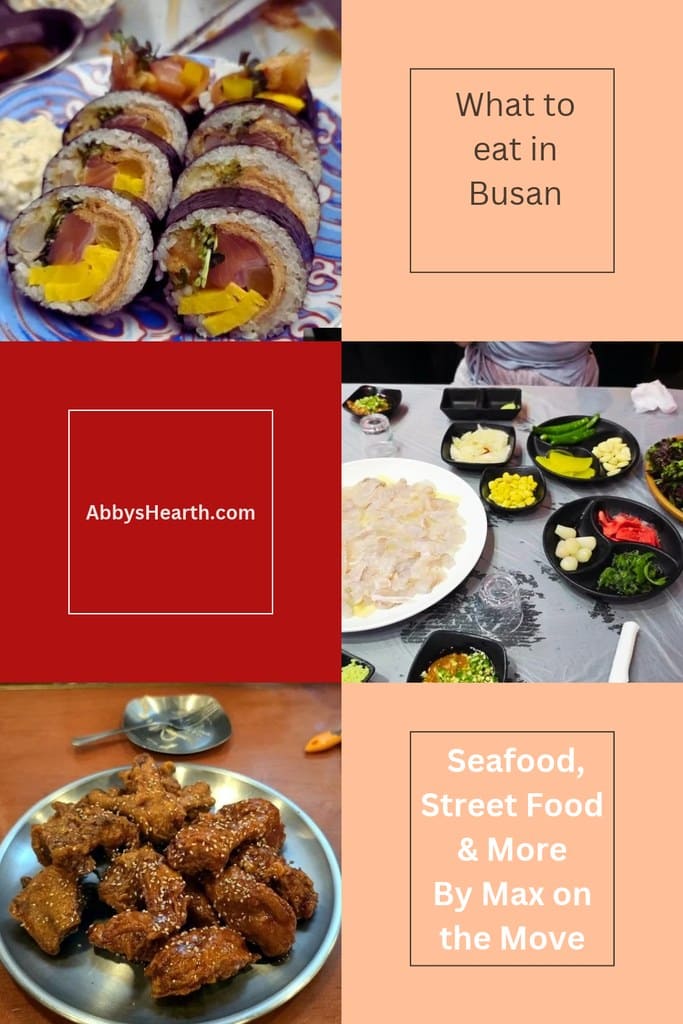
The first thing you notice in Busan is the smell. Salt from the sea, charcoal smoke from the grills and steam from the fish cake carts, all on the same street. I ‘ve been to Busan three times now, in 2018, 2020 and June 2026, and on every visit I spend more time eating than sightseeing.
Busan is South Korea’s second biggest city after Seoul and its biggest port, and you taste that everywhere. The seafood comes off the boats in the morning and is on your plate by lunch. Many of the city’s signature dishes were born during the Korean War, when refugees from all over the peninsula arrived here and cooked with whatever they could find. Busan’s food is simpler and saltier than Seoul’s, and I think more fun.
If you want to plan the rest of your trip as well, my Busan travel guide covers the temples, beaches and neighbourhoods. Here I focus on what to eat in Busan, where to find it and how to order it without stress.
Busan Food at a Glance
- Hoe (회): fresh raw fish, wrapped in lettuce with garlic and chilli
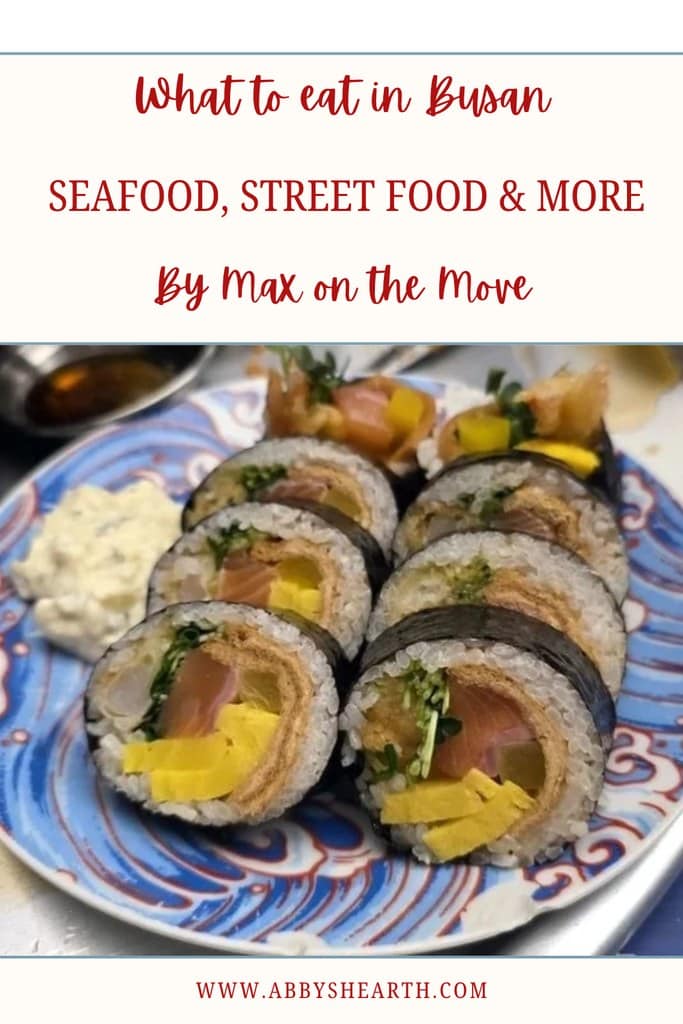
- Busan-style gimbap (김밥): rice roll filled with raw fish, egg and pickles
- Eomuk (어묵): fish cake skewers in hot anchovy and radish broth
- Tteokbokki (떡볶이): chewy rice cakes in spicy gochujang sauce
- Dwaeji gukbap (돼지국밥): milky pork bone soup with rice
- Milmyeon (밀면): cold wheat noodles in icy broth
- Ssiat hotteok (씨앗호떡): sweet pancake stuffed with seeds
- Chimaek (치맥): Korean fried chicken and beer
Hoe: Raw Fish at Millak Raw Fish Center in Gwangalli
If you only have one big meal in Busan, make it hoe, Korean-style raw fish. We went to Millak Raw Fish Center in Gwangalli Fish Market, right at the edge of Gwangalli Beach. A friend from Busan recommended it. It’s less famous than Jagalchi and a bit more hidden, so you’re less likely to be overcharged, and it’s full of locals and stays open late.
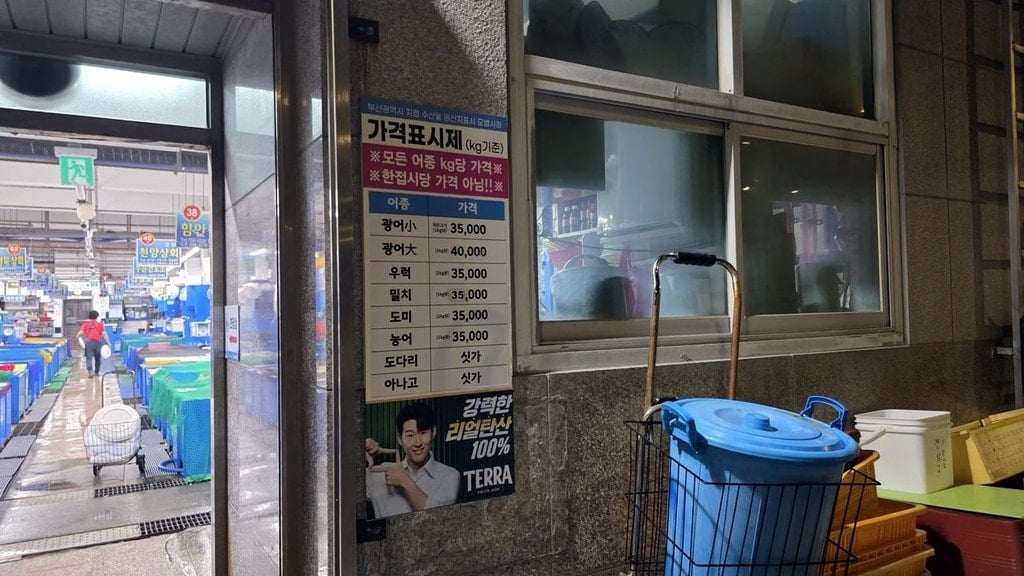
The system looks confusing at first, but it is the same few steps every time:
- Check the price board at the entrance first. It lists the price per kilogram for everything in season that day. On our visit in June 2026, flounder cost 35,000 won per kilogram for smaller fish and up to 40,000 won for larger ones. Squid, sea bream and bass were all around 35,000 won. Some fish, like eel or jangeo, are listed at market price and change daily.
- Choose your fish from the tanks. The ajummas who run the stalls will wave you over and point at whatever is best that day. It is worth listening to them.
- Agree on the weight and pay. We could pay by credit card, which is not a given at traditional markets in Korea.
- Your fish is cleaned and sliced in front of you in about five minutes.
- Then you take your plate to one of the small restaurants beside the market and pay a seating fee of around 10,000 won per person. They bring rice, a bowl of doenjang jjigae (soybean paste stew), side dishes and drinks.
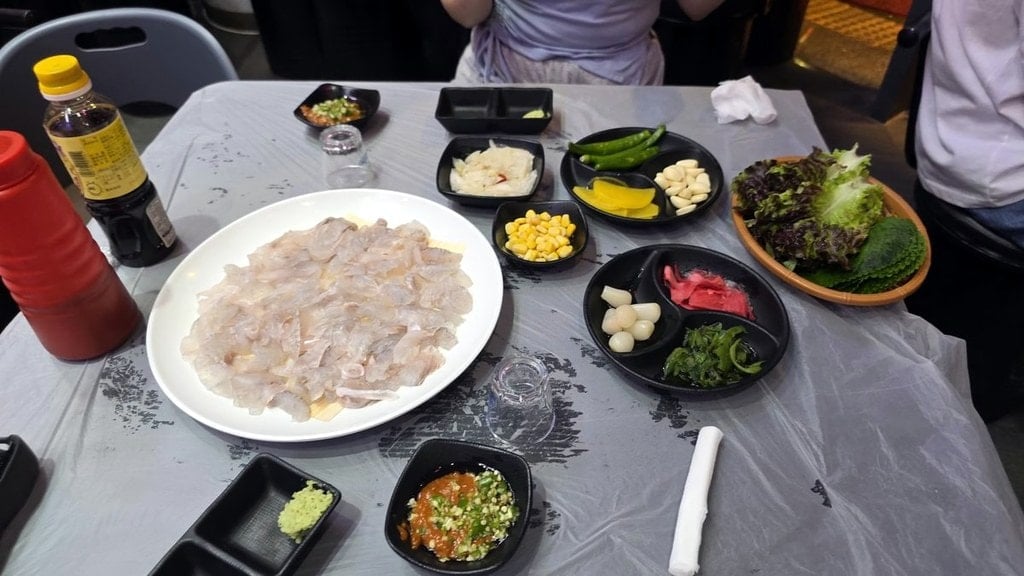
To eat it the Korean way, put a few slices of fish on a lettuce or perilla leaf, add a slice of garlic, a piece of chilli and a dab of chojang (sweet and sour chilli sauce), fold it up and eat it in one bite. For two people the whole meal came to between 50,000 and 80,000 won, depending on the fish. For fish that fresh, that’s cheap! We were still eating at 10pm on a weeknight, and the place was full of locals. Autumn is gizzard shad and crab season in Korea, and our guide to Korean autumn foods covers both.
Busan-Style Gimbap With Raw Fish
Gimbap is Korea’s everyday rice roll: rice seasoned with sesame oil and salt, rolled in dried seaweed with fillings like egg, pickled radish and vegetables. You can buy it in every convenience store in the country. In Busan, look out for the seafood version.
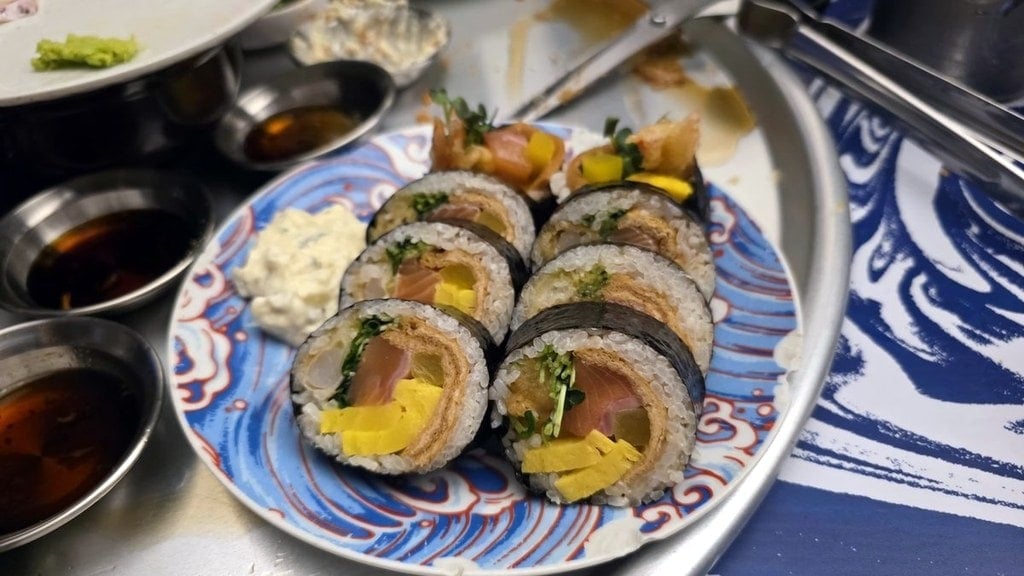
At a local seafood spot, the gimbap came filled with fresh raw fish, egg, sprouts and pickled radish, with soy sauce, wasabi and tartar sauce on the side. It sits somewhere between Korean gimbap and Japanese sushi.
Eomuk: Busan’s Famous Fish Cakes
Busan is the fish cake capital of Korea, and Busan eomuk is sold all over the country as a regional speciality. Eomuk (also called odeng) is made from fish paste, pressed into thin sheets, folded onto long wooden skewers and simmered in a clear broth made from anchovies and radish.
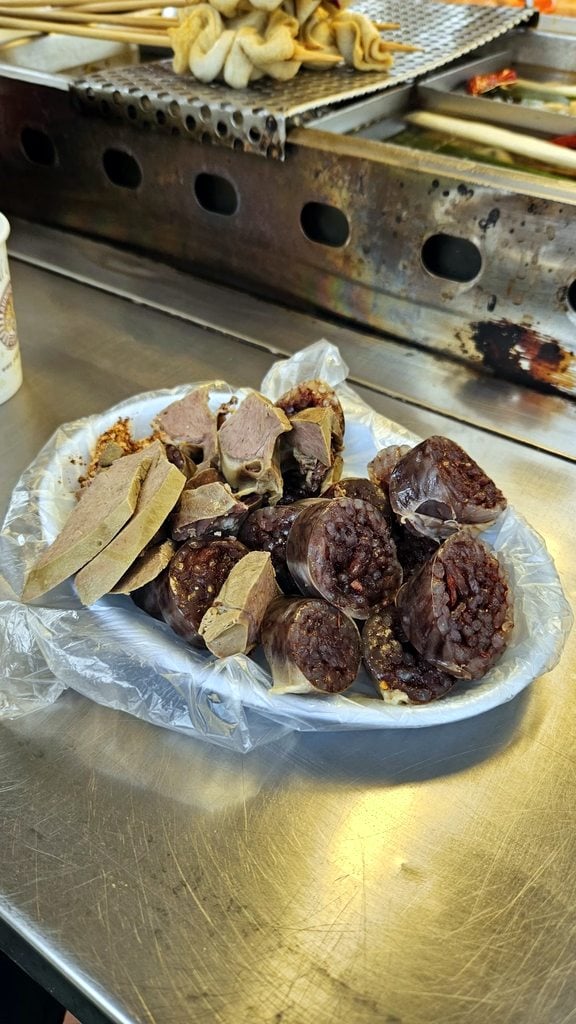
You eat it standing at the cart. Take a skewer straight from the pot, and the vendor counts the empty sticks at the end. The best part is the broth: you can ladle it into a paper cup and sip it for free. On a cold evening, two or three skewers and a cup of hot broth make a good snack between shops. The same stalls often sell sundae, Korean blood sausage made with glutinous rice and glass noodles, if you feel adventurous. For more dishes that test your nerve, see our post on weird foods around the world.
Tteokbokki: Spicy Rice Cakes
Tteokbokki is Korea’s favourite street snack: chewy cylinders of rice cake cooked in a thick, sweet and spicy gochujang sauce, usually with a few pieces of fish cake. In Busan you find it at every market and street corner, and at one small restaurant we had it served bubbling in a stone pot.
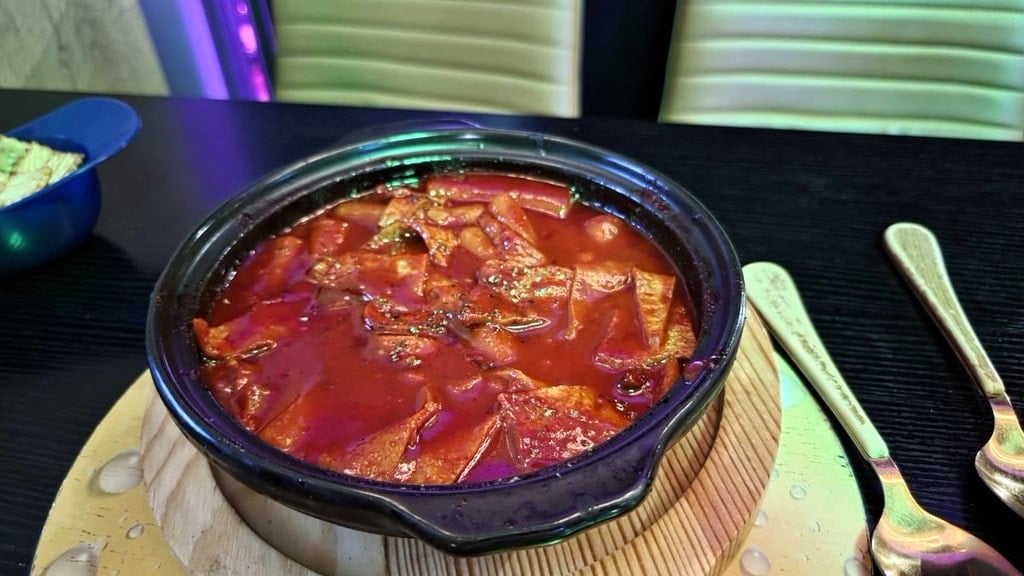
Be warned: it’s properly spicy. If you’re not used to chilli, order some gimbap or fried snacks on the side to dip into the sauce. That’s how many Koreans eat it anyway.
Dwaeji Gukbap and Milmyeon: The Refugee Classics
Dwaeji gukbap is practically the official dish of Busan. It’s a milky pork bone soup with slices of pork, served with rice that you add to the bowl. It comes plain, and you season it yourself at the table, often with salted shrimp, chopped chives and chilli. Locals eat it at any time of day, including breakfast, and it is the classic cure after a long night out. Busan’s gukbap culture goes back to the war years, when it was cheap, filling food for workers and refugees.
Milmyeon comes from the same time. Refugees from the north wanted to make the cold buckwheat noodles of home, but buckwheat was hard to find, so they used wheat flour instead. The chewy noodles are served in a half-frozen broth, which suits a hot, humid Busan summer day. You cut the noodles with scissors and season the bowl with the sauces that come with it. I eat milmyeon every time I’m in Busan, and for me it’s one of the most interesting dishes in the world.
Hotteok and the Snack Stalls at Haedong Yonggungsa
Hotteok is a pan-fried pancake filled with molten brown sugar, cinnamon and nuts, eaten scalding hot from a paper cup. Busan is famous for ssiat hotteok, a version stuffed with a generous mix of seeds. The classic place to try it is BIFF Square in Nampo, in the old part of the city.
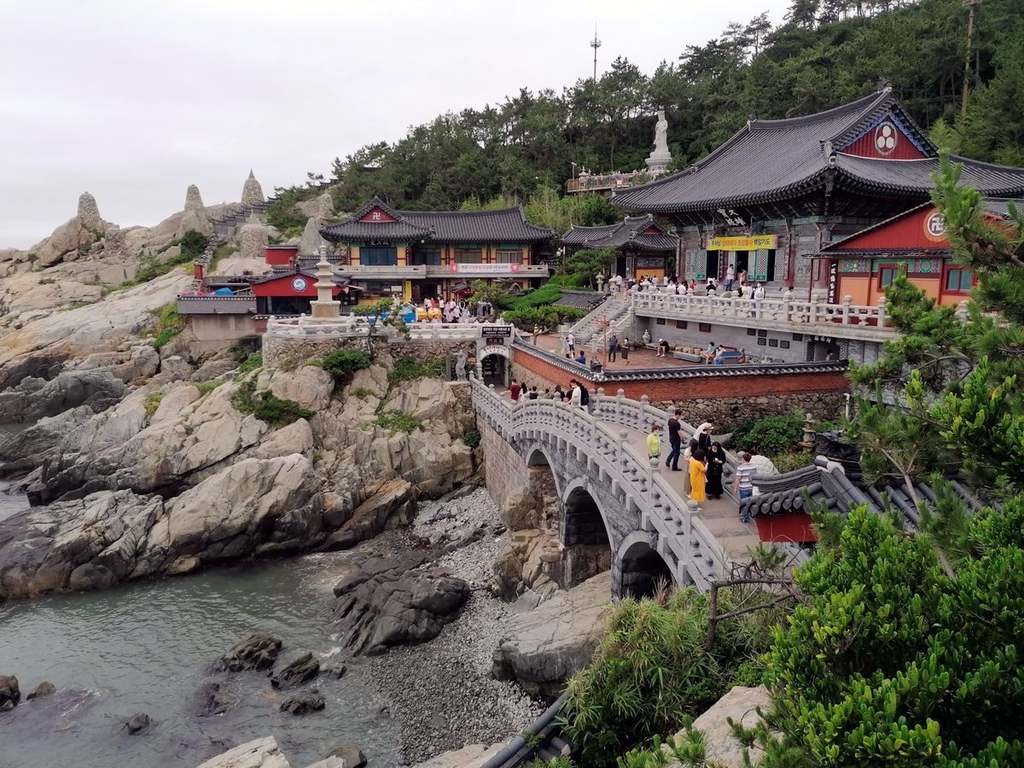
You can also find hotteok at Haedong Yonggungsa; a Buddhist temple built in 1376 directly on the sea cliffs, and one of the best places in Korea to watch the sunrise. It’s usually filled with a small row of stalls at the top of the steps that sell hotteok, fish cakes, tteokbokki and coffee. When we visited again recently in 2026, the area was under construction, so check before you plan a sunrise visit.
Jagalchi Market: For the Adventurous
Jagalchi is Korea’s biggest seafood market and the most famous food sight in Busan. The ajummas sell the day’s catch in the thick Busan dialect, and walking the rows of tanks and stalls is worth it even if you don’t buy anything.
We had live octopus (sannakji) and grilled eel here. Sannakji is cut into pieces that are still moving, and the suction cups still grip. So dip it in sesame oil and chew it thoroughly before swallowing. You don’t want a tentacle getting stuck in your throat!
I like the grilled eel even more than Japanese unagi, because it’s not sweet. Not really an eel even though it’s name ends with ‘jangeo’ which means eel, the kkomjangeo is a grilled hagfish, a chewy, smoky port-city dish often stir-fried with onions and a fiery red sauce. It’s a classic drinking food around the market and the old harbour. For more Korean dishes, from the famous classics to the adventurous ones, see my Korean food guide.
Fried Chicken and Beer by the Bridge
Korean fried chicken with a cold beer is called chimaek, and it’s a national habit. In Busan, the best place for it is Gwangalli in the evening, when the Gwangan Diamond Bridge lights up over the water.
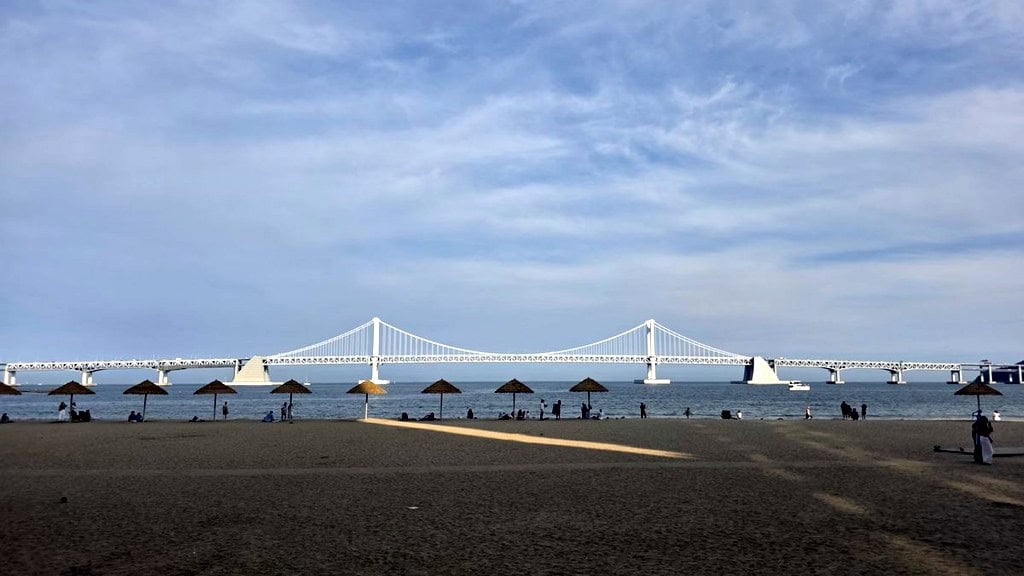
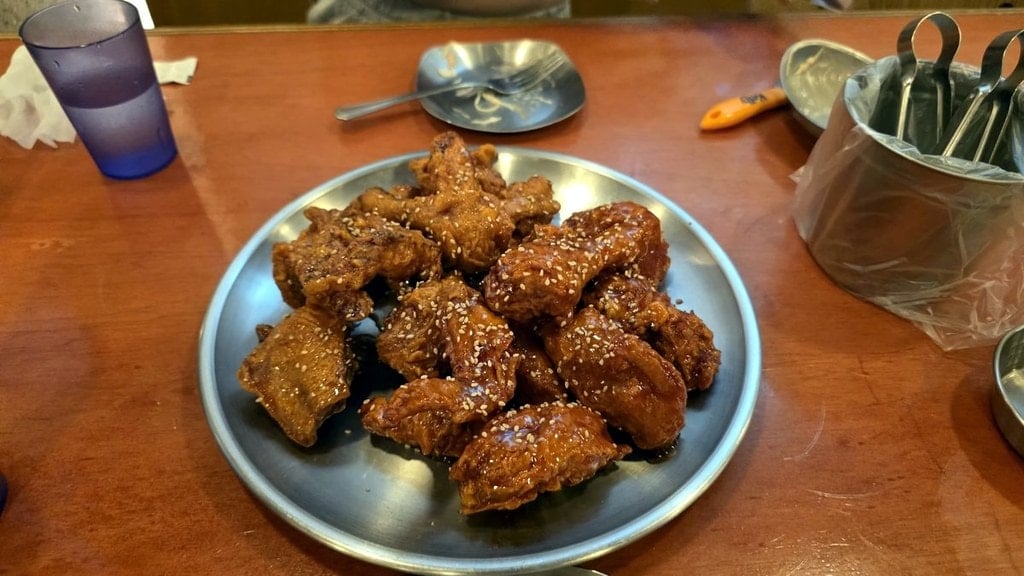
Walk one or two streets back from the beach and look for the small chicken places with plastic chairs on the pavement and no English signs. Order yangnyeom chicken, which is double-fried and coated in a sticky sweet and spicy glaze, and sit outside facing the bridge. On the beach itself, vendors sell beer in giant cups shaped like baseball bats. It sounds silly, and it is, but almost everyone ends up with one.
Seomyeon: Barbecue, Street Tents and Coffee
Seomyeon is Busan’s busy shopping district, where the two main subway lines meet. The side streets behind the main shopping street are full of Korean barbecue restaurants and pojangmacha, the tented street bars, and they stay busy late into the night. The best barbecue places often have no English menu and a queue by 6pm. I always order samgyeopsal, grilled pork belly. You grill it at the table and wrap it in lettuce with garlic, kimchi and ssamjang sauce.
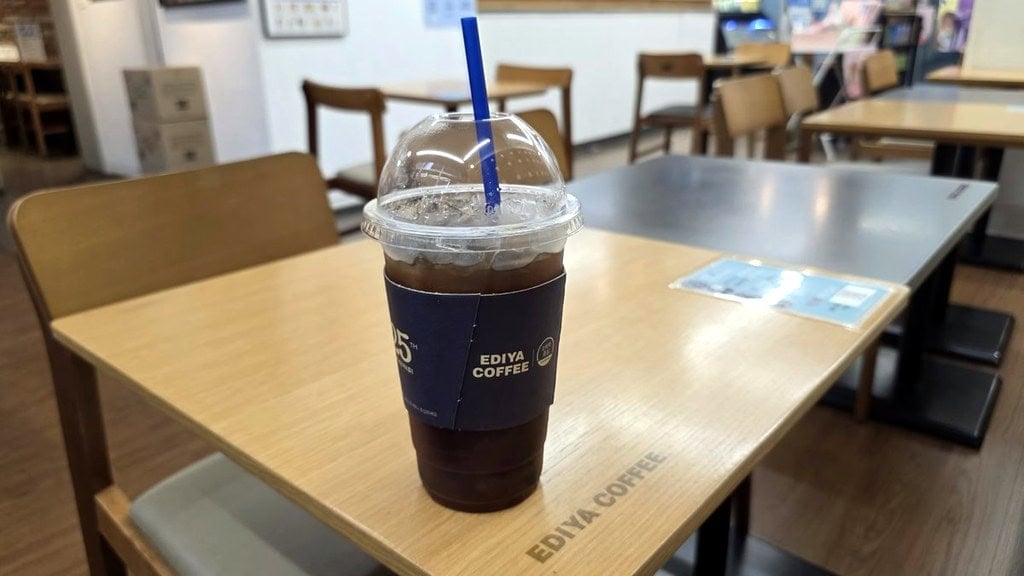
Between meals, grab an iced coffee. Ediya, one of Korea’s biggest homegrown coffee chains, has a branch on almost every block in Seomyeon.
Tips for Eating in Busan
- Always check the price board at fish markets. Prices are per kilogram, and knowing them helps you choose without surprises.
- Carry some cash. Most restaurants take cards, but small street stalls are easier with cash.
- Eat late. Busan has a late dinner culture, and many restaurants and street tents stay open past midnight.
- Use Naver Map or Kakao Map. They work much better than Google Maps in Korea, especially for finding small restaurants.
- Get a T-money card. Busan has four metro lines, and one card works on the metro, buses and many taxis. From Gimhae Airport, the light rail and metro take you to Seomyeon for around 2,000 won.
- Busan is easy to reach. The KTX high-speed train from Seoul takes about 2 hours 15 minutes to 2 hours 30 minutes and costs around 60,000 won. Busan is also often a little cheaper than Seoul.
- If you are vegetarian, plan ahead. Many soups are made with fish or pork bone stock, the eomuk broth is anchovy-based, and most kimchi contains fish sauce or salted seafood. Bibimbap without meat is often your safest option, and sweet hotteok from a street stall is an easy snack.
- Learn one phrase. “Mashisseoyo” means “it is delicious”. Saying it to the ajumma who cooked your meal will usually get you a smile.
Why I Keep Going Back to Busan
Seoul has more restaurants, but eating in Busan felt closer to how the people there actually live. You eat fish that was swimming ten minutes earlier, or fish cake broth from a paper cup at a street cart. And some days you enjoy fried chicken and beer while the bridge lights up. My favourite meal across my three trips was Korean barbecue that allowed us to grill the meat ourselves at the table, and drink a cold beer or somaek, soju mixed with beer. If you are planning a trip to Korea, give Busan at least three days and plan them around your meals.
About the author
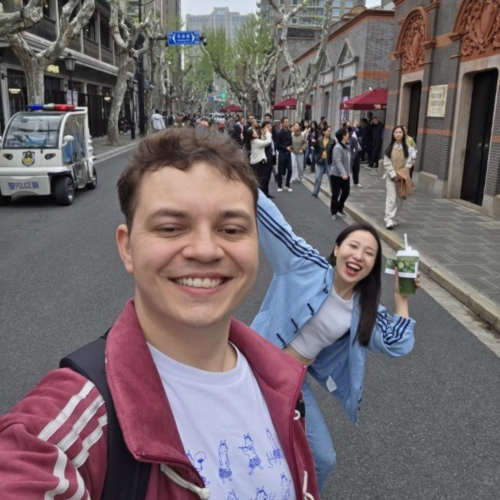
Max is a Swiss travel writer from Solothurn. He spent eight months in Seoul as an exchange student at Ewha University, has been to Busan three times and lived in Tokyo for three years while studying at Waseda University. He writes practical travel and food guides about Korea, Japan and Switzerland at Max on the Move. You can also find him on Instagram at @max.switzerland
Other Posts You Might Like
- Top Korean Autumn Foods You’ll Love This Fall
- 5 European Food Capitals, and the Dish That Made Each One Famous
- What to eat in Spain
- What to drink in different cities