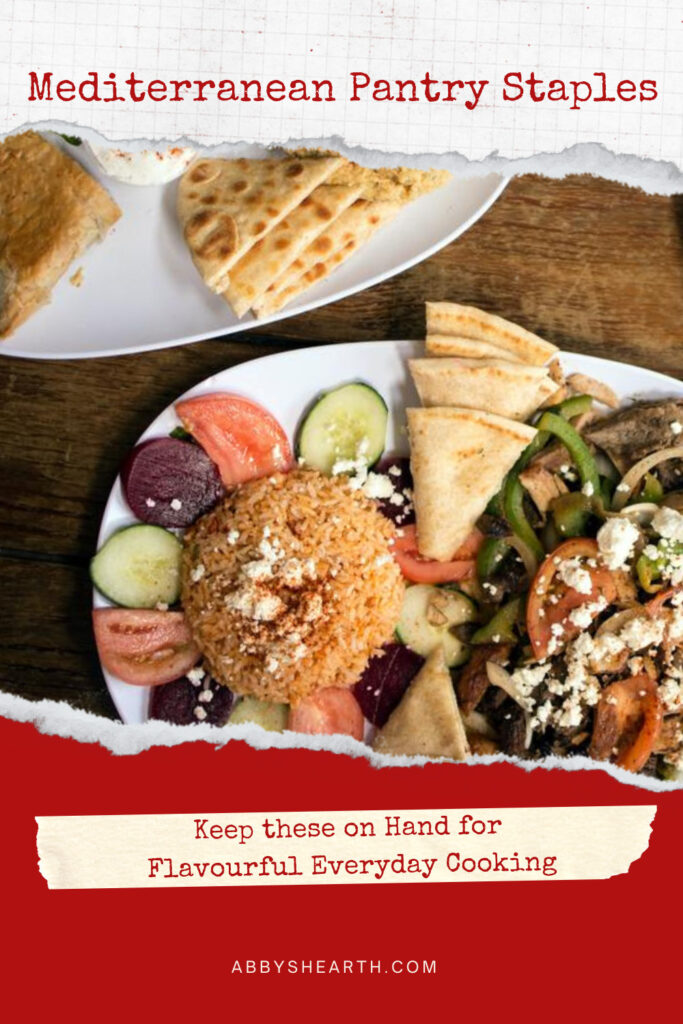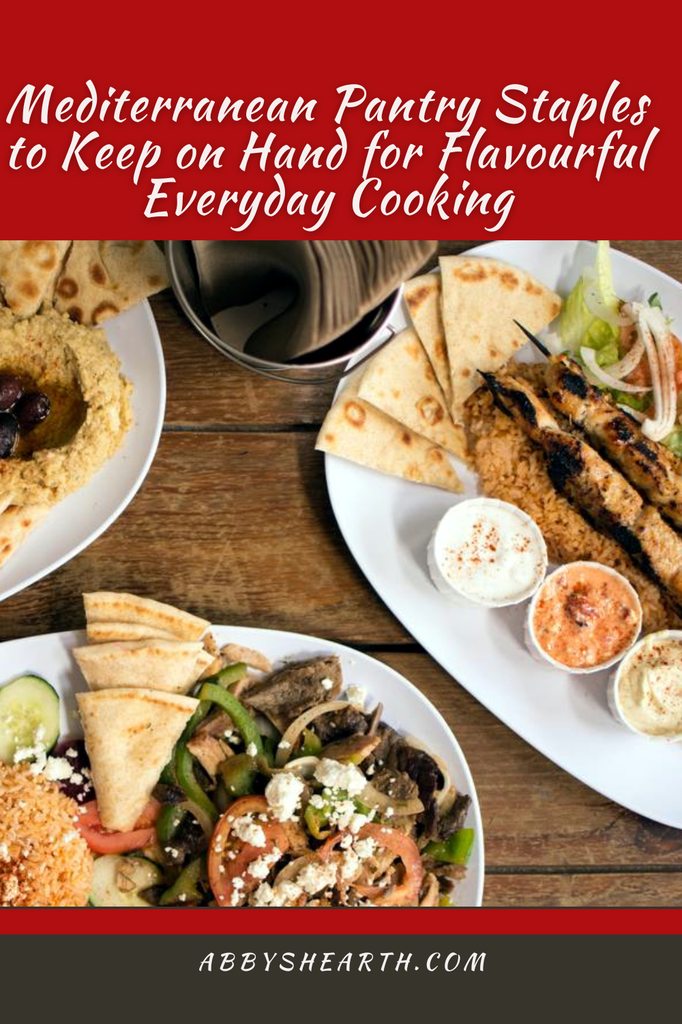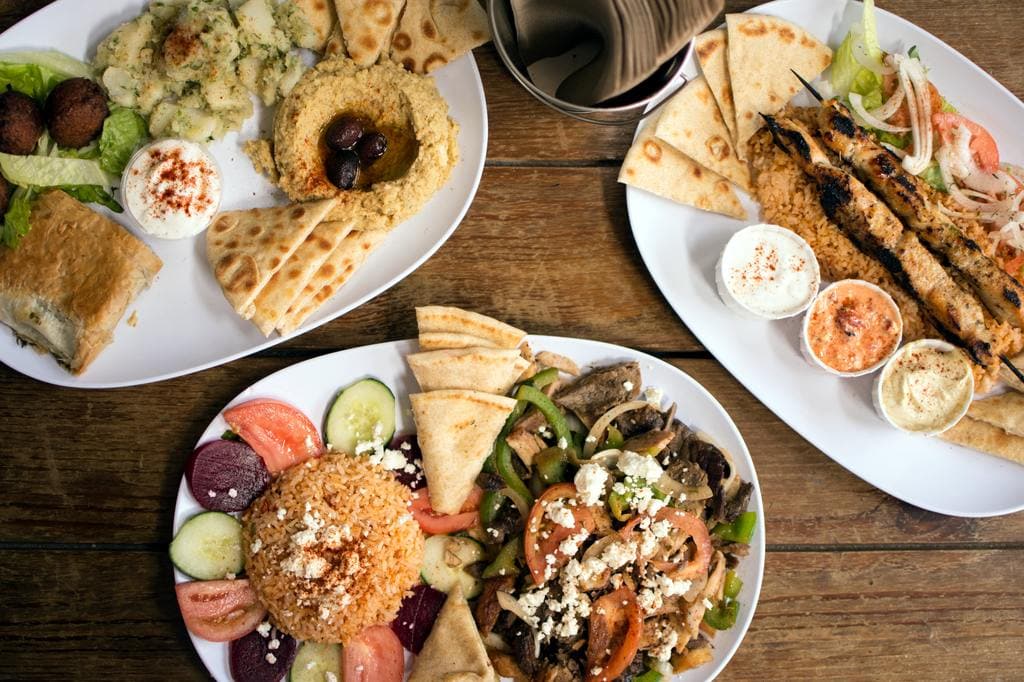
Mediterranean food has a particular quality that is hard to manufacture — it feels generous without being complicated, and deeply flavoured without requiring a long list of ingredients. A Greek salad, a bowl of hummus, and some slow-cooked lamb with herbs and lemon are so inviting. None of these are technically difficult to make. What they share is a well-stocked pantry and a confidence with a small set of key ingredients.
If you’ve ever sat down to a meal on a terrace somewhere along the Mediterranean coast, or ever gone embarking on a Mediterranean cruise and eaten your way from port to port, you will know that the food changes as you move — Greek flavours give way to Turkish ones, which give way to Lebanese, Italian, Spanish. But the pantry foundations are remarkably consistent across all of them. Get those right, and the cooking follows.
The Oils and Acids That Carry Everything
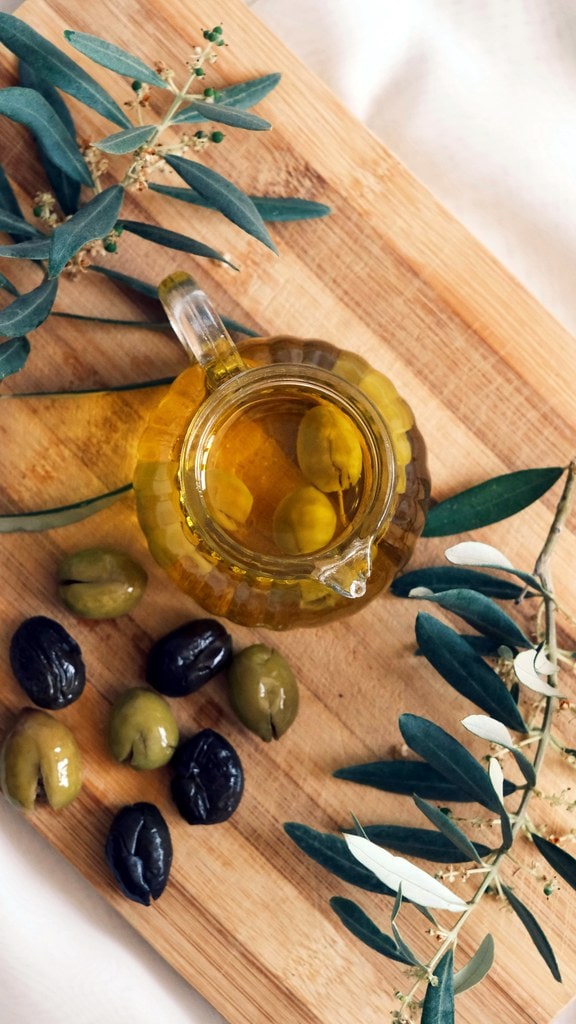
Extra virgin olive oil is not interchangeable with other cooking fats in Mediterranean cooking. It is a flavour in itself — grassy, peppery, sometimes buttery depending on the variety — and it is always used generously. It goes into the pan, it finishes the dish, it dresses the salad. Different regions produce oils with distinct personalities: Sicilian olive oils tend to be robust and bold; Greek ones are often fruitier; Spanish oils from Andalusia can be smooth and mild.
Keep one everyday bottle for cooking and, if budget allows, a smaller bottle of something better for finishing — drizzled over hummus, swirled into soup, spooned over roasted vegetables at the table.
Lemon juice and good vinegar are the other half of this equation. Mediterranean cooking rarely needs much sugar because acidity does the brightening work. A squeeze of lemon over grilled fish or a splash of red wine vinegar into a bean salad are small additions that pull a dish into focus.
Legumes: The Quiet Backbone
Chickpeas, white beans, lentils, and butter beans are the unsung heroes of Mediterranean cooking. They provide substance, protein, and a kind of creaminess that takes well to both bold spicing and restraint.
Canned or jarred versions are perfectly fine and significantly reduce cooking time. A tin of chickpeas becomes hummus in fifteen minutes. White beans with garlic, olive oil, and a handful of fresh herbs is a side dish that costs almost nothing and tastes like it took effort.
If you make hummus at home — and it is worth doing — the difference between shop-bought and homemade is significant. A good dill hummus or a beetroot hummus uses this principle well: the base is always chickpeas, olive oil, and lemon, and from there you can take it in any direction.
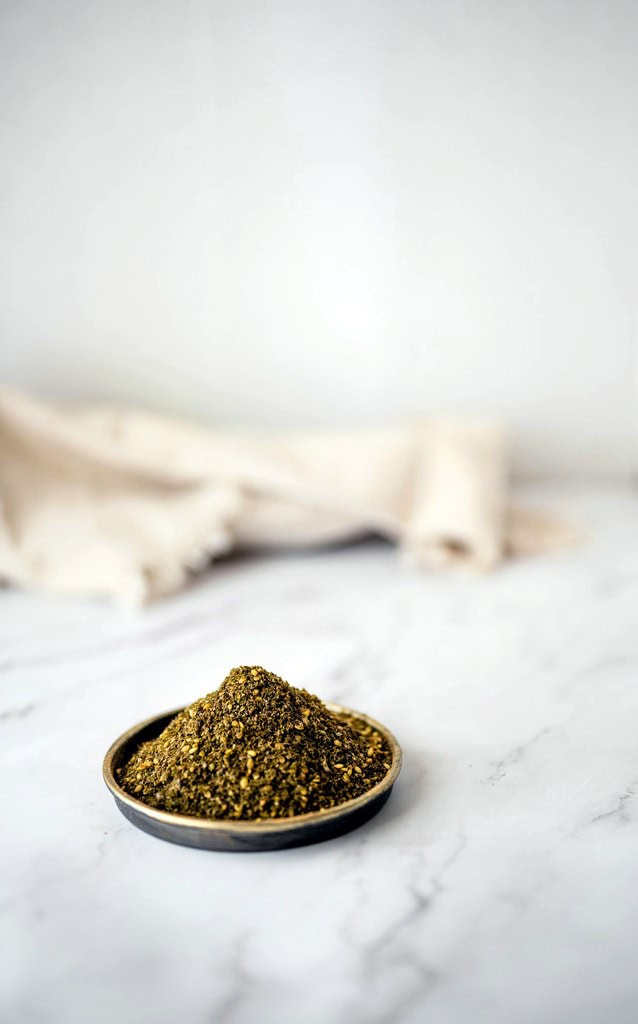
Herbs and Spices Worth Having Permanently
Mediterranean cooking draws from a wide arc of countries, and the spice palettes shift accordingly — Italian food leans on oregano and basil; North African cooking uses cumin and coriander heavily; Levantine food brings in za’atar, sumac, and allspice. You do not need all of these immediately, but a core set covers a surprising amount of ground.
Start with these:
- Dried oregano — It’s the backbone of Greek and Italian cooking; excellent with tomatoes, on pizza, in marinades.
- Cumin — Earthy and warm in flavor; it’s an essential in anything made with chickpeas or lamb.
- Smoked paprika — Adding depth without heat, it’s good in bean stews and with chicken.
- Za’atar — A Middle Eastern blend of thyme, sesame, and sumac; it adds extraordinary to flatbread with olive oil, or simply sprinkled over eggs or labneh.
- Sumac — A tart and slightly fruity spice; it lifts salads and grilled meats in a way that is hard to replicate with anything else.
- Cinnamon — It’s used more in savoury cooking across the Mediterranean than most people expect, particularly in meat dishes.
Fresh herbs matter too, though you can’t stock them, just buy when you need them or grow some yourself. Parsley, mint, and dill are the most frequently called upon, so a small pot of any of these on a windowsill is more useful than a drawer full of dried versions.
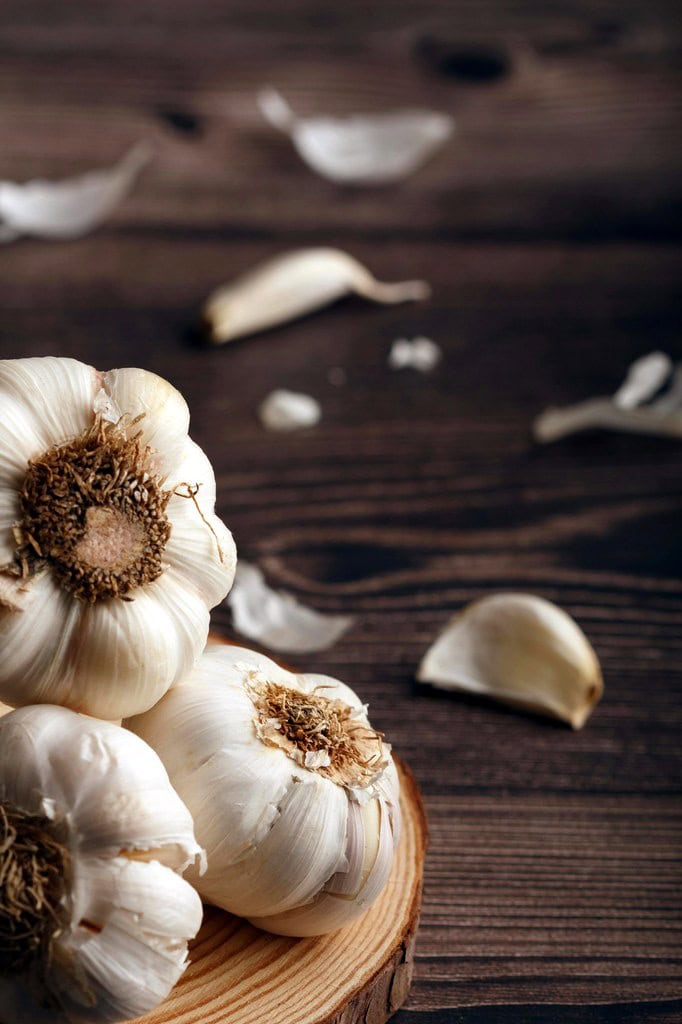
Aromatics: Garlic, Onion, and What You Do With Them
Garlic is foundational to all Mediterranean cooking. It goes into almost everything, usually at the beginning by being cooked in olive oil, and sometimes raw in dressings and sauces. It is worth understanding how differently garlic behaves depending on how it is prepared — raw garlic in a dressing is sharp and pungent; slowly softened in oil it becomes mild and sweet; roasted whole it turns almost nutty.
Pickled garlic is a whole different thing — milder in heat but deeply savoury and somewhat tangy, and useful as both a condiment and a cooking ingredient. If you have never tried it, it is worth making a jar.
Onions, shallots, and leeks round out the aromatic base. These are not glamorous pantry items, but the number of Mediterranean dishes that begin with one of these softening slowly in olive oil is almost all of them.
Preserved and Fermented Things
The Mediterranean pantry has always relied on preserved ingredients — not just for convenience but because the preservation process itself adds flavour. Some of the most useful:
- Capers — These are intensely savoury, slightly briny; particularly when used in Sicilian dishes such as pasta or with fish.
- Olives — Are so versatile. They can be eaten as they are, cooked into stews, or tossed with pasta. All the different varieties have very different flavour profiles and it is worth experimenting.
- Anchovies – Whether in oil or salt-packed are used as a seasoning rather than a main ingredient. They dissolve into oil and add a deep savoury quality that is not obviously fishy.
- Sun-dried tomatoes — Gives dishes that concentrated tomato flavour that’s good in pasta sauces, on flatbreads, or chopped into salads.
- Preserved lemons — These are North African in origin but used across the wider Mediterranean; the fermented rind adds a complexity that fresh lemon cannot replicate.
Grains and Bread
Couscous, bulgur wheat, and good bread are the carbohydrate foundations of Mediterranean eating. Couscous takes just five minutes to prepare and absorbs flavour beautifully. Bulgur wheat is the base of tabbouleh and works well in salads and stuffed vegetables.
The bread matters too — not just as a vehicle for other things but as a component of the meal. Warm pita or flatbread with olive oil and za’atar is a snack or a starter; thick sourdough torn and eaten alongside a bean stew is part of the dish.
Eating the Mediterranean Way
What makes Mediterranean food distinctive isn’t any single ingredient but rather the approach: shared plates, quality over quantity, vegetables given as much care as meat, and a slow pace at the table that treats eating as something worth doing properly.
The mezze platter, a spread of small dishes served together captures this well. A table with hummus, warm bread, marinated olives, a simple tomato salad, some roasted peppers, and perhaps stuffed vine leaves does not require elaborate cooking. Most of it can be assembled rather than made. But it creates a meal with real warmth, the kind that turns an ordinary weeknight dinner into something that your friends will actually linger over.
The pantry is where this starts. Once it is stocked, the Mediterranean table is a lot closer than it looks.
Start Exploring
A few recipes on this site that use these pantry staples:
- Homemade dill hummus from scratch — chickpeas, olive oil, lemon, and dill
- Beetroot hummus — a vibrant variation worth making
- Pickled young garlic — simple to make, and keeps for months
- Who makes the best hummus? — a taste comparison worth reading before your next supermarket shop
- Cookbooks worth having in your kitchen — including some excellent Mediterranean titles