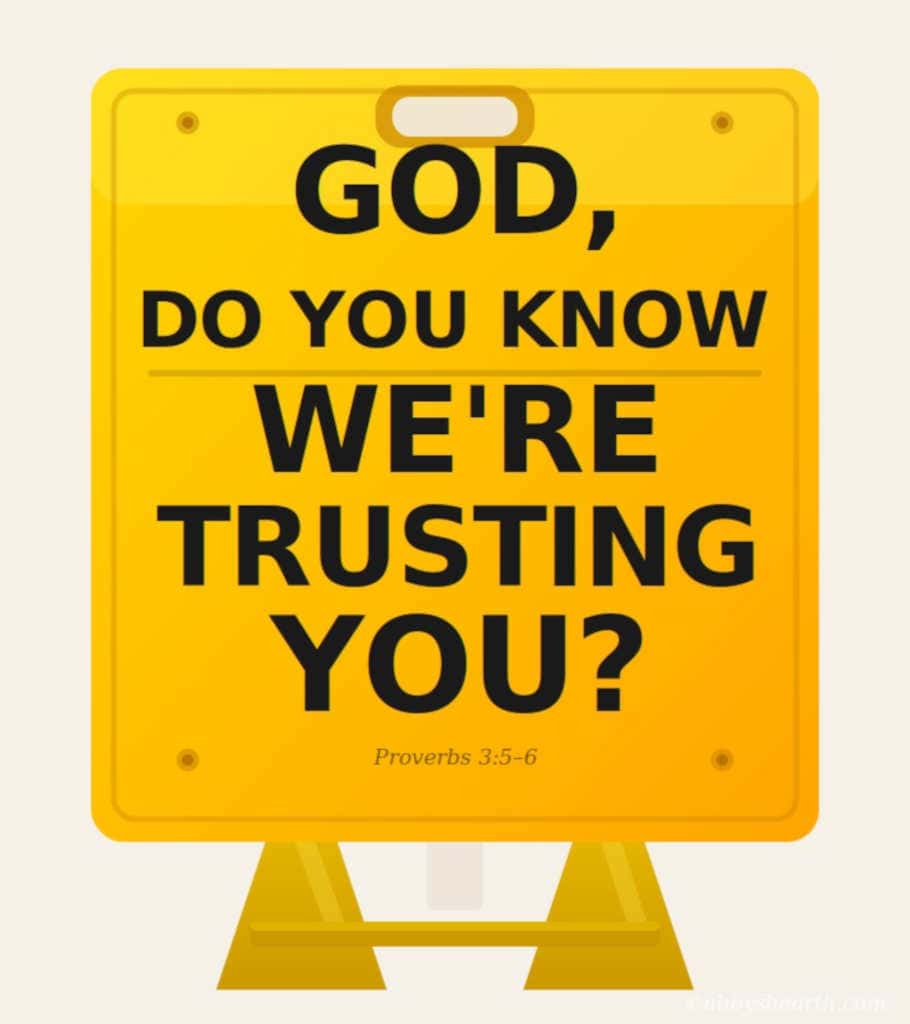
There’s a point in every season of waiting, and I mean every season, where your carefully maintained faith starts to look less like a serene woman with her hands open and more like a yellow caution sign wedged in the middle of God’s driveway.
Does the process know we’re trusting it?
We would never say it out loud. In church, we say things like “I’m just resting in Him” or “I’m trusting the process”. At home, we’re refreshing our bank balance at 2 AM and asking Abba, very politely, whether He has our address.
The Stages of Trusting God (An Honest Field Report)
Stage 1: Confident Surrender
You prayed. You released it. You maybe even journalled about releasing it. You feel genuinely peaceful. You tell a friend, “I’ve just given it to God.” You mean it.
Duration: approximately four days. Sometimes four months.
Stage 2: Helpful Suggestions
You’re still trusting God, but you’ve also prepared a short document of possible solutions He may not have considered. You’re not interfering; you’re being a good steward of your own problem.
Proverbs 3:5 is beginning to feel personally targeted.
Stage 3: The Status Check
“I trust You, Lord. I do. I’m just… checking. Has anything moved? Any small sign? A parking space in an unusual location? An email? A bird?”
This is where you start reading every scripture as a direct message and interpreting the bin lorry being late as either prophetic or a warning.
Stage 4: The Renegotiation
You’re still trusting God. You want that on the record. But perhaps the timeline could be revisited. You have a few thoughts. You’ve written them down.
Stage 5: The Surrender (Again)
Usually arrives at around 11 PM on a Tuesday, when you are too tired to manage the situation anymore. You let go. Properly this time. You feel peace again. If the 11pm surrender is a regular occurrence, this School of Prayer & Intercession course changed how I pray through the hard seasons.
You are back at Stage 1. The cycle continues.
Here’s the Thing About Trust
Real trust – the kind the Bible is actually talking about – doesn’t mean the anxiety never shows up. It means you keep handing it back when it does.
Proverbs 3:5–6 says to trust God with your whole heart and not lean on your own understanding. That word lean is doing a lot of work. It doesn’t say don’t have understanding. It just says don’t make it your support beam.
Abraham trusted God for 25 years while apparently still ageing, still moving house, and still occasionally trying to solve the problem himself (see: Hagar). God didn’t disqualify him for the wobbles. Faith credited to his account anyway and Isaac was born. You know the story of Israel.
The disciples were in a boat with Jesus during a storm and still panicked; with Jesus physically present in the boat. If that’s not encouraging enough to you, I don’t know what is.
So, Does God Know We’re Trusting Him?
Yes. And I think He finds our frantic little status checks rather endearing, the way you’d find a child adorable for asking “are we nearly there?” every seven minutes on a long drive.
He’s still driving. He knows where we’re going. The sign in the driveway is ours, not His.
Trust the process, even when the process appears to have no idea you’re trusting it.
Looking for more light reading? Here are some Genesis Bible jokes or prayer position debates to brighten your week.
Other Posts You Might Like
- Why should Christians invest in gold?
- Why real Christians support Israel
- Volunteer in Israel
- What the Quran says about Israel
- Where to eat in Jaffa, Israel
- Men of God to emulate


Heya, I’m Abby! I’m a Gourmand Award-winning cookbook author and East Indian from Bombay, India. This blog is all about faith, food, and culture – from East Indian recipes to home, DIY, and spending time in the Word. Find out more about me here!