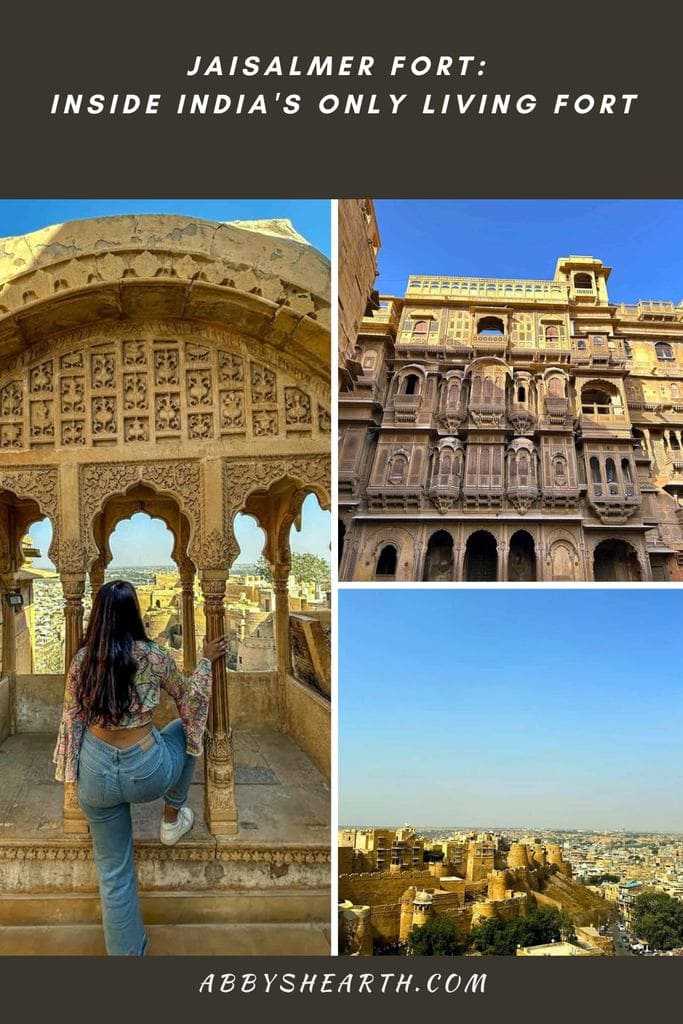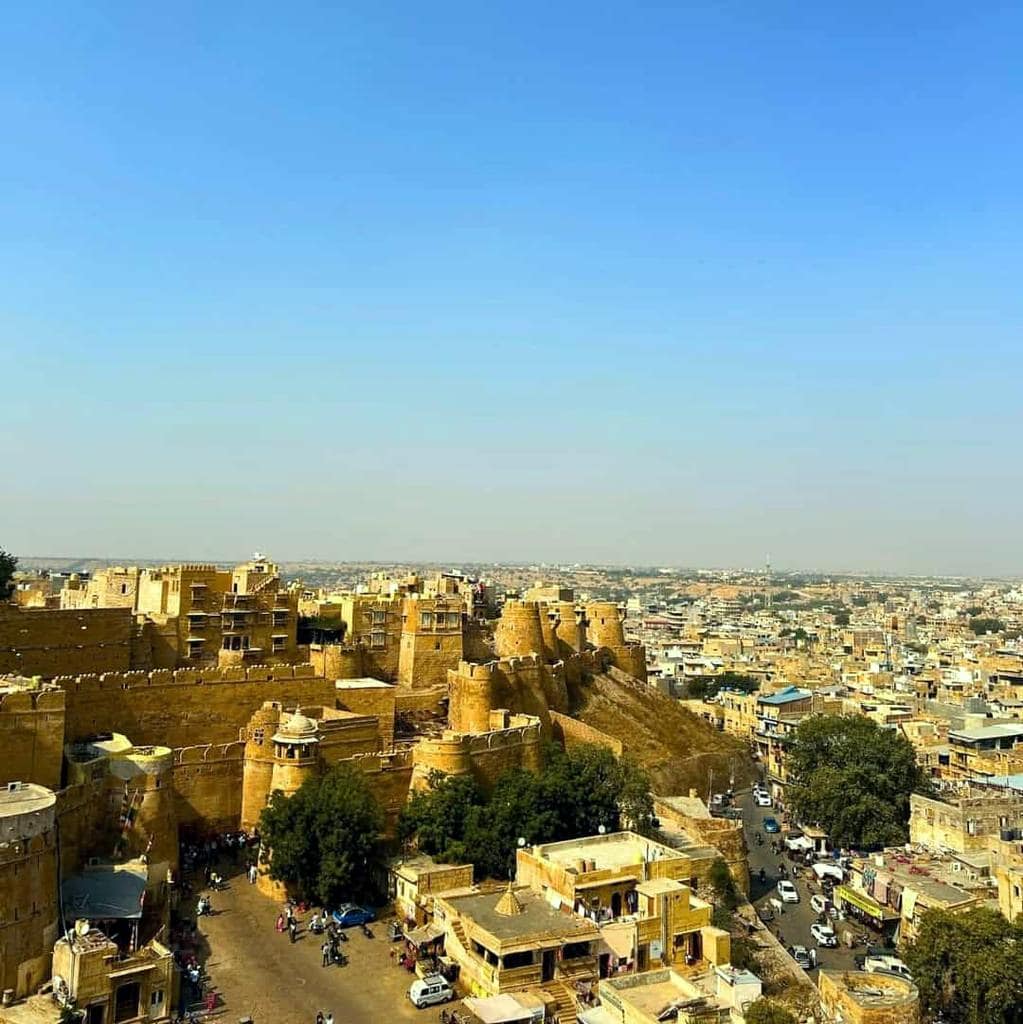
The first thing you notice about Jaisalmer Fort is how it rises above all around it. The city surrounding it is flat and sandy, and then suddenly, there it is, protruding like a giant sandcastle, visible long before you reach it.
Walking towards it in the early morning sun, the stone almost glows. It’s only once you pass through the last of its 4 impressive gates, and the open approach gives way to the tight labyrinth of streets and bazaars, that you realise what makes the fort so special. It isn’t just a historical monument to look at – it’s a place where people still live.
What is Jaisalmer Fort?
Jaisalmer Fort is a 12th-century fort in the Indian state of Rajasthan, known as the land of kings for its rich history of empires and royalty. It’s located in the Thar desert, the world’s most densely populated desert, explaining why this land has been highly sought after all this time and why forts such as this one were strategically placed.
What makes Jaisalmer so special today is that it is a living fort, with still over 3000 inhabitants to this day. It has been a UNESCO World Heritage site since 2013 and is the main tourist attraction in the city of Jaisalmer and one of the most popular in all of Rajasthan.
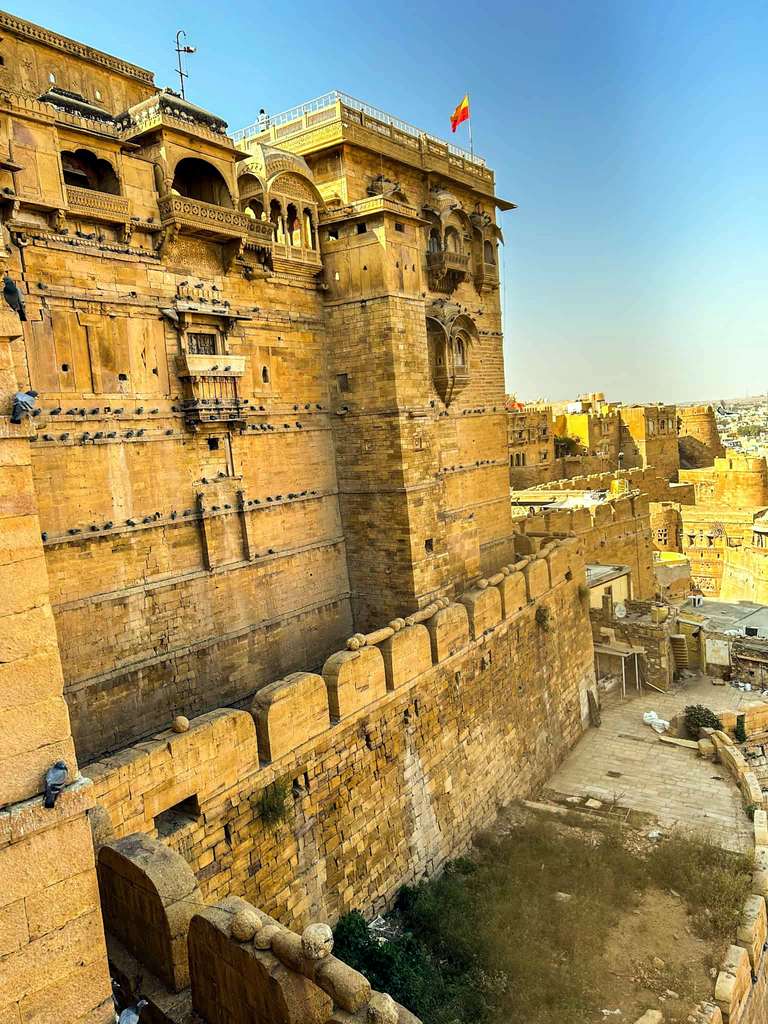
This desert fort is known as Sonar Quila, the ‘Golden Fort’, because its yellow sandstone construction is so unique, almost glowing in the bright desert sun and becoming a beautiful honey gold colour at sunset.
A Brief History of Jaisalmer Fort
Origins
Jaisalmer Fort was built in 1156 by Rawal Jaisal, a Rajput ruler who grew dissatisfied with his previous capital at Lodhruva, 15km away. He chose Trikuta Hill, a rocky base rising 250 feet above the desert, for its strategically commanding position. The name Jaisalmer combines Jaisal with Meru, the mythical mountain at the centre of the Hindu universe.
Its position wasn’t just symbolic. Jaisalmer sat directly on the Silk Road, the ancient trade network connecting India to Persia, Central Asia, and Arabia. Merchants paid heavily to pass through, making the fort and the surrounding city very rich. That wealth funded everything you see inside the fort today, the palaces, temples and impressive defences.
The Sieges
The fort’s history is punctuated by major sieges, each ending in Jauhar, the mass self-immolation of Rajput women who chose death over capture. The first came in 1299 when Alauddin Khalji of the Delhi Sultanate attacked after local raiders had looted his treasure caravan. After an eight-year-long siege, the fort fell, the women performed Jauhar, and the warriors rode out to die fighting. The Bhati locals eventually reclaimed it.
The second siege, in the 1530s, is perhaps the more tragic of the two. Facing attack from Afghan chief Amir Ali, the ruler Lunakaran ordered the women killed, believing defeat was certain, only for reinforcements to arrive almost immediately after. The fort had been successfully defended.
The Mughals eventually took control in 1541 and held it until 1762.
Decline
In 1818, a treaty with the East India Company brought British protection but effectively ended Jaisalmer’s independence. More damaging was the shift in trade, as maritime routes, especially through Bombay, grew, the Silk Road dried up. The fort lost the economic purpose for which it had been built.
Revival, Conservation and Tourism
UNESCO recognised the fort as a World Heritage Site in 2013 as part of the Hill Forts of Rajasthan group.
But recognition hasn’t solved everything. The fort was built on weak rock designed for a desert climate with minimal rainfall. Modern water usage by residents and tourists has caused serious weakening of the foundations and parts of the fort have already collapsed.
The World Monuments Fund has been involved in restoration efforts, but the conservation challenge is ongoing.
What to See Inside Jaisalmer Fort
The Four Gates
As you enter Jaisalmer Fort, you go through four gates: First Akhai Pol, then Suraj Pol, Ganesh Pol and finally Hawa Pol.
The whole time as you walk through them, you rise uphill and double back on yourself multiple times in a zigzag pattern. This is because these were designed to slow attackers from getting into the fort, especially horse cavalry.
Through Akhai Pol lies a large open courtyard, where today you find a few bazaars and people going about their day, but here you still kind of feel outside the main fort, being surrounded by towering walls. It’s not until you pass through Suraj Pol (Sun Gate), where the path narrows, and you start to see beautiful carvings above the entrance, that you get that feeling.
After Suraj Pol is Ganesh Pol, the original and first gate built for the fort, before you finally get to Hawa Pol (Wind Gate), the most impressive of all, both in terms of size and beauty. You can see the announcement balcony and other windows from the adjoining palace, which sits above the gate. You can visit this too, as we’ll cover later.
The Jain Temples
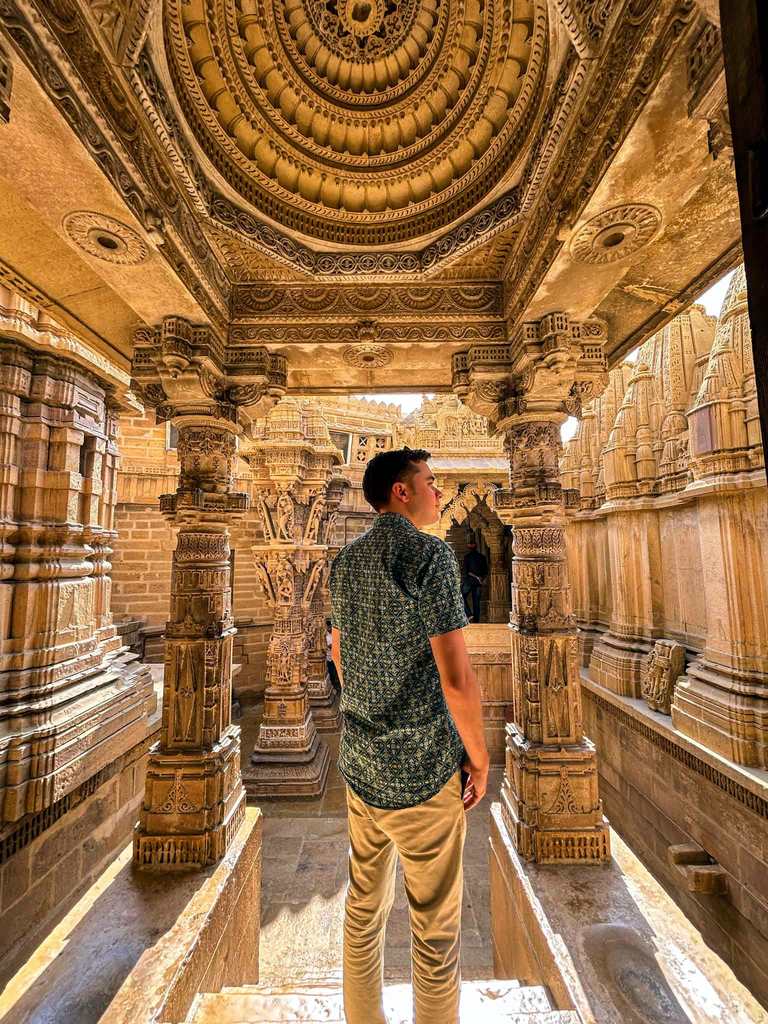
Jaisalmer Fort contains 7 incredibly beautiful Jain Temples, all of which are interconnected with one another. They were built over 400 years between the 12th and 16th centuries, funded by a series of wealthy Jain merchants who controlled the Silk Road trade through the region.
These temples are open to Non-Jains until 12pm so visit early to be able to see and avoid the crowd.
There are two temples that are worth a visit in particular. Chandraprabhu is the first you’ll encounter, built in 1509, it has a white marble idol, and the most stunning carved dome ceiling. The second, Parshvanath, is the largest and most magnificent of all the temples, with a massive carved, arched gateway and another ceiling carving, this one of a lotus flower.
Note that you will need to remove shoes and any leather items before you enter the temples, so plan accordingly.
The Royal Palace Museum
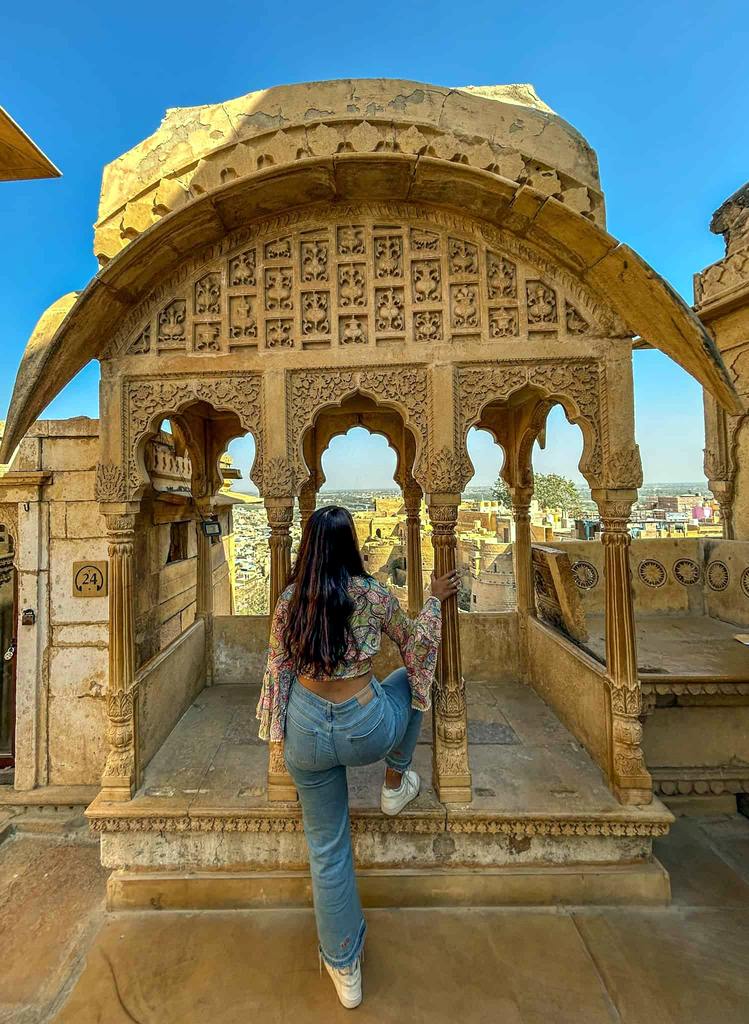
Towering over Dashera Chowk, the main square, the Royal Palace is a seven-storey structure partly built on top of Hawa Pol itself. It’s where you can learn the most about the history of the fort itself.
An audio guide is included with the entry ticket. Make sure you use it, it’s worth every minute. The palace is interesting enough on its own, but the guide gives context that transforms what you’re looking at.
Highlights include Rang Mahal, the mirrored and painted bedroom of 18th-century ruler Mulraj II, and the sculpted balcony on the eastern wall where drummers would raise the alarm whenever the fort came under siege.
The tour moves from the Raja-ka-Mahal, the king’s palace, through to the Rani-ka-Mahal, the queen’s palace, giving you a sense of how life was divided and organised within these walls.
The rooftop is the highlight. From up there, the views stretch in almost every direction, the golden city below you, and then the Thar Desert beginning where the city ends.
The Fort Walls and Views
That contrast, the densely packed streets of the fort city suddenly giving way to the vast empty desert, is one of the most striking things about Jaisalmer.
From the fort walls, you see exactly where one world ends, and another begins. Go early morning if you can, the light is softer and it’s much quieter, making it a much more relaxing and enjoyable experience to watch the walls and surrounding desert sand begin to light up.
What Else is There to Do in Jaisalmer?
The fort is the highlight of any Jaisalmer Itinerary, but the city has plenty more to offer beyond its walls.
Patwon Ki Haveli
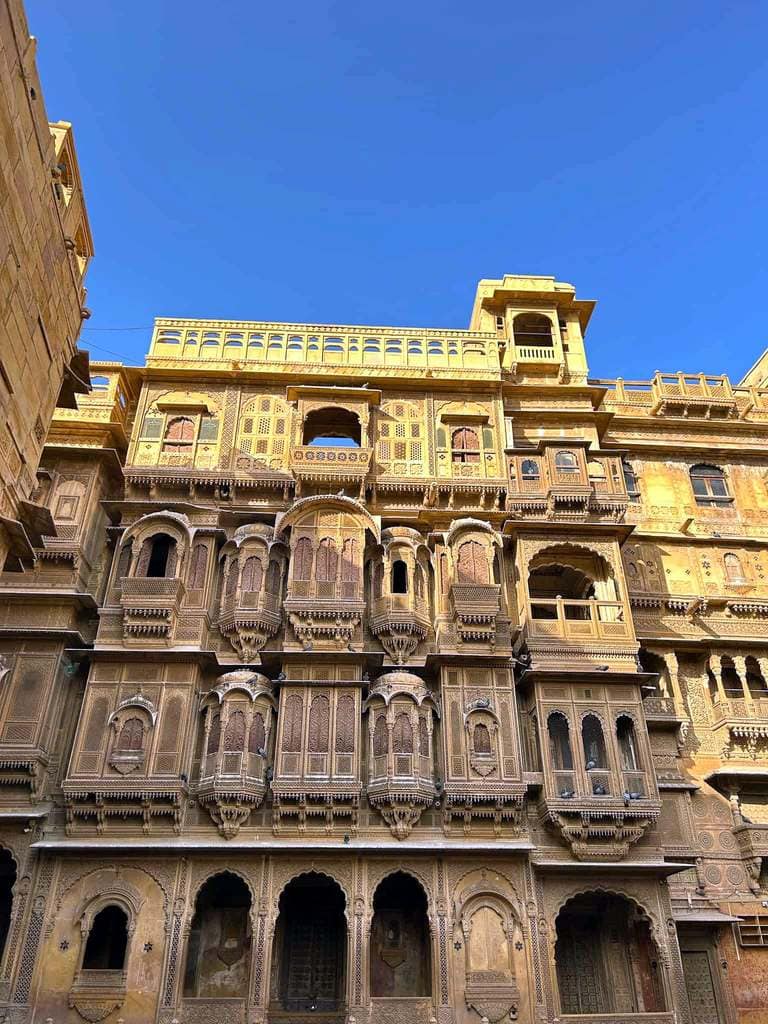
Just outside the fort is Patwon Ki Haveli, a complex of five havelis built over 200 years ago by a wealthy Jain merchant for his five sons. The facade as a whole is among the most impressive examples of sandstone craftsmanship you’ll see anywhere in Rajasthan, and you’ll find plenty of people posing for pictures outside.
It’s worth going inside too; there is a museum showcasing artefacts from Jaisalmer and beyond, as well as a great display of how upper-class merchants lived in this area. The rooftop also gives you a great view back up to the fort looming above the city.
Cafe The Kaku
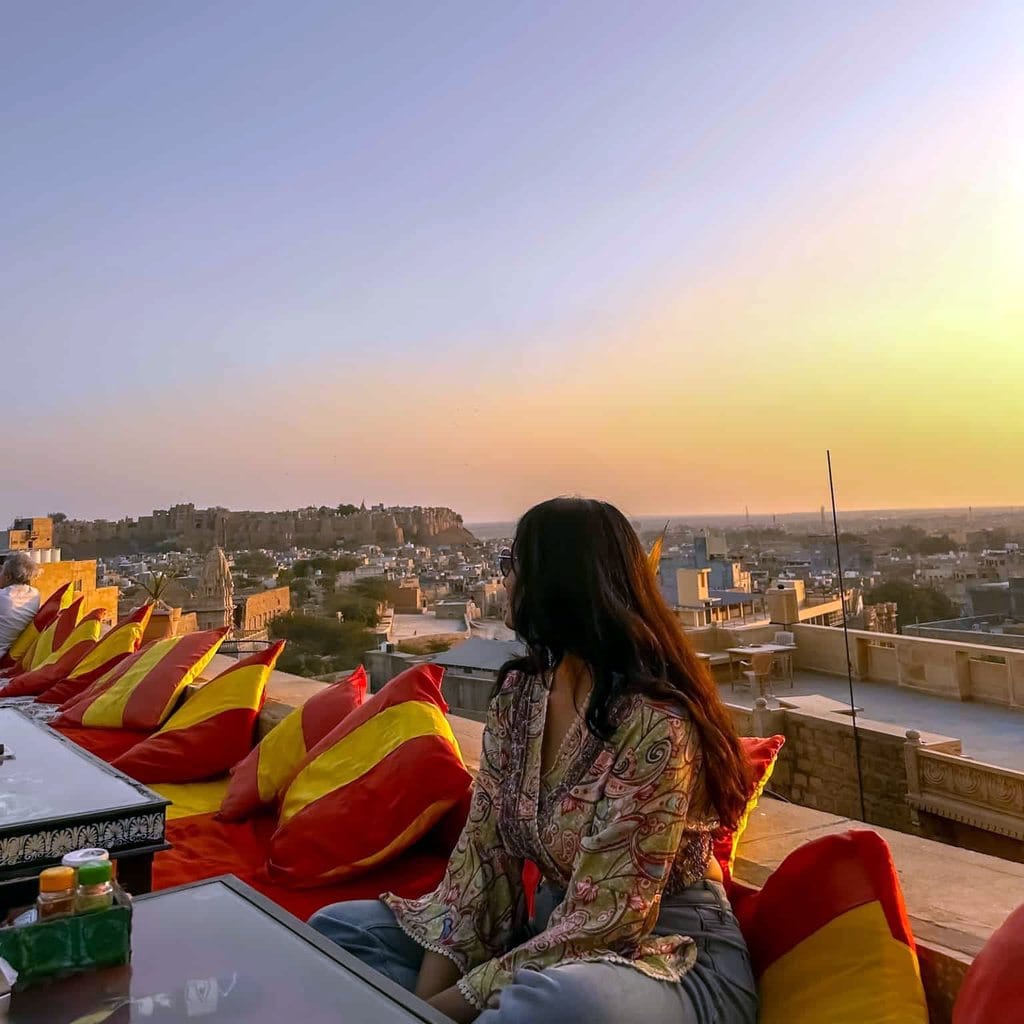
For the best views of the fort, head to Cafe The Kaku on the outskirts of the city. It takes a little finding, but it is absolutely worth the effort. The panoramic views over the rooftops and up to the fort are unmatched anywhere in the city, and at sunset, when the sandstone turns that deep honey gold, it’s really something.
Grab a drink, find a seat and take in the golden hour views. After hours of exploring in the daytime heat, the chance to take the weight off your feet and relax with this view as a backdrop feels perfect.
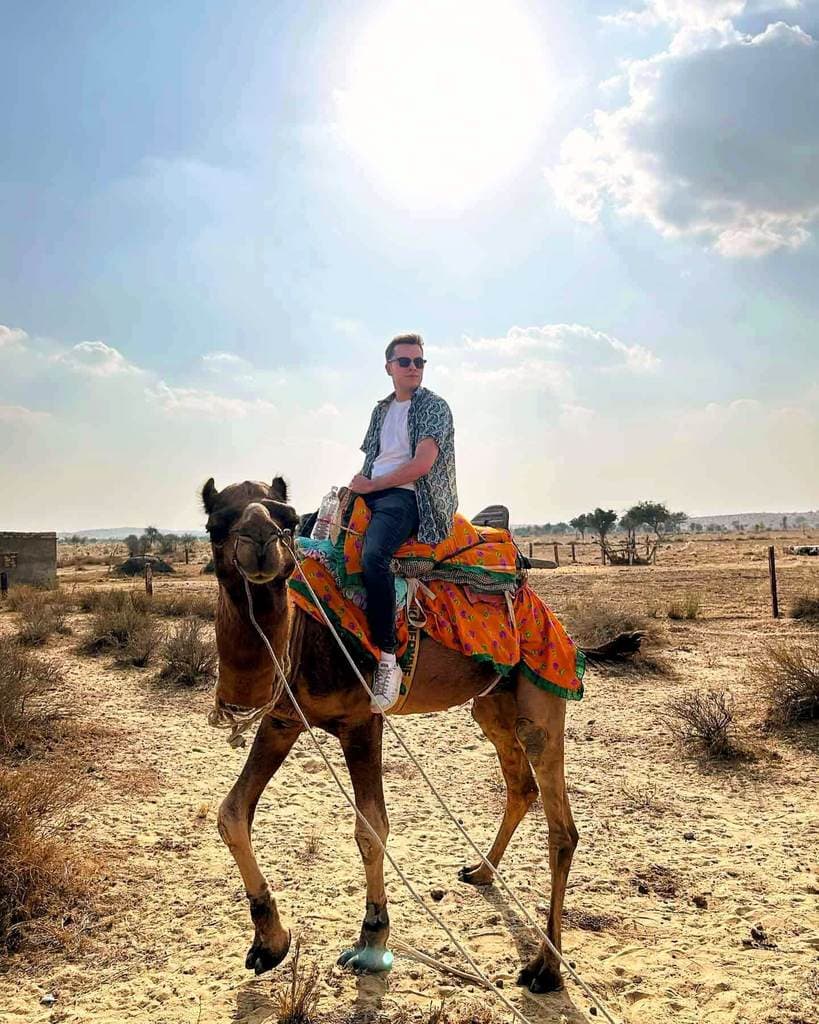
Thar Desert and Camel Safari
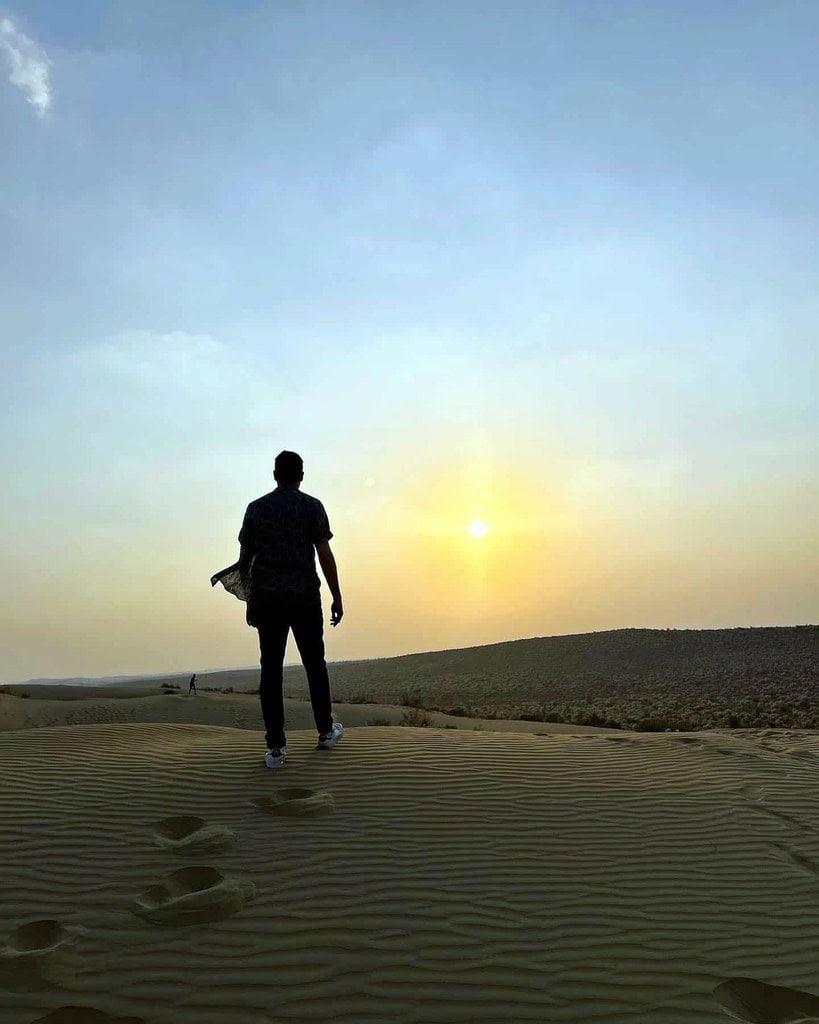
If anything competes with the fort itself for the highlight of a trip to Jaisalmer, it’s the desert. The Thar is right on the doorstep and feels like a completely different world, vast, silent, and surprisingly cold once the sun goes down.
Riding a camel out into the dunes and sleeping under a sky full of stars with zero light pollution is something you can do in very few places and feels very special. You can read our full Jaisalmer desert safari guide for everything you need to know before you go.
Rajasthan also has some of India’s best wildlife — Ranthambore National Park is a full-day trip from Jaipur on the way to or from Jaisalmer.
Practical Information for Jaisalmer
Getting There
Jaisalmer is quite isolated out in the far west of Rajasthan, but there are two main ways of getting there:
- Plane: Jaisalmer airport is only around 30 minutes from the fort and has daily flights from major Indian cities such as Mumbai, Delhi and nearby Jaipur
- Train: Overnight trains are available from Jaipur and Jodhpur, making it an easy and both cost and time-effective alternative to flying.
We always prefer overnight trains as it saves a night’s accommodation cost, and it’s always fun to fall asleep in one city and wake up in another.
You can read our guide to booking and travelling on Indian trains for helpful and practical tips.
What to Wear
As a desert city, Jaisalmer gets very hot in the daytime and can get quite cold at night, especially in winter.
In the daytime wear loose light clothing to keep cool. Make sure to keep your shoulders and knees covered if accessing the Jain Temples or any other religious places in the fort and city.
If you are going on a desert safari, make sure to take a hat and stay out of the sun in the midday heat as much as possible.
At night, temperatures will drop quickly once the sun sets, so don’t get caught out and take a warm jumper or similar out with you when going for dinner.
When to Go and How Long to Spend
The best time to visit Jaisalmer and its fort is in the Indian winter from November to February. In this time, you’ll get no rain and temperatures, despite still being hot, are more manageable than in spring or summer. Because of this, it’s also the busiest time, so book your accommodation in advance.
2 days are good enough for seeing the full of Jaisalmer. One day to explore the wonders of the Fort, including its walls, gates and temples and the rest of the city. The second day is to explore the surrounding Thar desert, whether on an overnight camel safari or just a short daytime trip.
If you’re able to stand the heat, you could take a tuk tuk tour with the driver taking you to all the important locations in the city. Entry fees aren’t included, but experiencing the city as a local is an experience in itself. Find out more here.
Final Thoughts on Jaisalmer Fort
Jaisalmer Fort is a must-see when visiting Rajasthan. Despite the state having an abundance of forts, Jaisalmer is unique for being India’s only living fort and for its incredible sandstone architecture blending so well with its desert surroundings.
What sets it apart from every other fort in Rajasthan is that it hasn’t been frozen in time. Life has continued inside these walls for nearly 900 years. That’s what you feel when you walk through Hawa Pol and the city opens up around you, and it’s what stays with you long after you leave.
About the Author: Ben from Beyond Both Shores
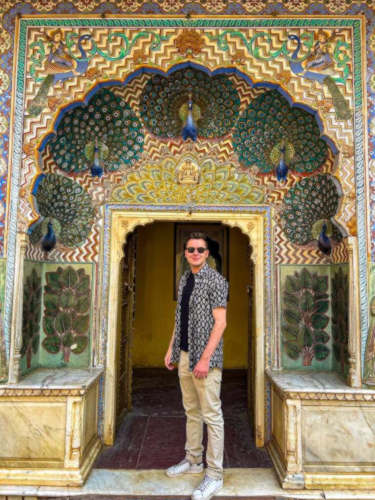
Ben Cross is a British travel writer and with his partner Poorva Sinha, a co-founder of Beyond Both Shores, a travel blog for independent travellers run by a British-Indian couple based in London. He has travelled to 16 countries and to India four times, spending over 60 days across Rajasthan, Kerala and Goa, and writes detailed itineraries and practical guides to help first-time visitors plan with confidence. You can find more of his India travel guides as well as other content at BeyondBothShores.com. You can follow Ben on Pinterest and Instagram.
Other Posts You Might Like
- Kumbhalgarh Fort, Rajasthan
- What to Do in Mumbai / Bombay
- Ranthambore National Park
- What to Eat in Delhi
- Best Indian Street Food