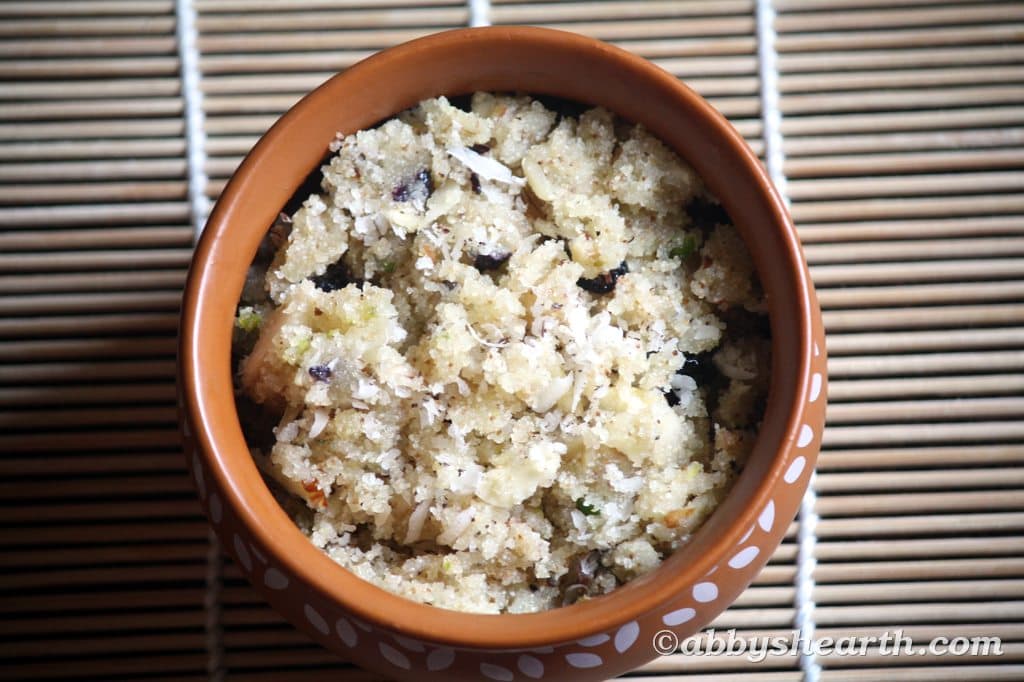
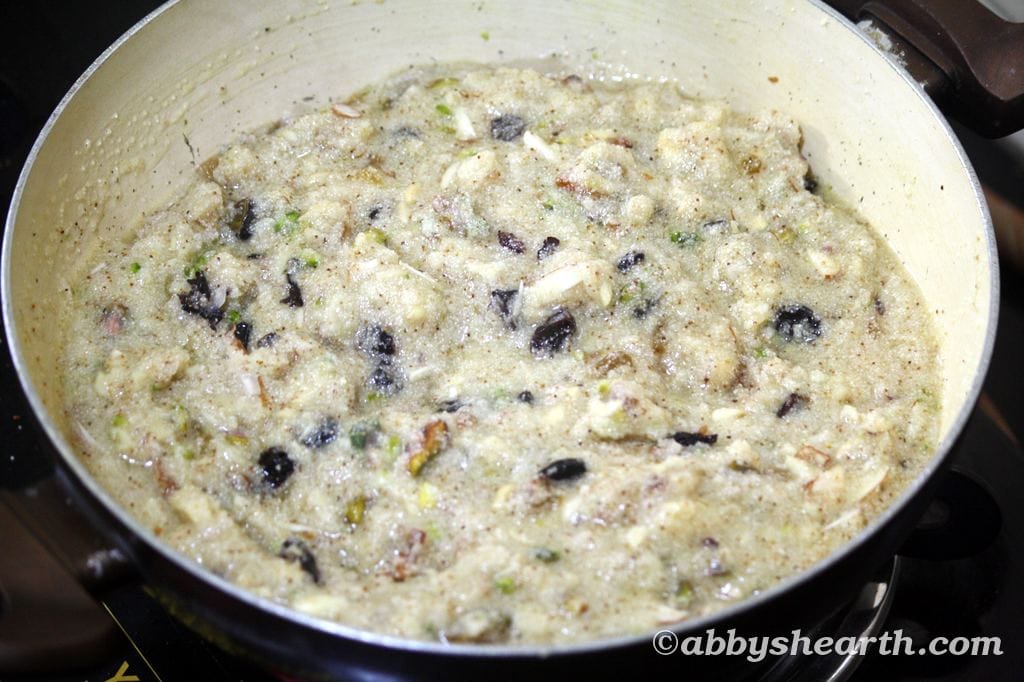
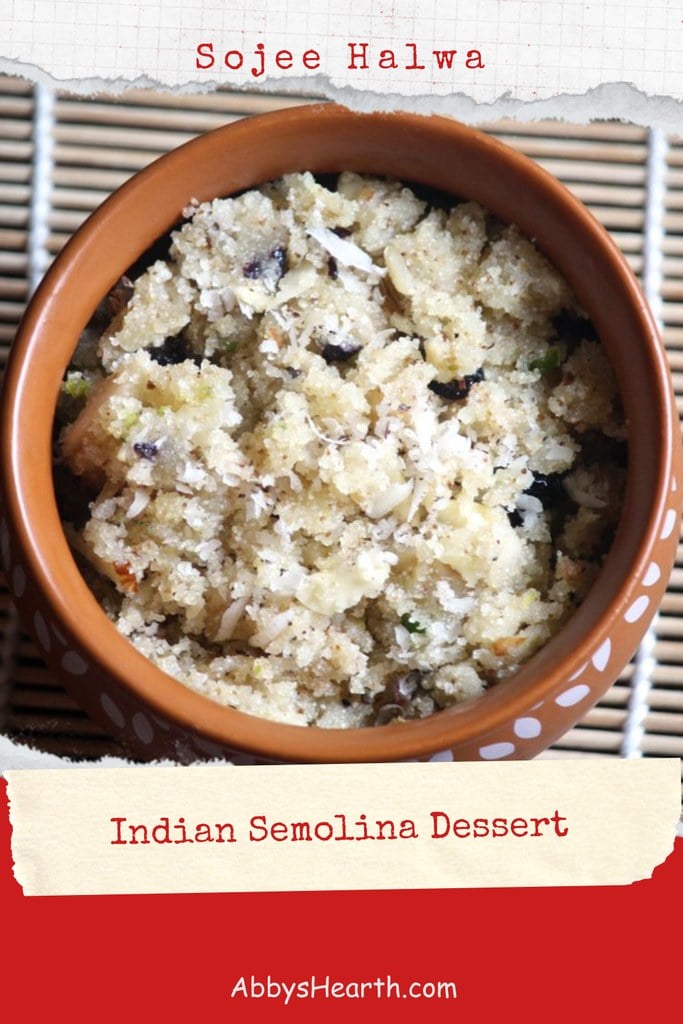
This sojee halwa is my mom’s version of the classic Indian sooji halwa — semolina fried in ghee, then finished in a sugar syrup with cashews, almonds, pistachios and raisins, and topped with coconut. It’s soft and spoonable, meant to be eaten warm with a spoon, not cut into pieces. Mom used to make it as tea time snack that we kids enjoyed on cold rainy days after coming home from school. It was perfect back then, and still is now.
If you’re looking for the East Indian Christmas version instead — the one set into pieces, colored green, and cut into diamonds — that’s a different recipe on the site: Sojee Sweet.
Mom’s version of Sojee Halwa
My mom’s version uses noticeably less ghee than most Indian sooji halwa recipes call for, which keeps it from feeling heavy. She also makes it with a sugar syrup rather than milk — that’s the version I grew up preferring.
My siblings actually prefer the milk-based version of this same halwa, which simply requires you to substitute the water with milk, and instead of making a mel, you cook the sugar and milk with the sooji/semolina so that it gets fuller. Fuller meaning, the semolina absorbs the milk and swells a bit more than it does with the water. It’s worth knowing there are two family camps on this one.
Getting the Texture Right
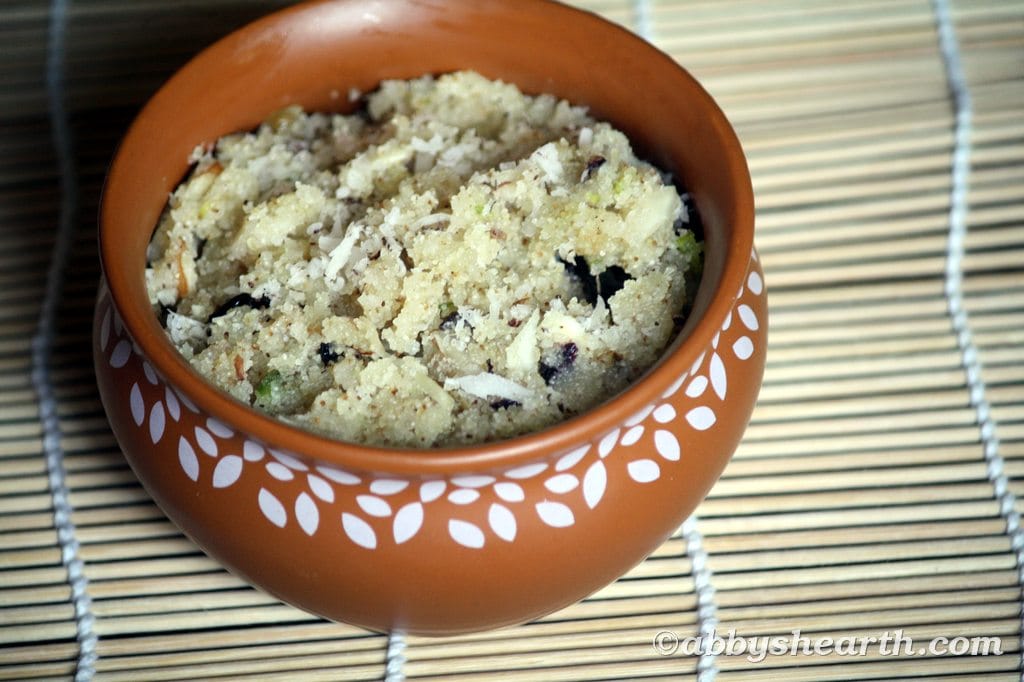
The two-stage cooking is what gives this halwa its texture: frying the semolina and toasting the nuts separately first, then bringing everything together in the sugar syrup at the end. Frying the semolina on a medium flame in ghee — 8 to 10 minutes, until it smells nutty — is what keeps the finished halwa from turning gluey once the syrup goes in.
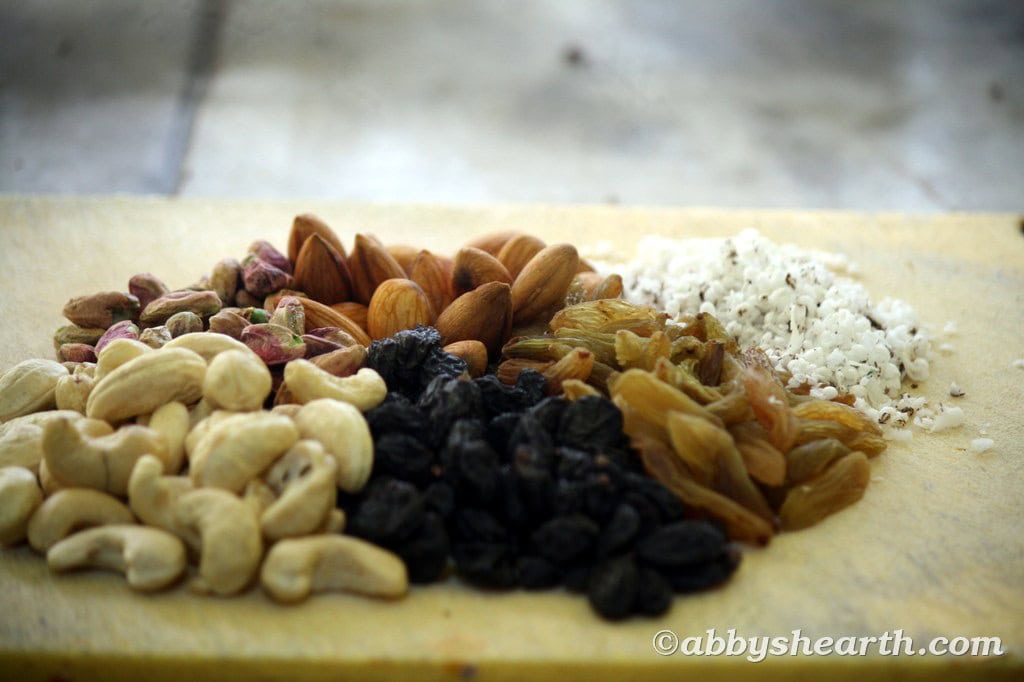
The richness comes from the nuts and raisins, but these are non-essential items. You can add as little or as much as you want.
A Note on “Dekshispoon”
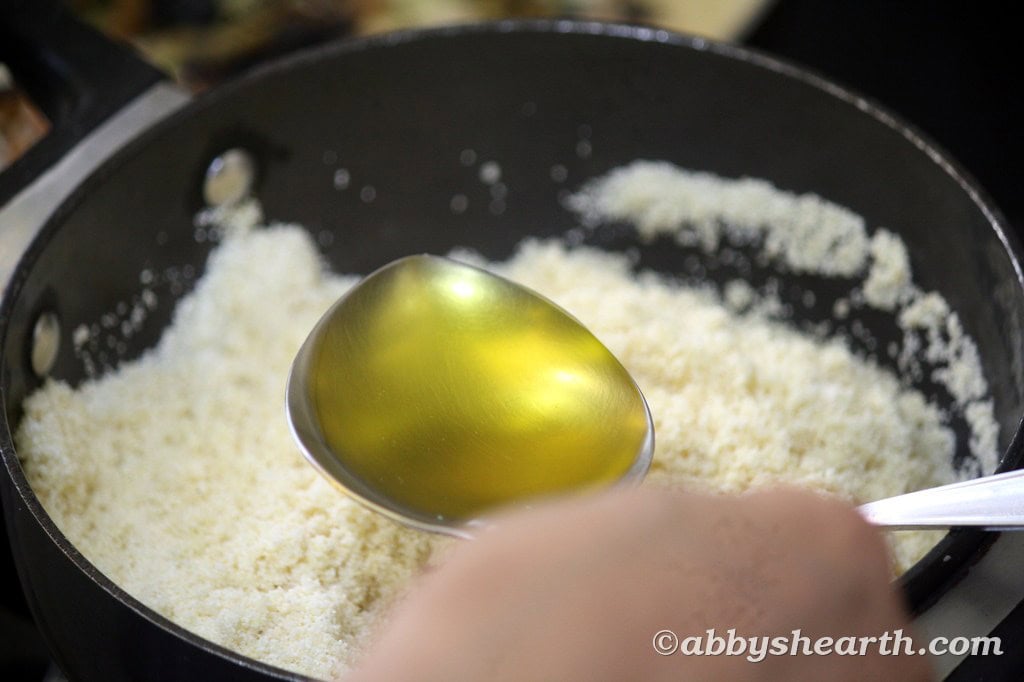
The ghee in this recipe is measured in a bigger spoon than a standard tablespoon — we East Indians call it a dekshispoon at home. So if you don’t have a dekshispoon, don’t worry. We’ve measured it out for you. You can use 2.5 regular tablespoons of ghee to make up that 1 dekshispoon.
See the Steps to Make a Sojee Halwa
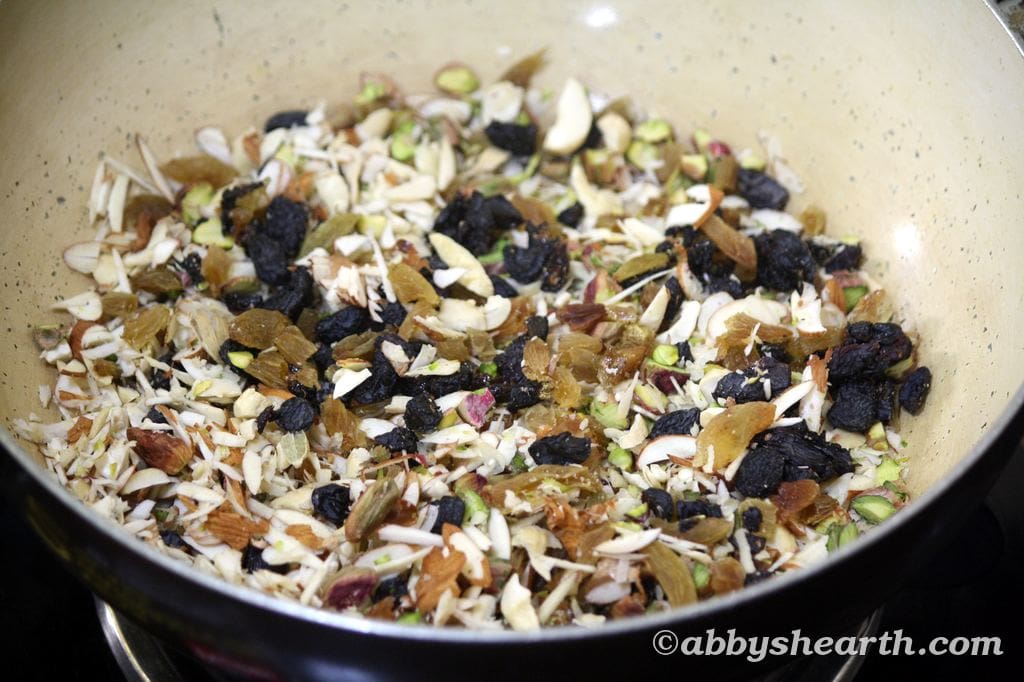
The recipe is simple, although it takes multiple pots to cook. Start by roughly chopping the nuts into any shapes you prefer – lengthwise, fine or chunky. Lightly toast them in a pot for a few minutes and set aside. (Or toast them after the semolina – that works too!)
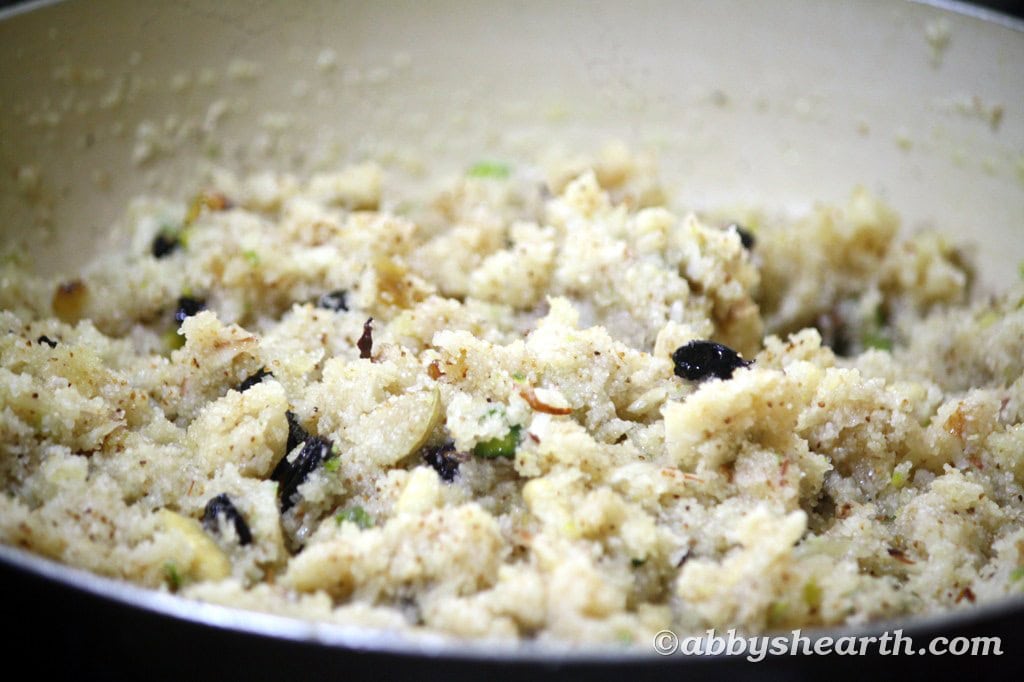
Now fry the semolina with ghee for about 8 to 10 minutes till you get that nutty aroma. Once that’s done add the toasted nuts in and stir fry for about a minute.
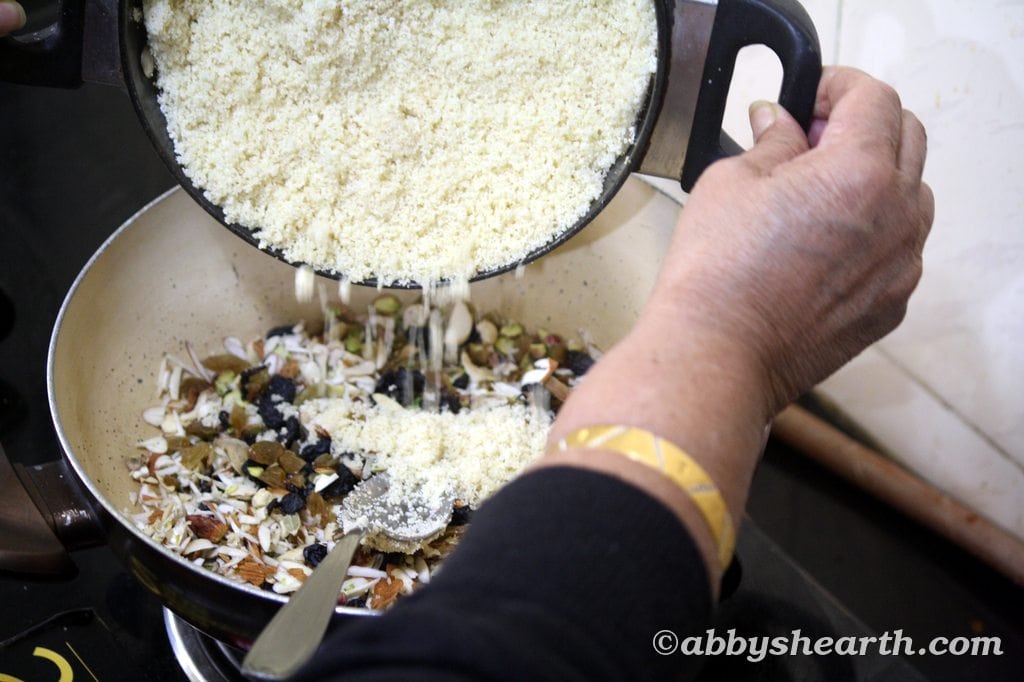
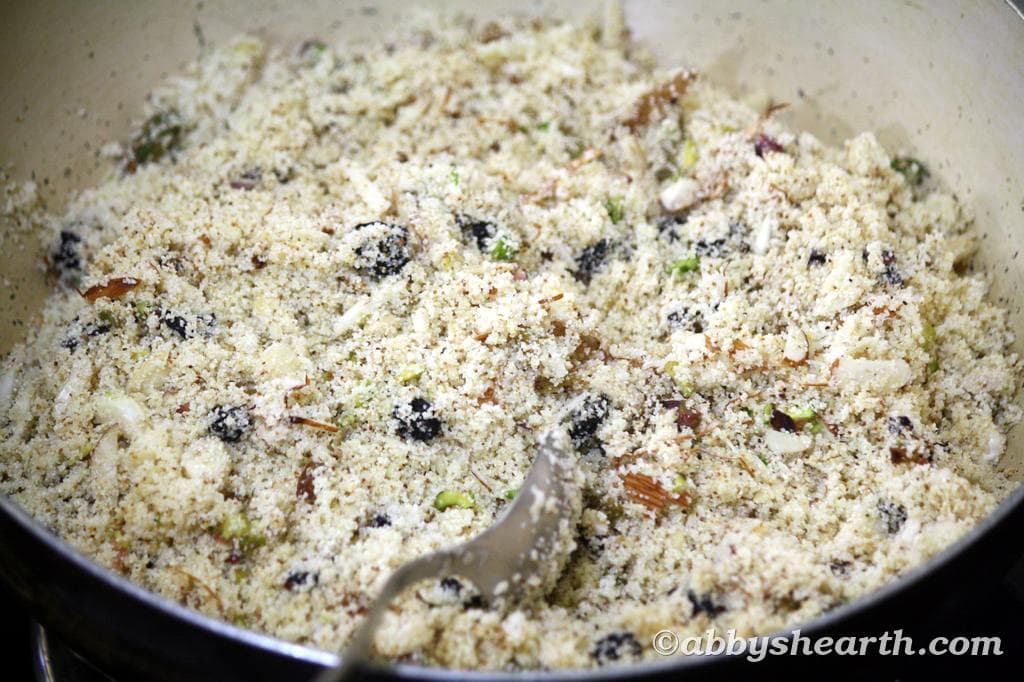
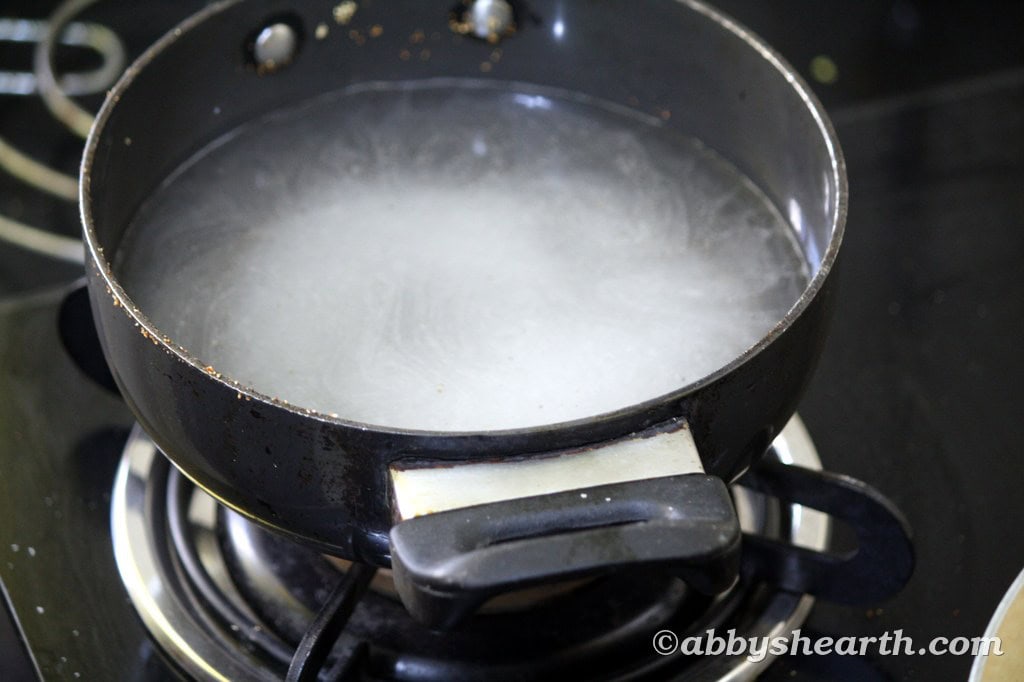
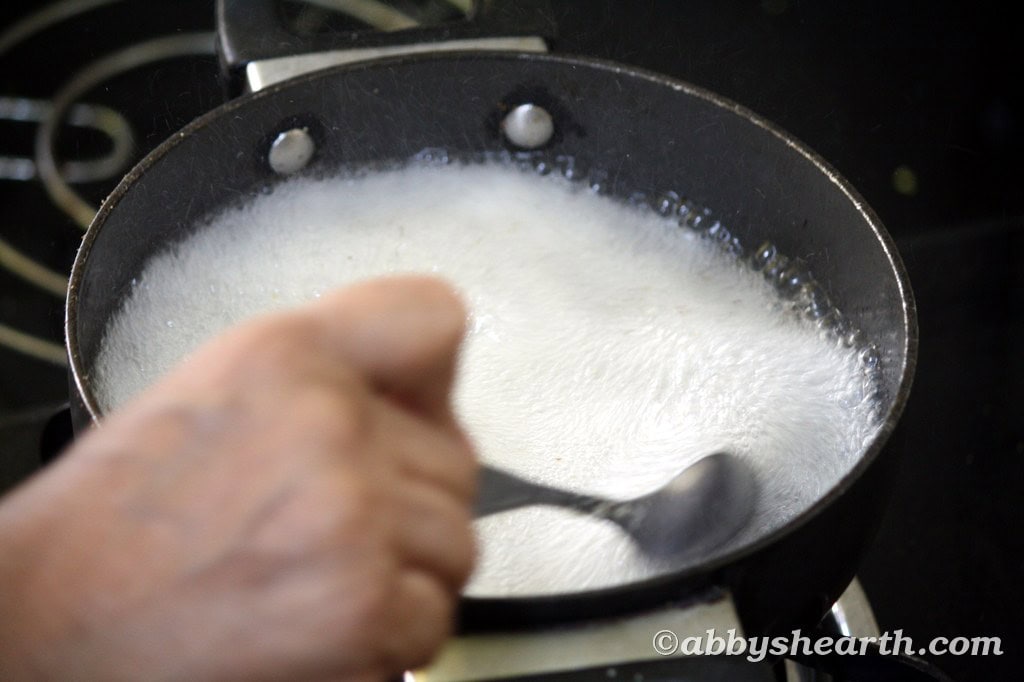
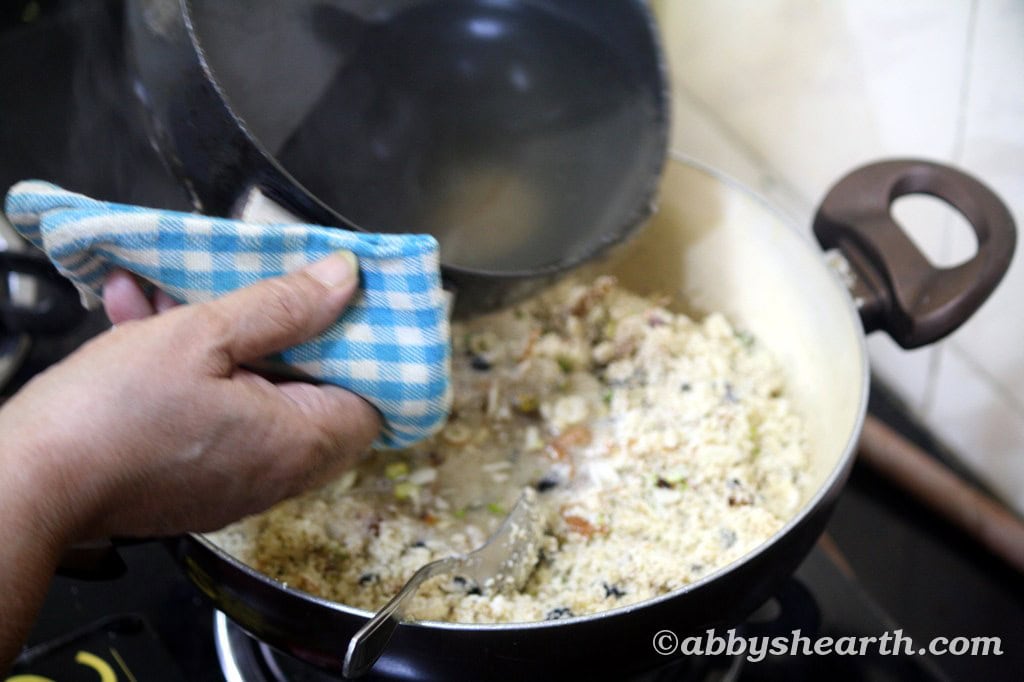
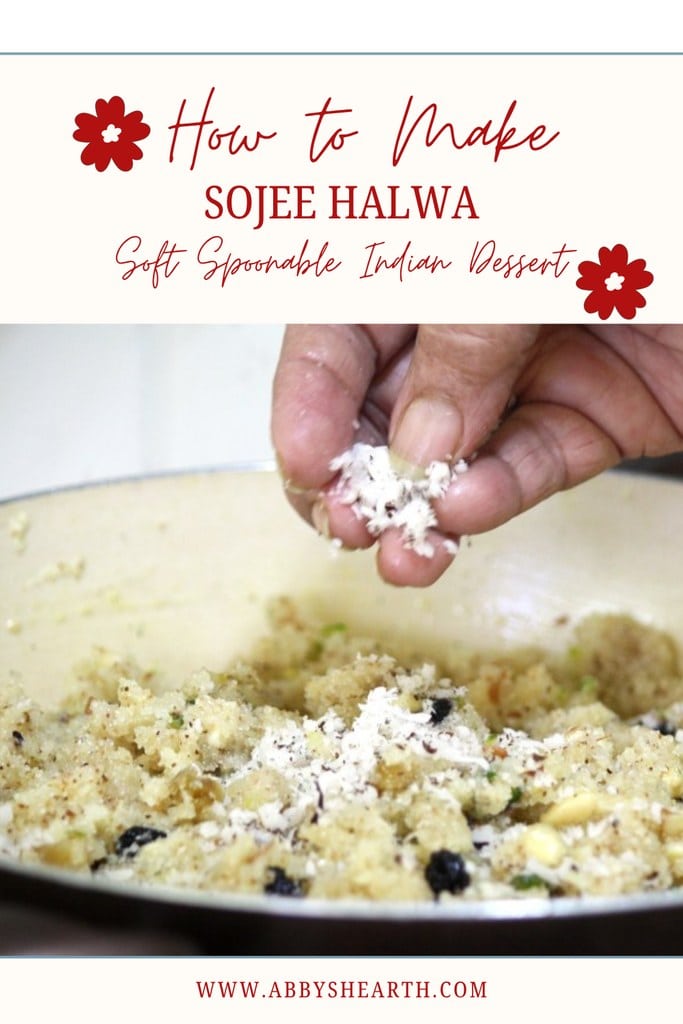
In another pot, boil sugar and water and create a mel. This mel once ready gets added to the semolina and once the entire mixture blends together you have a yummy spoonable sooji halwa. Of course, if you’re my siblings, you’ll use milk instead of water in the sugar syrup. Just add grated coconut on top (optional) and serve hot or warm. Perfect for rainy days or tea time! Perfect for dessert too!
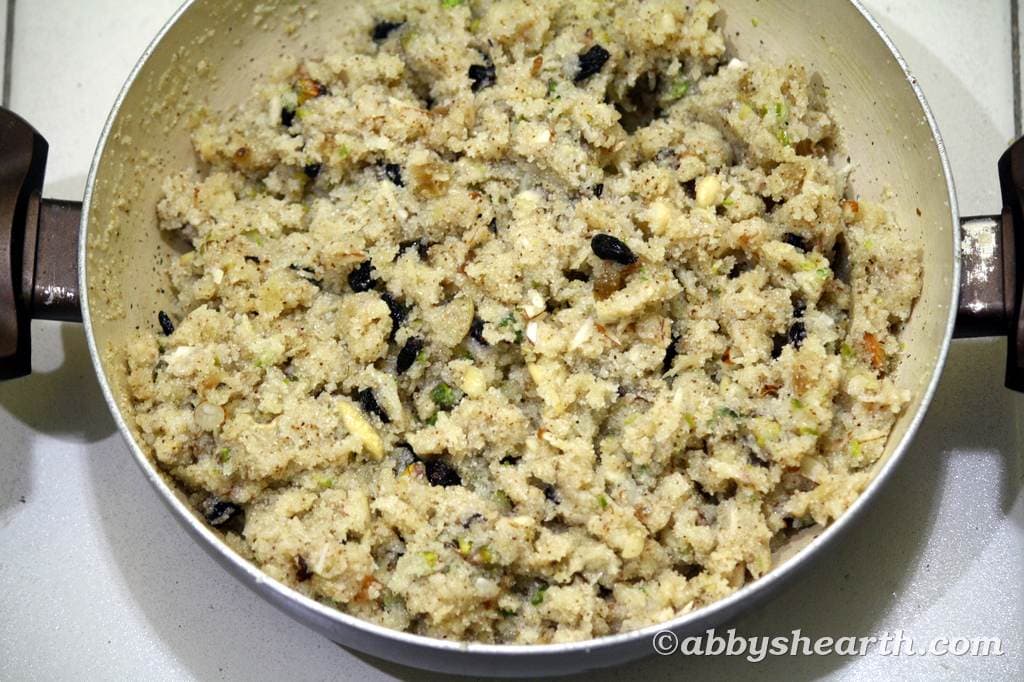
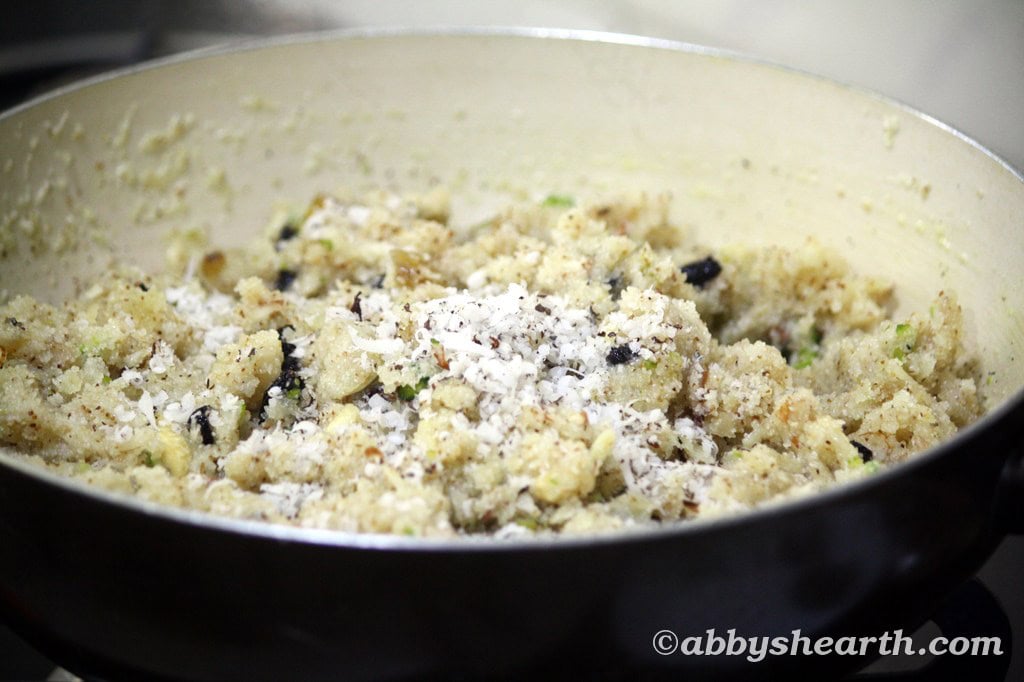
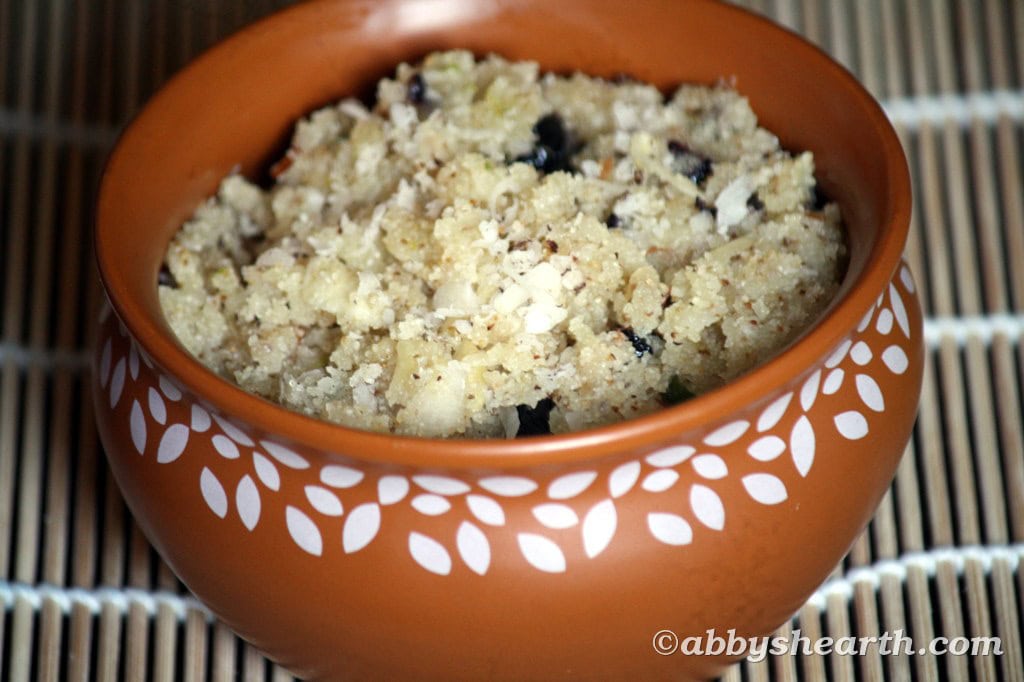
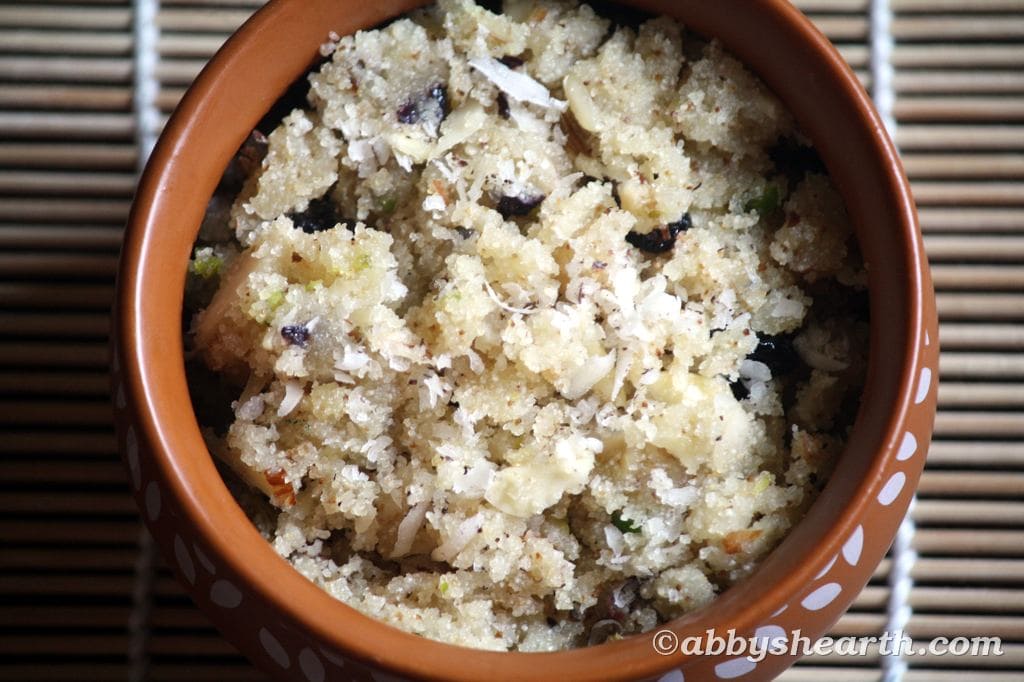
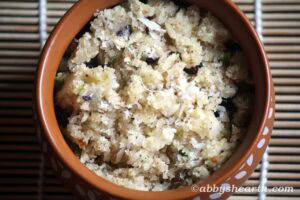
Sojee Halwa (Soft Semolina Halwa)
Click the stars to add your rating! Left you don’t like it, right you love it!


Ingredients
- 3 Tablespoons Cashew Nuts
- 3 Tablespoons Almonds
- 2 Tablespoons Pistachios
- 2 Tablespoons Black Currants
- 2 Tablespoons Raisins
- 1 Tablespoon Coconut (Grated)
- 500 grams Sojee Semolina
- 2.5 Tablespoons Ghee (Indian clarified butter) 1 Dekshispoon
- 350 grams Sugar
- 750 millilitres Water
Instructions
- Roughly chop the cashews, almonds, pistachios, currants and raisins into small pieces and set aside.
- In a pot, fry the sojee (semolina) in the ghee until it smells fragrant and nutty, for about 8 to 10 minutes.
- Once fried, remove the sojee onto a steel plate or into a smaller pot and set aside.
- In the same pan, heat the chopped nuts, currants and raisins for 2 minutes — this gives the nuts a nice crunch.
- Add the sojee back to the pan and cook together with the nuts for about a minute.
- In another pot, mix the sugar and water and bring to a boil. Let it thicken for 10 minutes.
- Add the cooked sojee and nut mixture to the sugar syrup and stir-fry for 5 minutes. (Depending on the size of your pots, you can add the sugar syrup to the sojee mix.)
- Sprinkle with grated coconut and serve hot or warm.
Please click to rate the recipe! Left you don’t like it, right you love it!
Nutrition (Per Serving)
Disclaimer: Nutrition Information per serving is estimated by a third party software based on the ingredients used, and is for informational purposes only. It will vary from product to product, based on methods of preparation, origin and freshness of ingredients. Please consult the package labels of the ingredients you use, or chat with your dietician for specific details.
This printable recipe card is for home use only. For more recipes head over to AbbysHearth.comFAQs
Is this the same as your East Indian Sojee Sweet?
No — that’s a different recipe. Sojee Sweet is the East Indian Christmas version: cooked with a sugar mel, colored green, set flat and cut into diamond pieces. This one is soft, made with more nuts, and eaten warm with a spoon.
What is a dekshispoon?
It’s the bigger serving spoon we cook with at home. For this recipe, 1 dekshispoon of ghee measures as 2.5 regular tablespoons.
Can I make this with milk instead of sugar syrup?
Yes, you can. That’s actually the version my siblings prefer. If you want that version, simply skip making the sugar mel; and add the sugar and milk to the pot of sojee itself.
Other Posts You Might Like
- Sojee Sweet (East Indian Christmas pieces version)
- Khajur Dry Fruit Barfi recipe
- Sugar-Free Anjeer Barfi recipe
- Custard powder halwa
- Different Halwa recipes
Heya, I’m Abby! I’m a Gourmand Award-winning cookbook author and East Indian from Bombay, India. This blog is all about faith, food, and culture – from East Indian recipes to home, DIY, and spending time in the Word. Find out more about me here!