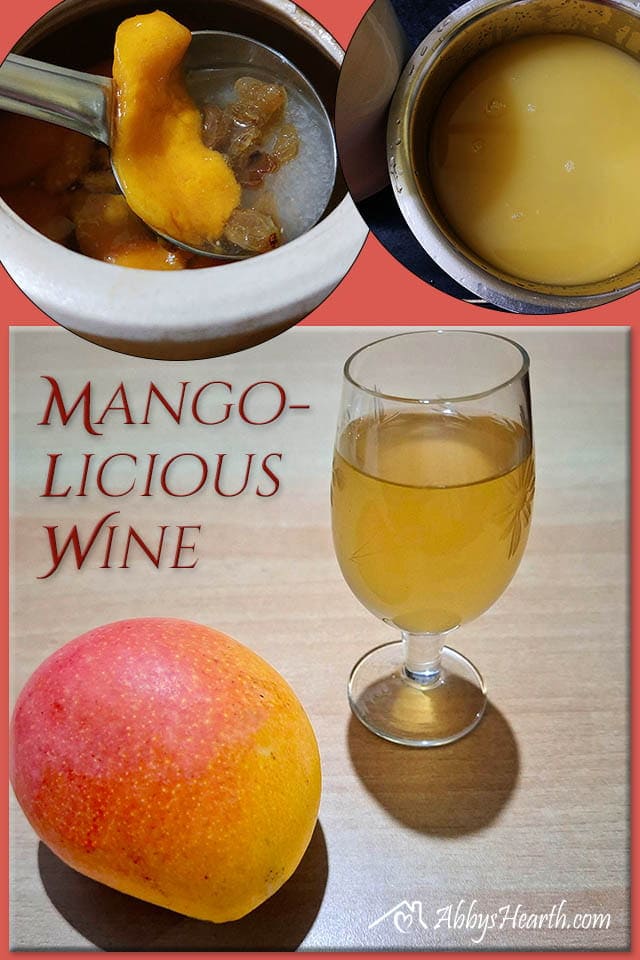
This recipe is from back when summer was still here. Mangoes that didn’t go in the ice cream or mango cheesecake would find their way to the refrigerator after a few weeks. And if they get forgotten a bit longer, they’re fair game. I’d take these mangoes, scoop out the pulp and add it to the barni for wine.
There’s something so simple about turning a single ripe mango into a bottle of homemade wine. Like every wine on this site, this one is also made completely from scratch at home — no wine base, no shortcuts, just fruit, sugar, water, and time doing the work.
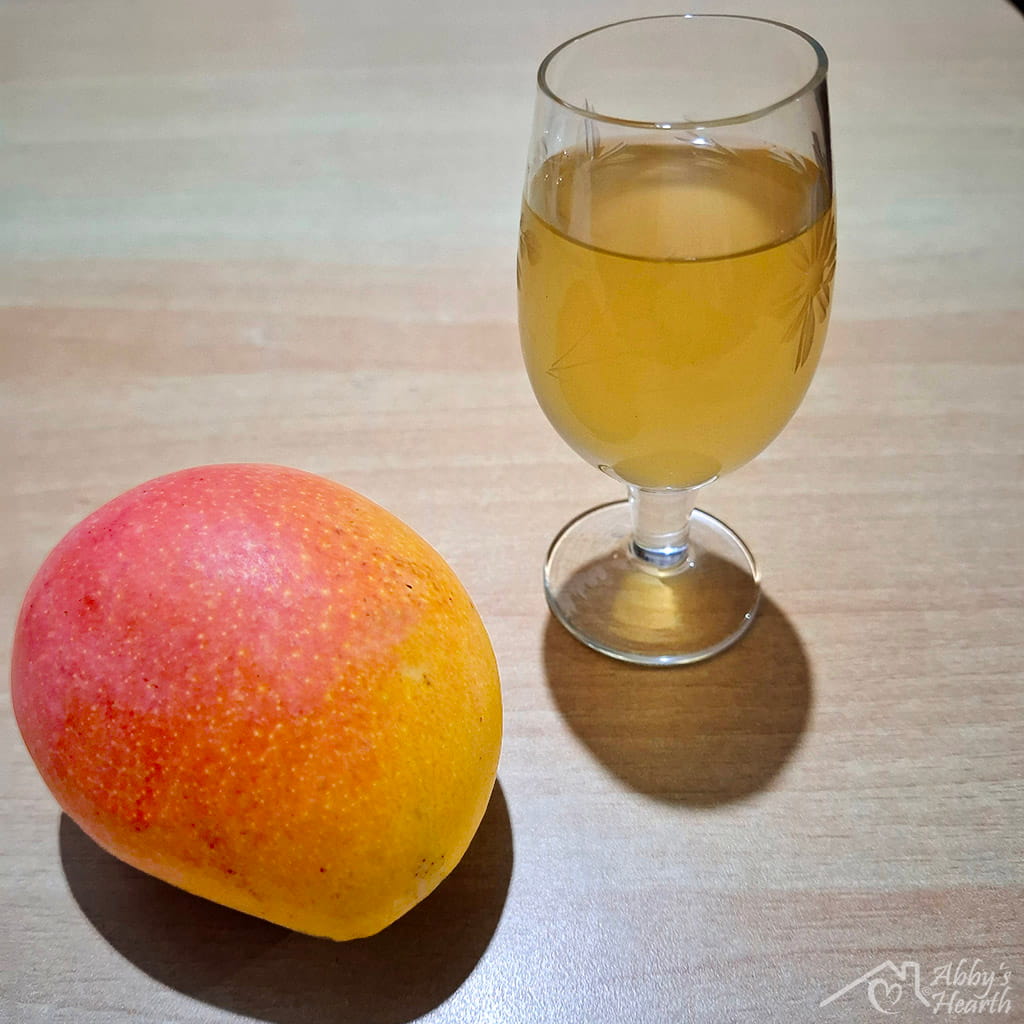
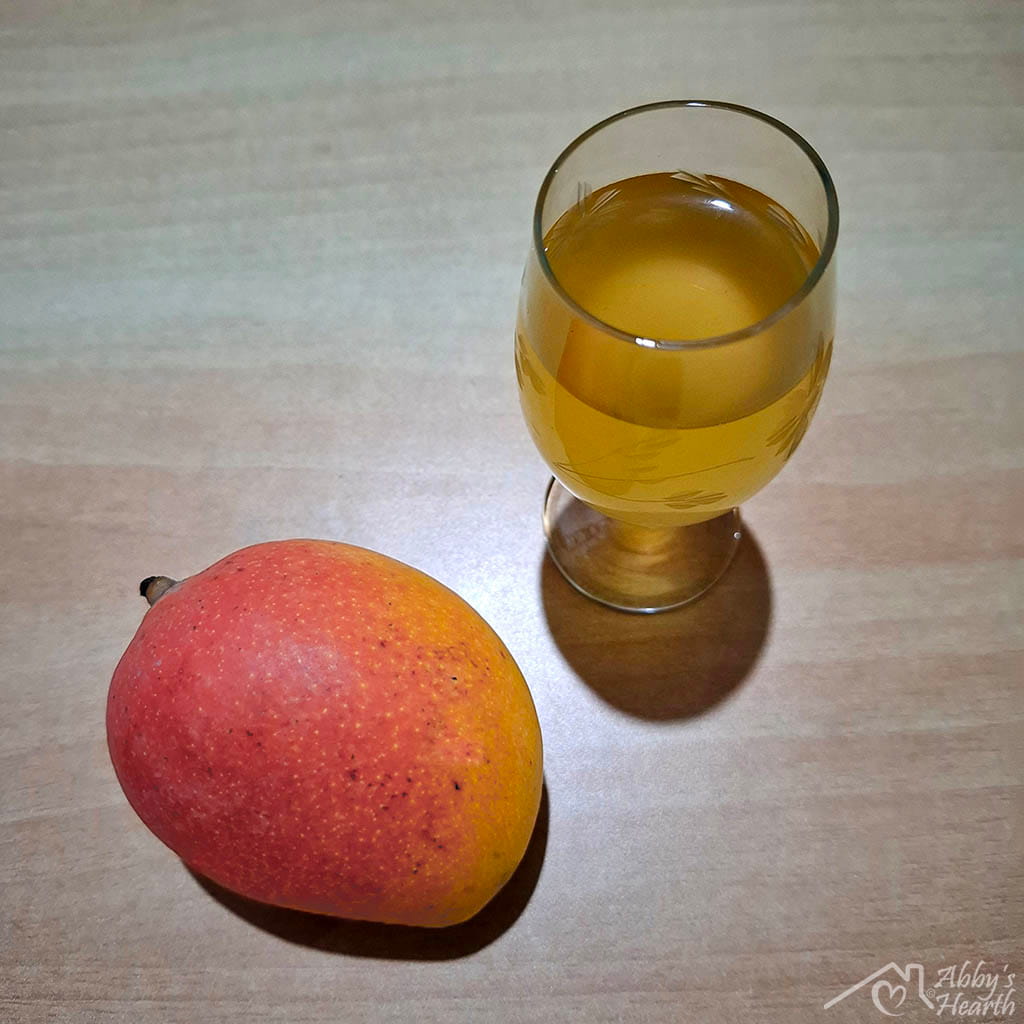
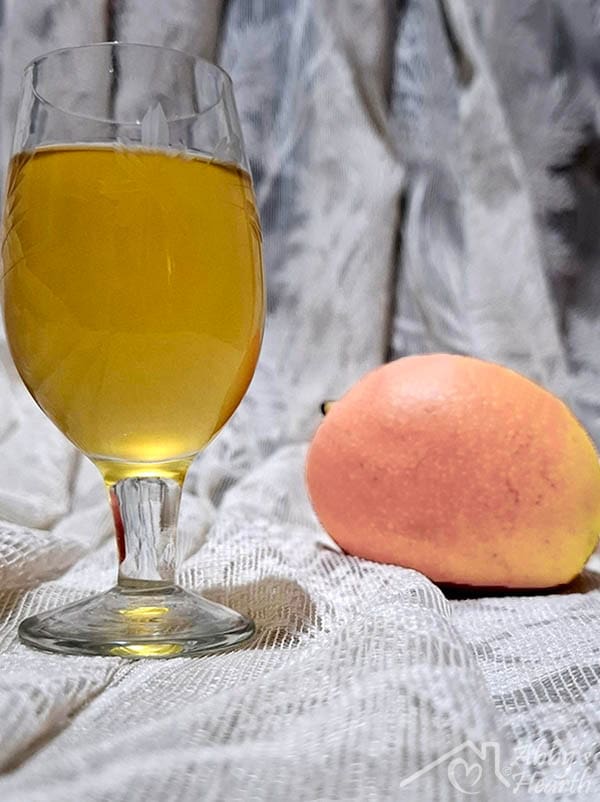
The mango wine recipe follows the same basic method as my ginger wine and potato wine — ferment for seven to ten days, then strain and bottle. But the mango gives the wine its own character: fruity, a little tropical, and a lovely golden colour once it’s strained. It actually reminds me of the bottles of mango flavored soft drink called Rasna that mom used to make when we were kids. There were other flavors too, kala khata, orange, etc, but mango Rasna was the best bit of summer.
Anyway, if you’re thinking mango wine might be too sweet, note that I’ve only used one mango here; so the flavor is very faint. (We can add more mangoes for a more fruity flavor.)
Sometimes we add a chilli or a squeeze of lemon for a little extra kick or tangy zestiness, so I’ve left both in as optional. This wine can be consumed as soon as it’s ready, or you could let it rest for 3 to 6 months, so that it’s flavor gets really mellow and it turns into a wine you can appreciate.
Ingredients
- 1 kg sugar
- 3 litres water
- 250 grams dried raisins or currants
- 1 tsp yeast
- 1 mango, deseeded and cut into pieces (You can use about 200 ml organic mango pulp instead of fresh mango if you prefer.)
- Optional: 1 chilli, for a bit of heat
- Optional: 1 lemon, for a bit of tangy brightness
How to make Mango Wine at Home
Start by adding the sugar, yeast, raisins and mango pulp to a barni or demijohn. Throw the mango seed out. The pulp can be squeezed by hand or cut into pieces. Either way works.
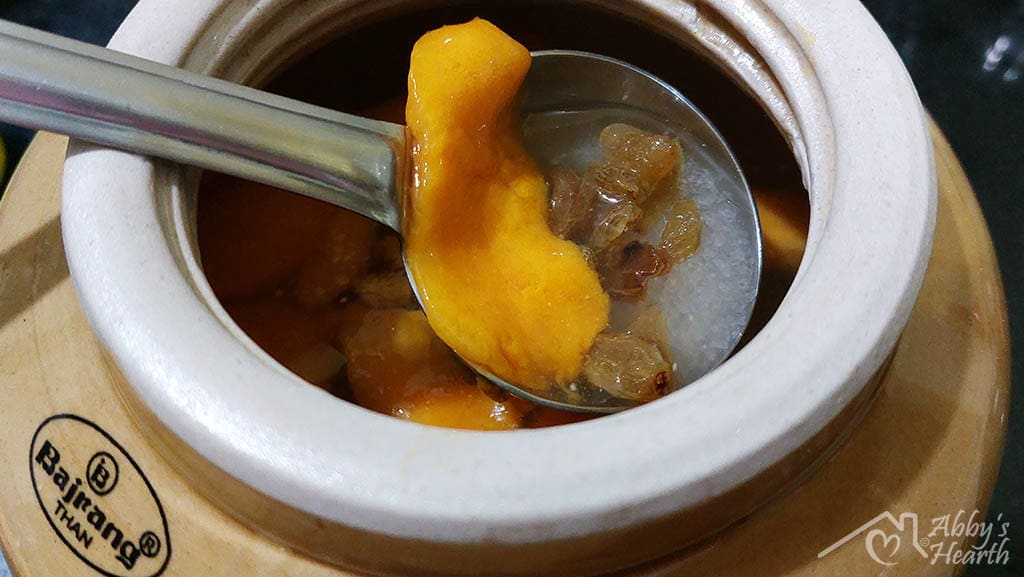
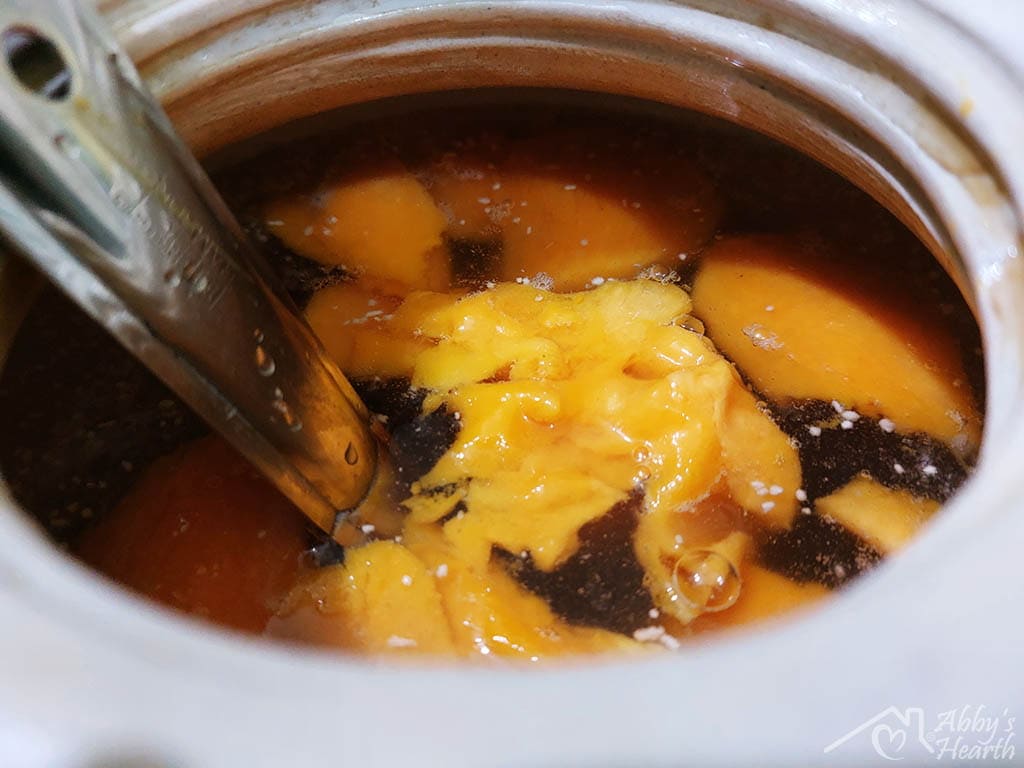
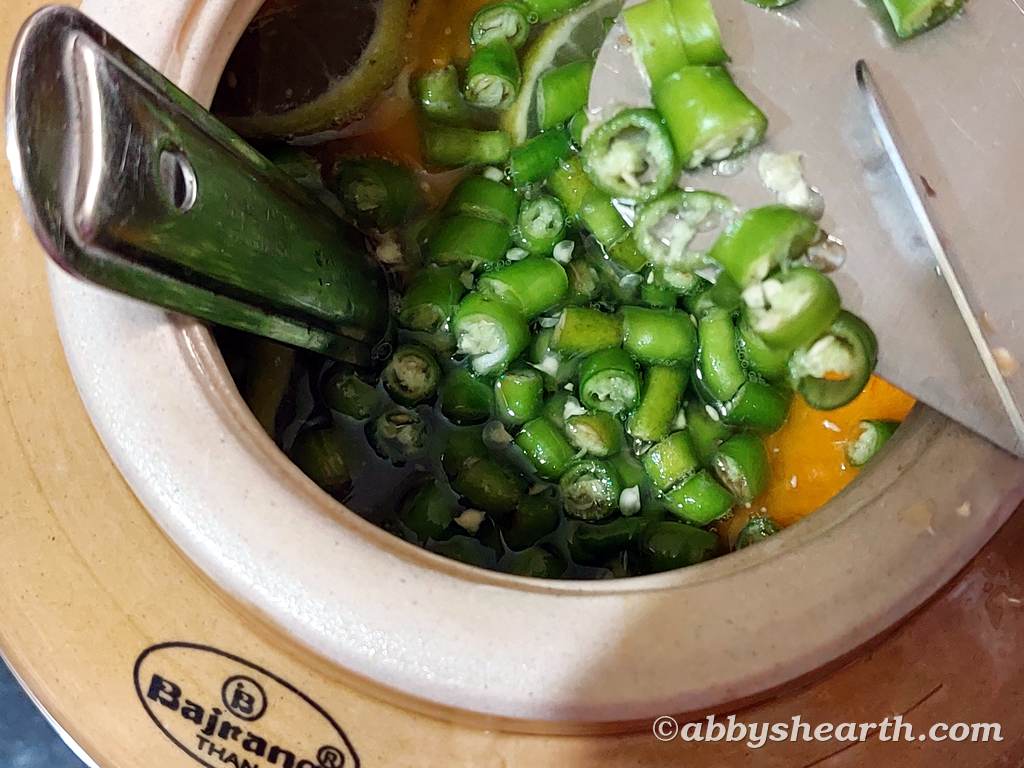
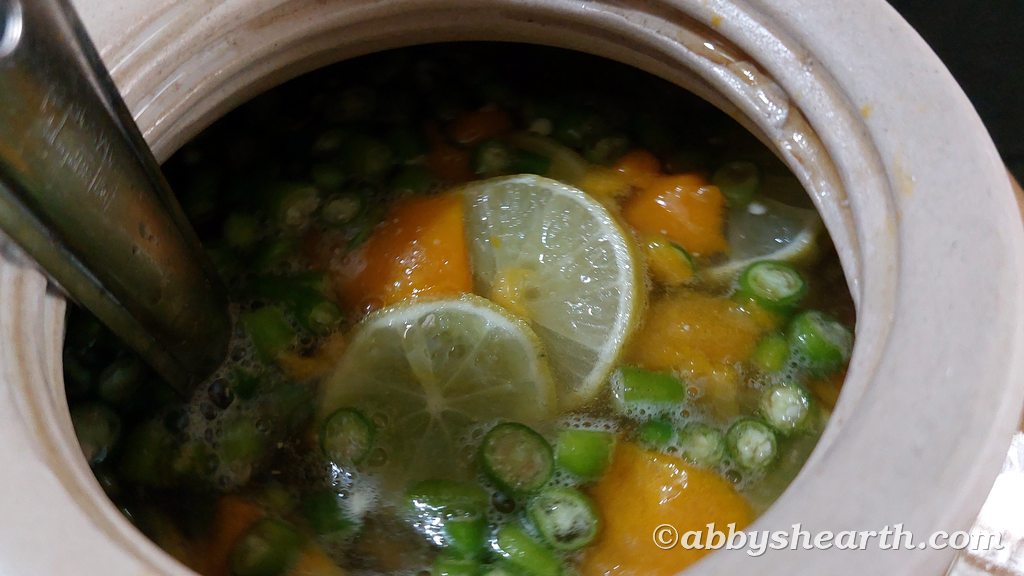
You can also add the optional green or red chilli or lemon juice now. The chillies can be cut or broken into pieces. Cover with about 3 litres of water, and stir well.
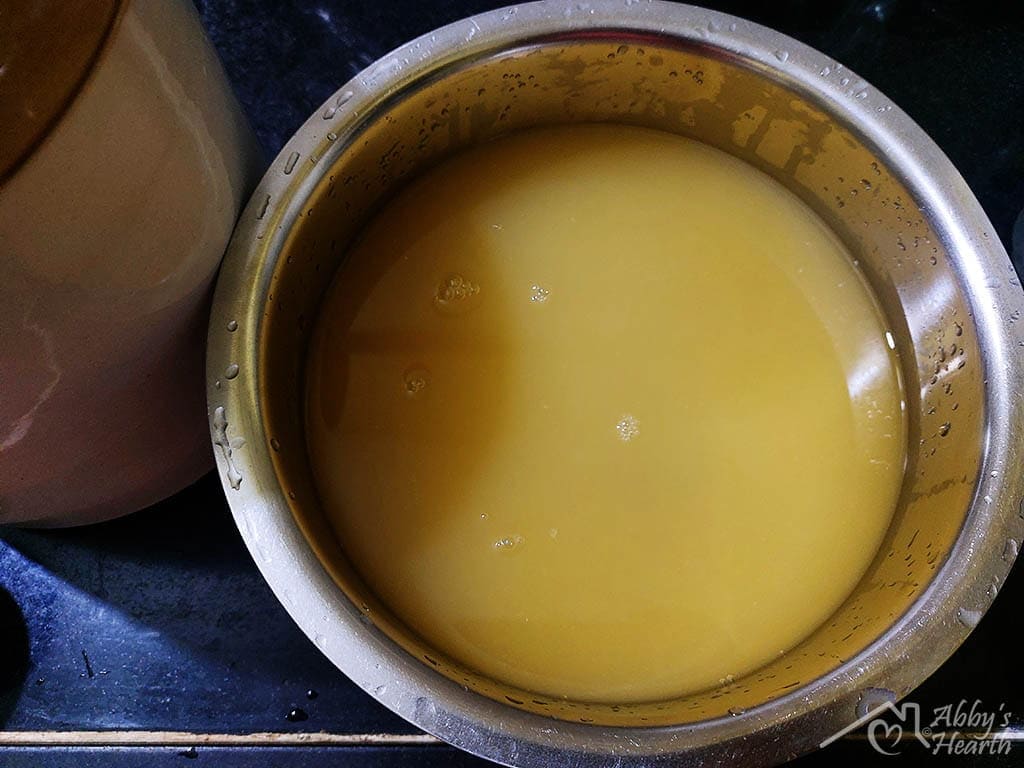
Cover the jar/barni/demijohn with a clean cloth and then loosely with the lid. This allows the CO2 and other fermentation gases to escape.
Stir once a day for one week while it’s fermenting.
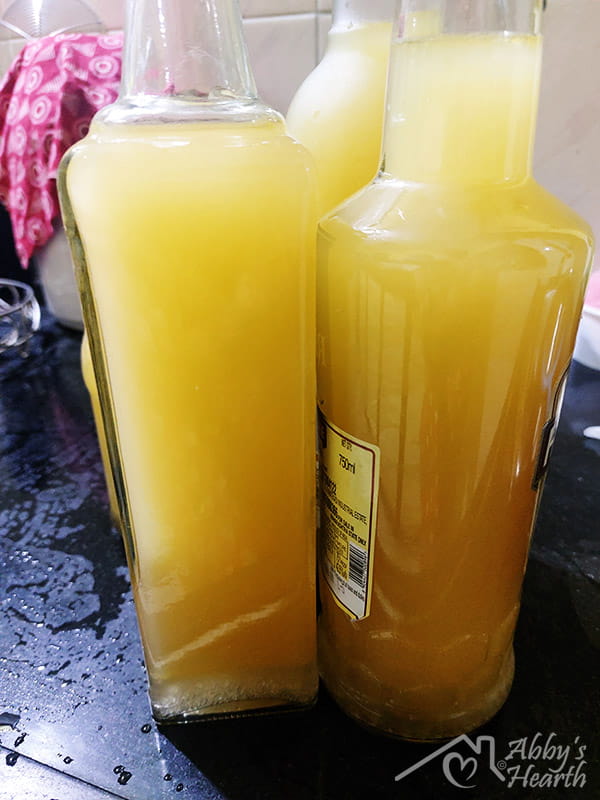
Once the fermentation has slowed and the liquid has turned cloudy, strain out the mango pieces and any sediment, and let it rest for a few days (2 to 3 days). Sometimes we let it rest for a week before bottling.
Notes
- It’s completely normal for homemade mango wine to look cloudy rather than crystal clear for the first few weeks. That’s part of the character of a naturally fermented wine, and it settles more the longer the bottles sit.
- The chilli and lemon are both optional. The wine is lovely on its own, but either one is an easy way to change the flavour up.
FAQ
Can I use this same base for a different fruit?
Yes — this sugar-water-yeast base is the same one I use for raisin wine, pineapple wine, rose petal wine, and black or green grape wine. Swap in the fruit and adjust the quantity to taste.
Why is my mango wine cloudy instead of clear?
Cloudiness is normal in a homemade, unfiltered wine like this. It’s not a sign that anything’s gone wrong. If you leave it alone for a few months, the dregs will settle and the wine will become more clear. But it’s still okay to drink as is.
How strong is homemade mango wine?
We do not measure specific gravity or anything else. And it depends on the fermentation time and conditions, so I can’t give an exact number here.
Can I make this mango wine spicier or zingier?
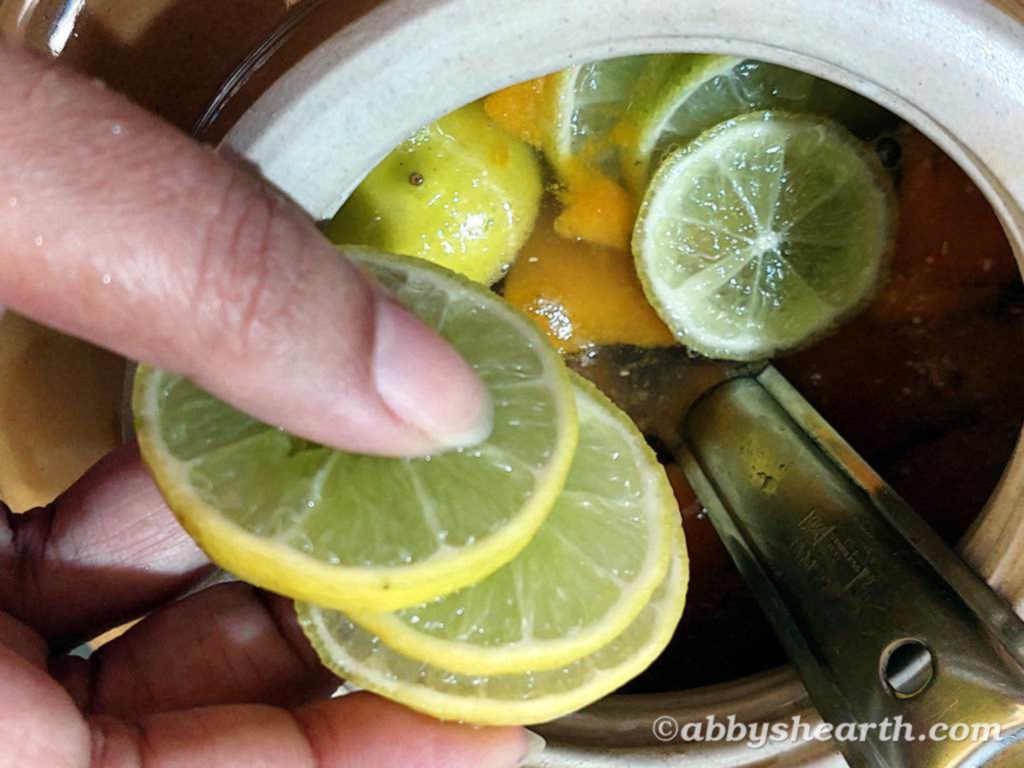
Yes, you can. There are times I’ve added two whole lemons (sliced in rounds) or about 10 to 12 chillies in a barni/jar with two mangoes. You’ll feel more spice than mango in the wine. If you want to lean all the way into that, my green chilli wine and red chilli wine skip the mango entirely and go full heat.
Other Wine Recipes You Might Like
- Black or Green Grape Wine
- Green Chilli Wine (or Chilli Liqueur)
- Spicy Red Pepper or Red Chili Wine/Liqueur
- Kimad Recipe with Brandy
- Recipe for Mustard Wine Chicken
Homemade Mango Wine
Click the stars to add your rating! Left you don’t like it, right you love it!

Ingredients
Optional
- 1 Green Chillies – Fresh
- 1 Lemons In Round Slices
Instructions
- Sterilize the jars, buckets, barni, or demijohns and spoons by washing with boiling water.
- In a ceramic jar (wine barni) or demijohn, add the sugar, mango pieces, chopped lemons, currants or raisins and the active dried yeast. (If using regular yeast make sure to proof it. If using active dried yeast, proofing is not necessary.)
- Add the water into the barni (ceramic jar) or wine bucket and stir all the ingredients together.
- Cover loosely with a muslin cloth and lid and leave overnight.
- For the whole week, stir daily every morning. (Or at a set time during the day.)
- On the 7th or 8th day, use a sieve or muslin cloth to strain the wine into a stainless steel pot or another demijohn. (If you prefer to siphon the wine, you can do that. We prefer to use the easier homemade style.)
- The wine is technically ready to serve now, so you can drink it as is. But racking it just gives it more time to deepen in flavor and taste, and for any sediments to settle.
- Bottle the strained wine and leave aside for a few weeks or months before straining it and shifting to new bottles again.
- Drink responsibly and enjoy!
Please click to rate the recipe! Left you don’t like it, right you love it!
Notes
- You can use about 200 ml organic mango pulp instead of fresh mango if you prefer.
Nutrition (Per Serving)
Disclaimer: Nutrition Information per serving is estimated by a third party software based on the ingredients used, and is for informational purposes only. It will vary from product to product, based on methods of preparation, origin and freshness of ingredients. Please consult the package labels of the ingredients you use, or chat with your dietician for specific details.
This printable recipe card is for home use only. For more recipes head over to AbbysHearth.com

Heya, I’m Abby! I’m a Gourmand Award-winning cookbook author and East Indian from Bombay, India. This blog is all about faith, food, and culture – from East Indian recipes to home, DIY, and spending time in the Word. Find out more about me here!

I might have to add this to my to-do list. I’ve been enjoying the chilli wine I made based on your recipe last year. I currently have an apple cider going with plans for a hibiscus wine. 🥂
That’s great Zane. Enjoy the chilli wine! Please let me know how the hibiscus goes. I haven’t tried that yet. 🙂