There are afternoons when you have three bananas sitting on the counter, going soft and spotty, and absolutely no plan for them. In my house, this is when fritters happen, because if they were left there any longer, our diabetic dad would make them disappear one by one. He loves eating bananas, especially the ripe ones that he’s not supposed to.
Anyway, these banana fritters are a straightforward East Indian tea-time snack; nothing elaborate or fussy. Ripe bananas, a little maida (all-purpose flour or baking flour minus the baking powder), one egg, a splash of milk, a pinch of sugar, and some ghee in the pan. That’s genuinely it. My mum made these the same way, and I’m fairly certain her mother made them before her.
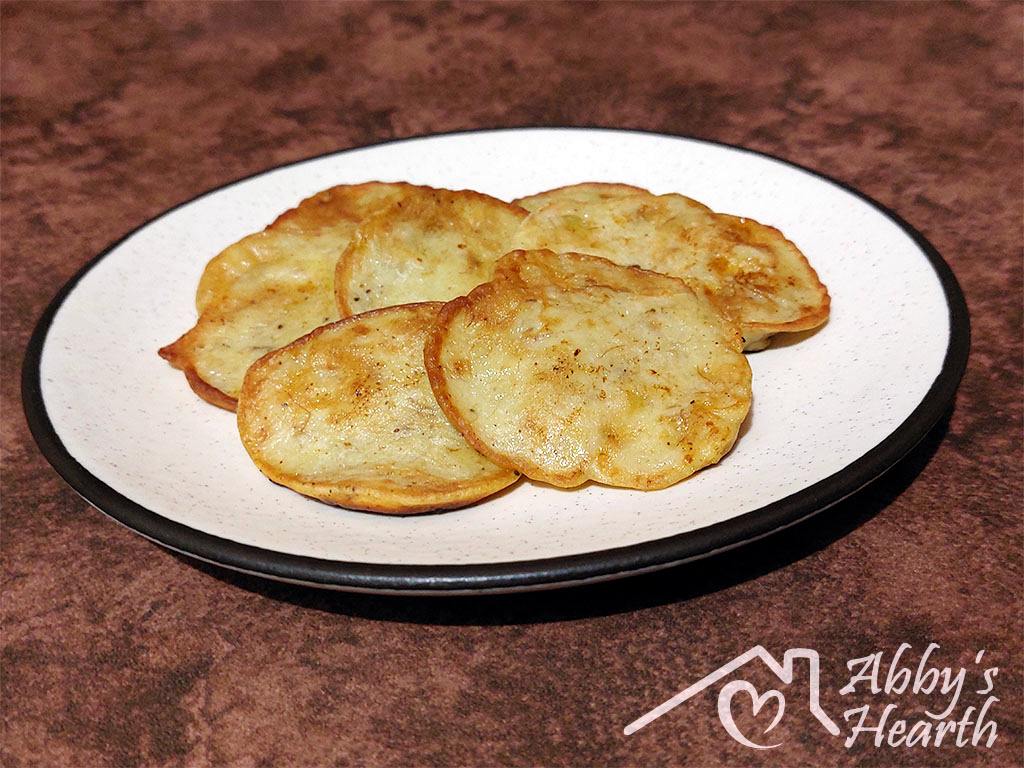
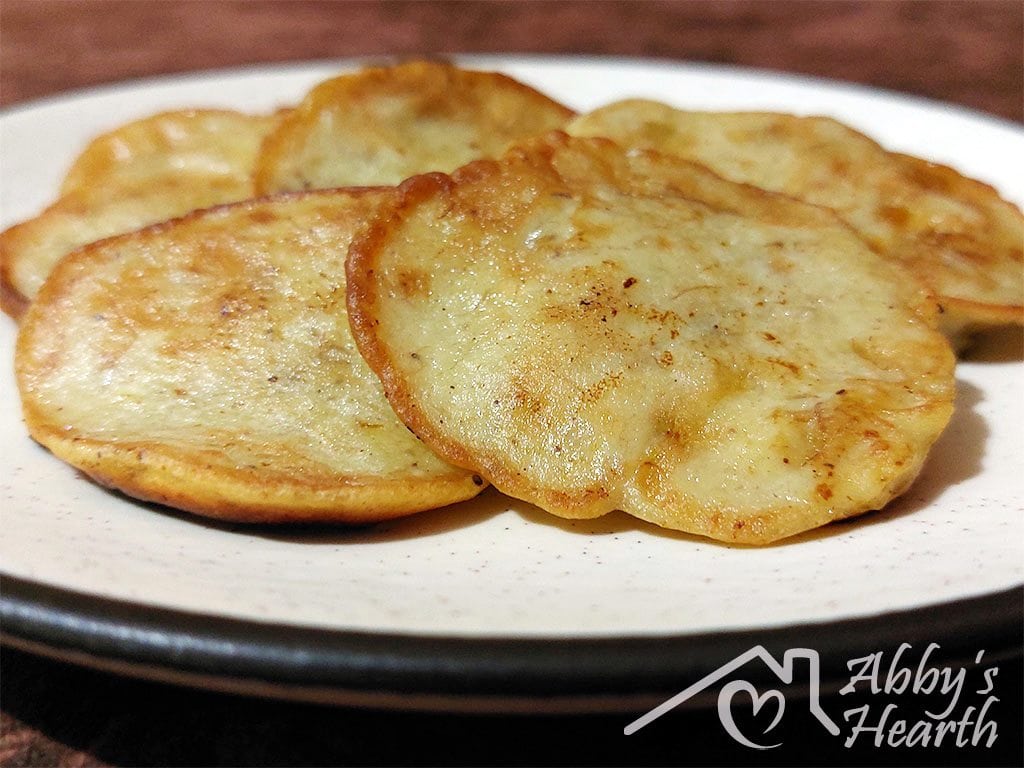
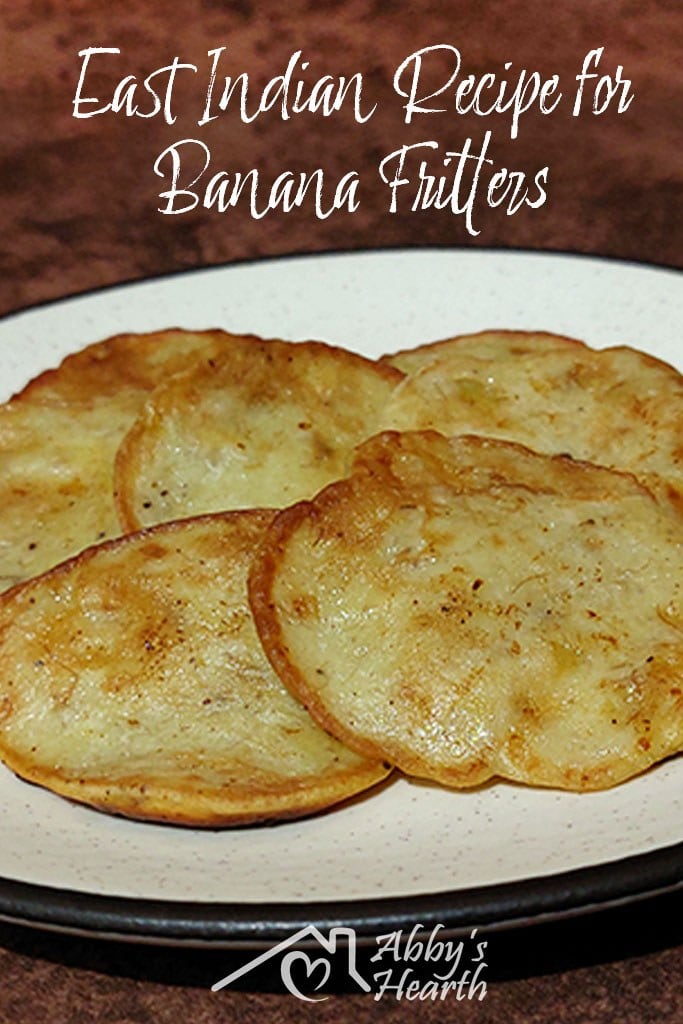
The batter comes together in about five minutes, and the frying doesn’t take much longer. What you get is something thin and golden, with crisp edges and a soft, banana-sweet centre. They’re best eaten warm, with tea, while someone else is doing the washing up.
A small note on ripeness: these fritters are better the riper the banana. Overripe bananas — the ones with very dark skins that you might otherwise throw away — work brilliantly here. The natural sweetness means you barely need to add sugar at all. Sometimes we skip the sugar entirely. If your bananas are still quite firm and yellow, let them sit on the counter for another day or two. (And sometimes we turn them into kele ki barfi or banana bread.)
And the cinnamon? Completely optional, but it adds a warm background note that pairs very nicely with the banana. I usually add it. You can skip it if you’re not a fan.
What You Need for Banana Fritters
Nothing here requires a trip to a specialist shop. If you’ve made any kind of pancake or fritter before, you’ll have most of this at home already.
Bananas — Three ripe ones. Spotty and soft is ideal.
Egg — One, to bind the batter.
Maida (all-purpose flour) — 50 grams, which is about 6 tablespoons. Maida gives the fritters a smooth, light batter. Whole wheat flour also works, but is a bit more chewy.
Milk or water — 4 tablespoons. I mostly use milk, which makes the fritters slightly richer. Water is fine too when in a hurry.
Sugar — Just 1 tablespoon to start. Taste the batter; if your bananas are very ripe and sweet already, you may not need more. Or if you’re trying to eat a tad healthier, skip the sugar entirely.
Ghee or oil for frying — 4 tablespoons. Ghee gives better flavour and the fritters brown more evenly. A neutral oil like sunflower works if you don’t have ghee.
Cinnamon powder — ¼ teaspoon, optional. Adds warmth.
How to Make Banana Fritters
Step 1. Mash the bananas roughly in a large bowl. You don’t need them perfectly smooth — a few lumps are fine and add texture to the finished fritter.
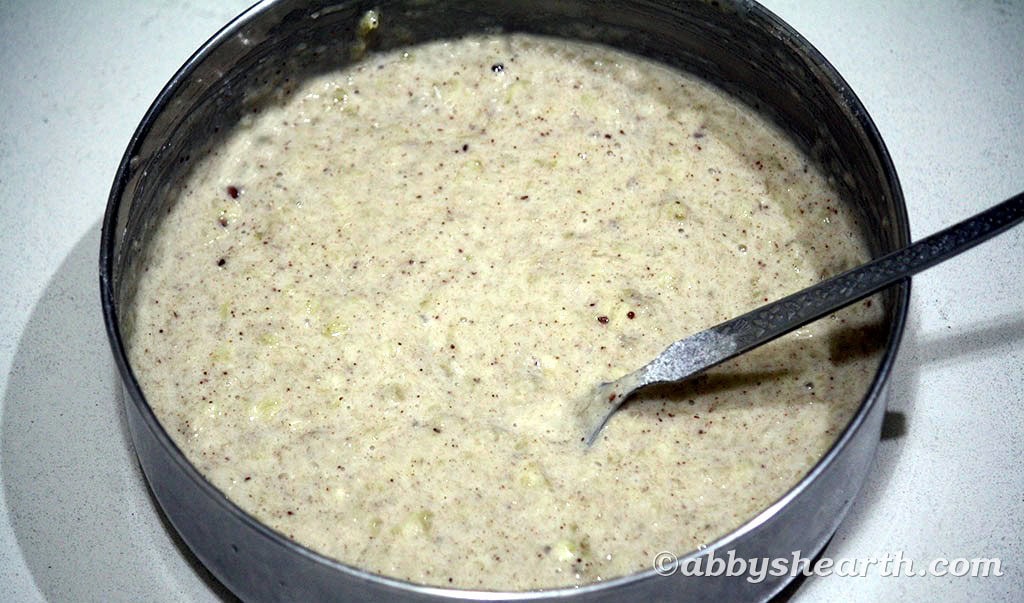
Step 2. Add the egg, sugar, milk or water, and flour. Mix until just combined. Don’t overwork the batter. If you’re using cinnamon, add it now.
Step 3. If your bananas were very sweet, the one tablespoon of sugar is probably enough. Add a little more if you’d like them sweeter.
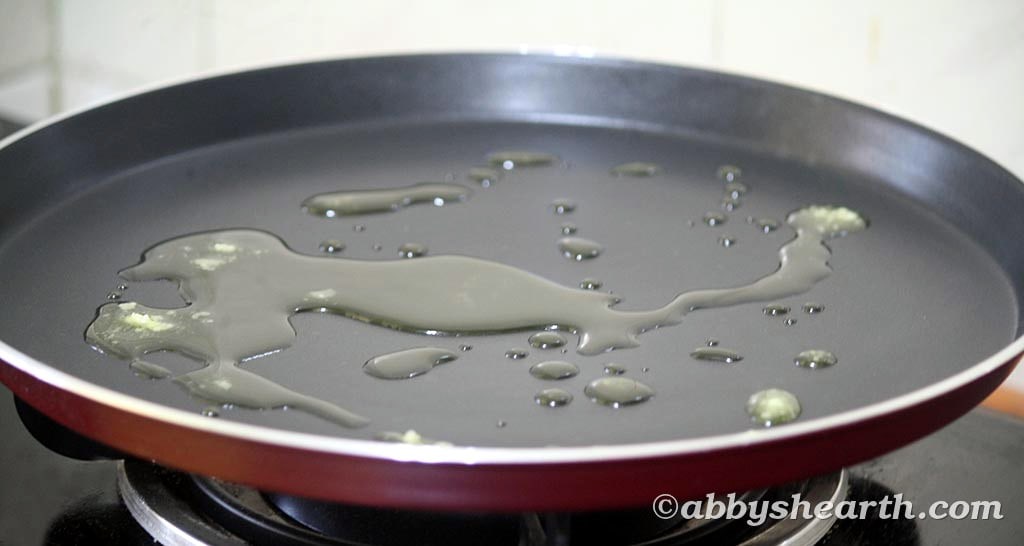
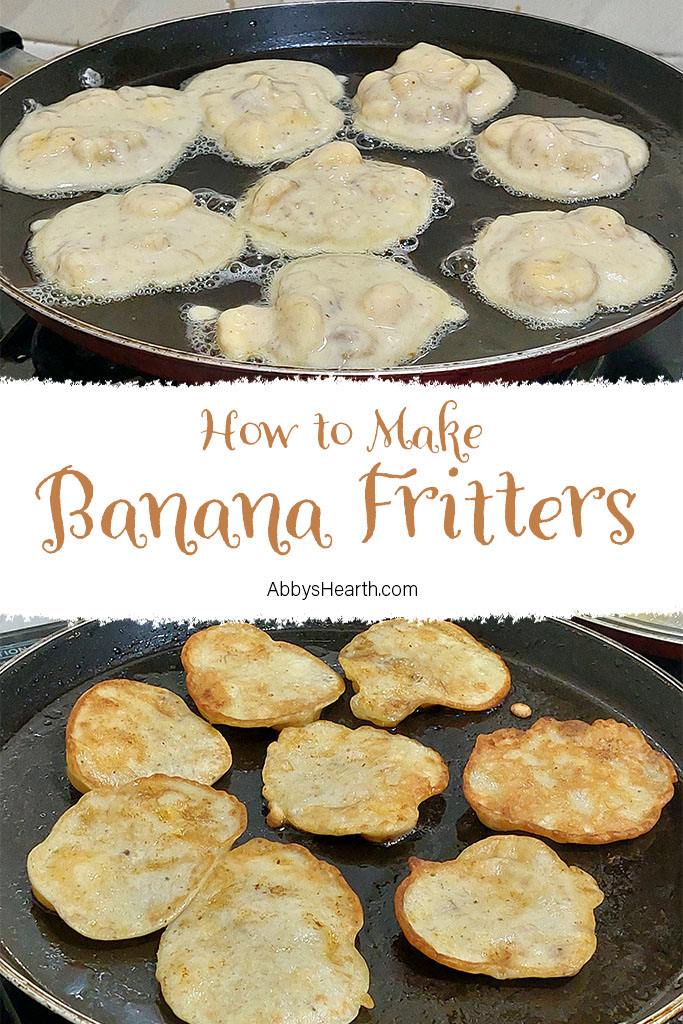
Step 4. Heat the ghee or oil in a wide, flat frying pan over medium heat. Once hot, drop a tablespoon or two of batter per fritter into the pan, leaving enough space between them so they don’t merge. They’ll flatten themselves out, so no need to worry about spreading them out into rounds or ovals.
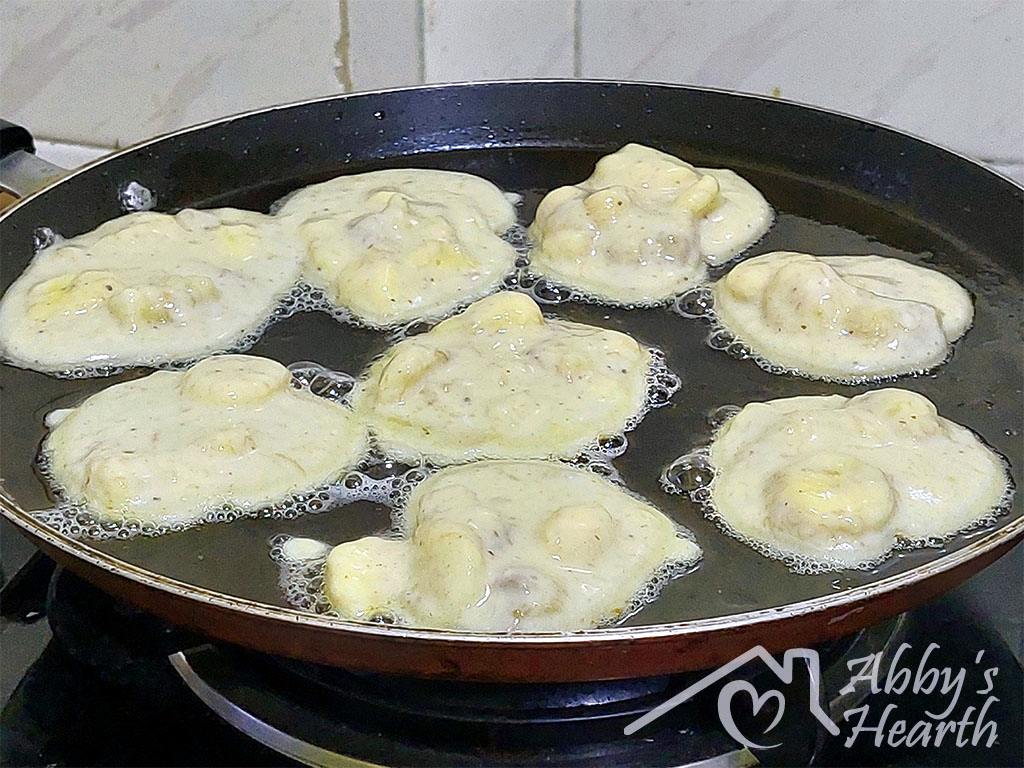
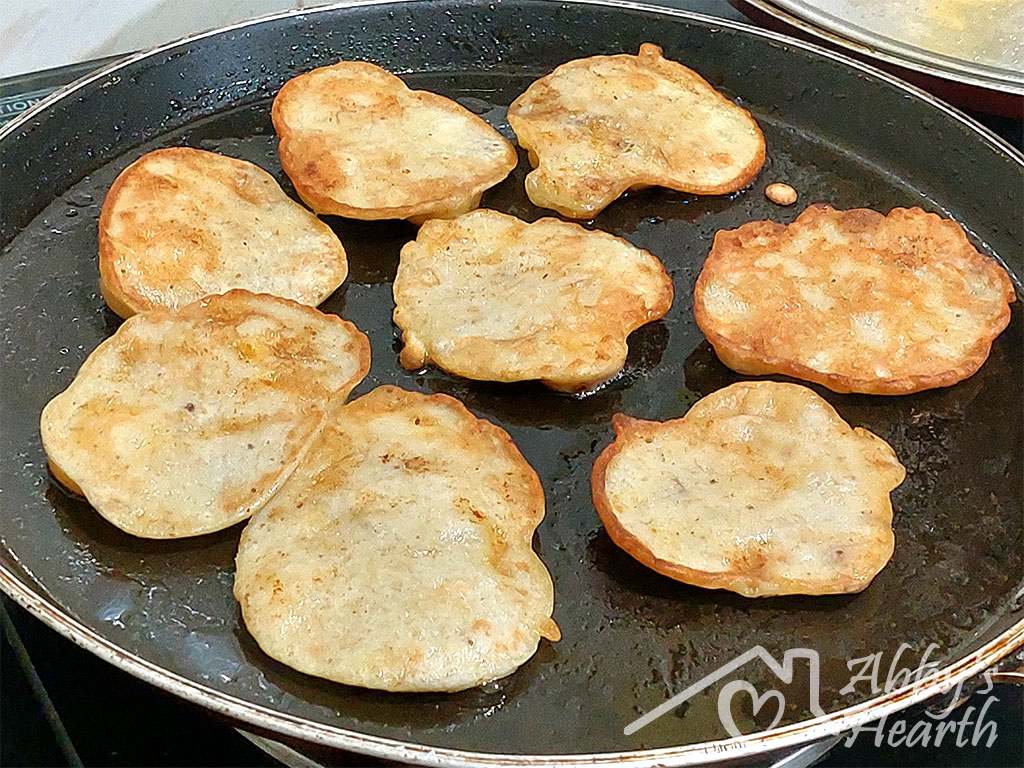
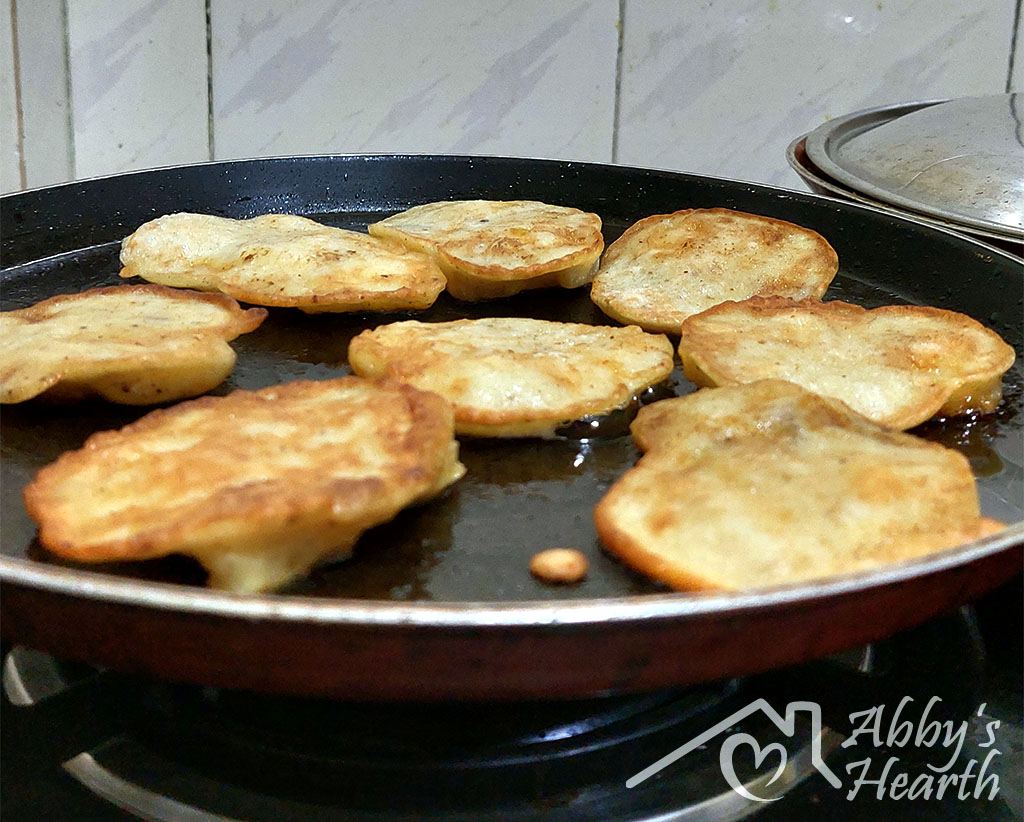
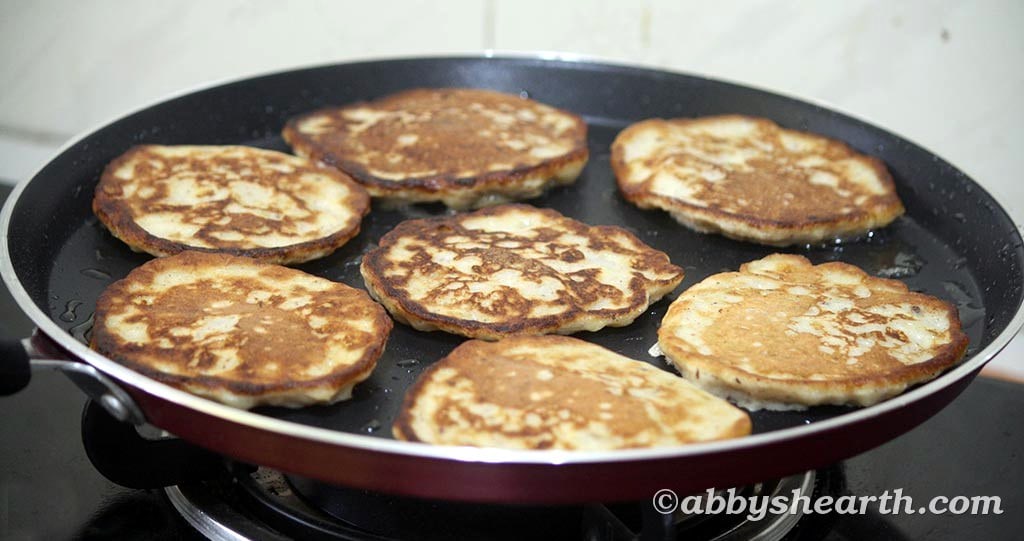
Step 5. Fry for about 3 minutes on the first side until golden brown and set on top, then flip and fry for another 3 minutes on the second side. Repeat with remaining batter. When you flip them over, they might look a little lumpy depending on how roughly you mashed your bananas. Mashed ’em more, less lumpy look, mashed ’em less, lumpier look. But don’t worry about how they look. They taste yum!
Serve warm. We usually have them at tea time, and on rare occasions for breakfast too.
A Few Tips
Don’t make the fritters too thick. A tablespoon or two of batter per fritter gives the right thin result — thicker and they won’t cook through properly before the outside burns.
Medium heat is important. Too high and the outside browns before the inside is cooked. Too low and they absorb more oil. Aim for a steady sizzle.
Ghee over oil, if you have it. The nutty flavour difference is noticeable.
Eat them fresh. These fritters are best eaten straight from the pan while still warm. They soften as they cool and lose the lovely crisp edges. If you have leftover, you could reheat them briefly in a dry pan, but fresh is always better.
What to Serve With Banana Fritters
These are a tea-time snack in the classic East Indian tradition, which means they’re served with a strong cup of chai. That’s really all they need.
If you want to stretch them slightly further as a light breakfast or dessert, a drizzle of honey is very good.
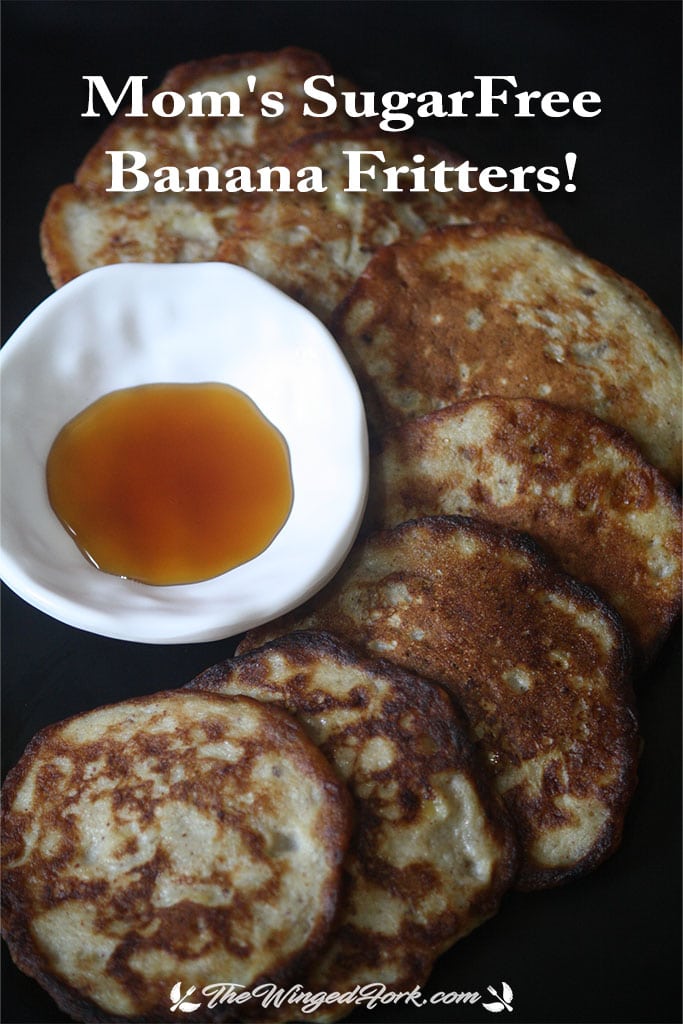
Sugar-Free Banana Fritters with Wholewheat Flour
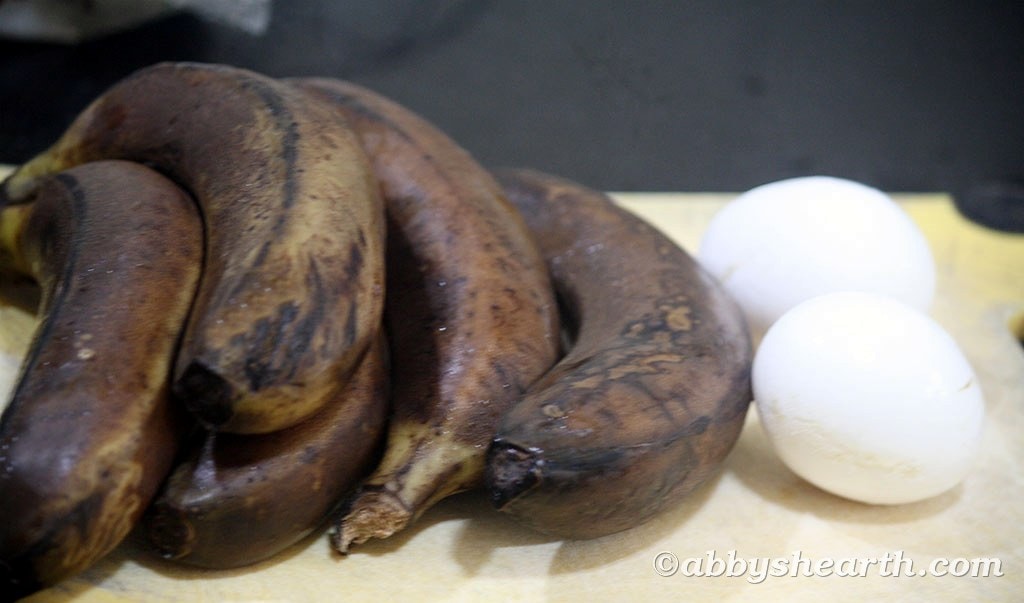
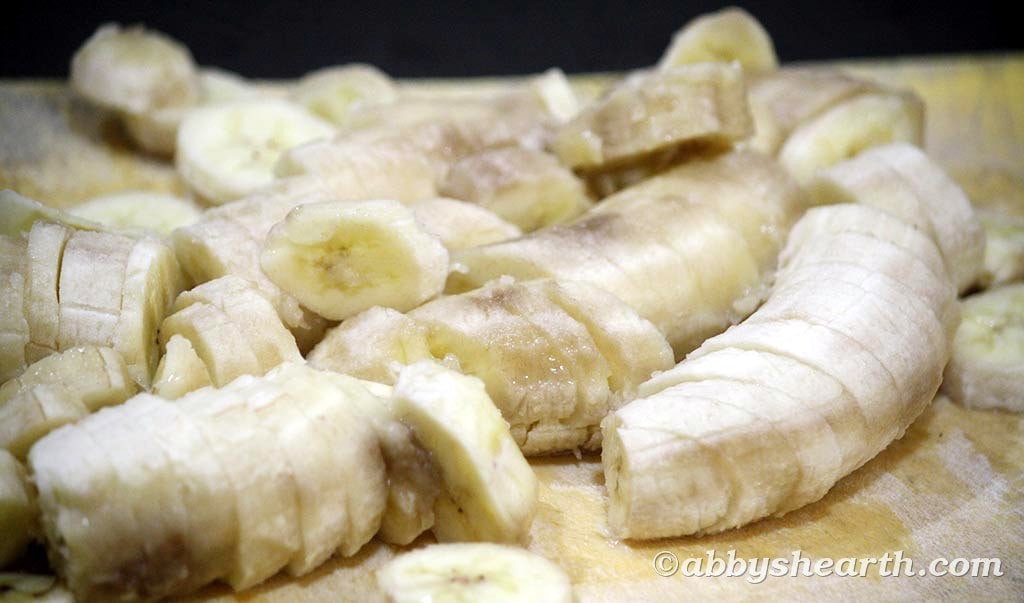
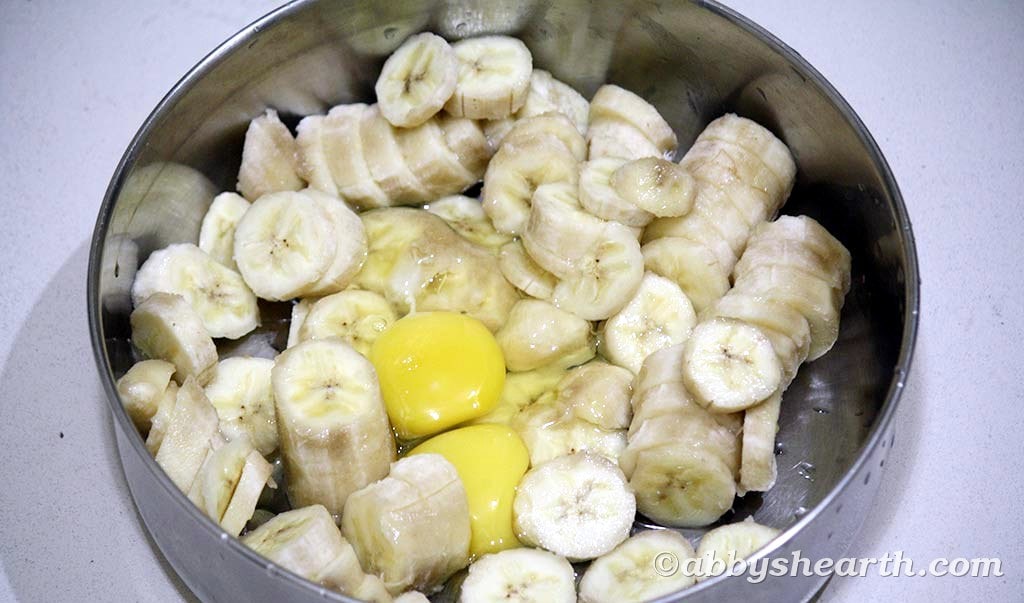
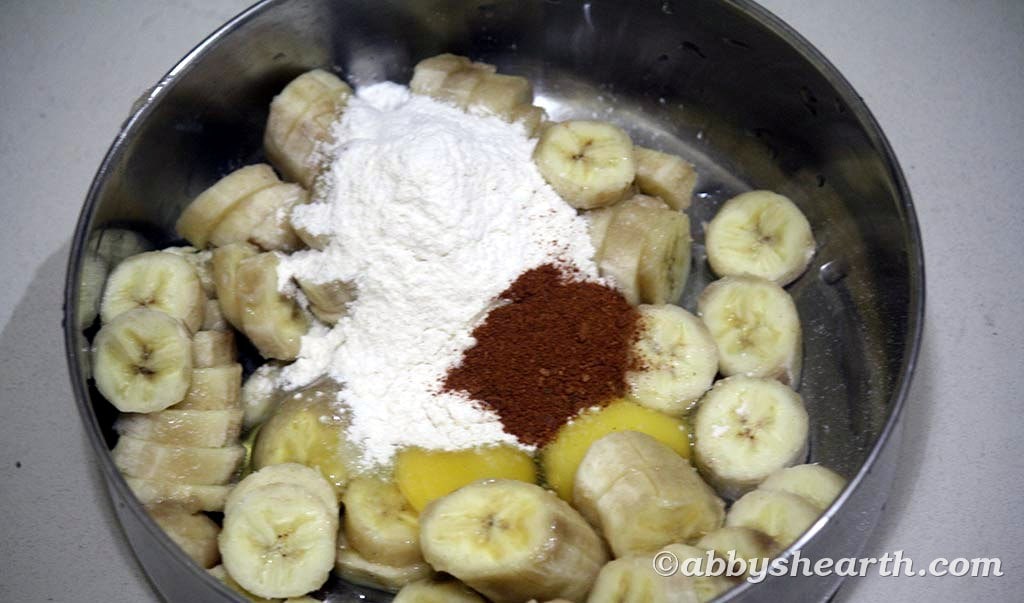
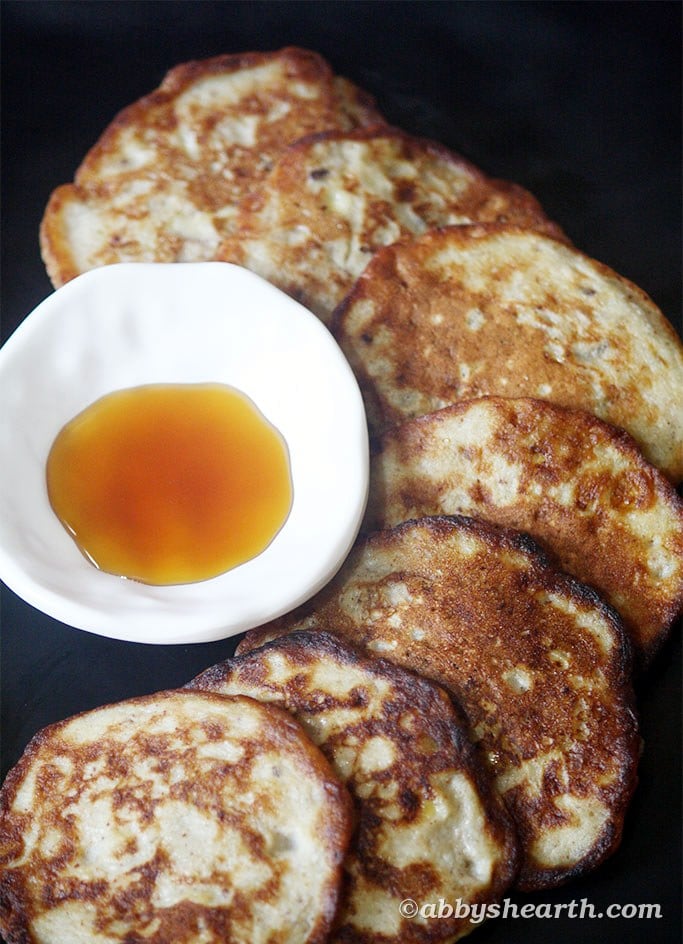
If you want a slightly more wholesome version — no sugar, no maida — this works well with wholewheat flour and very overripe bananas. The bananas in the photos below are almost completely black, which is exactly what you want here: that level of ripeness means you genuinely don’t need any added sugar.
Use 5 bananas, 2 eggs, 2 tablespoons of wholewheat flour, ½ teaspoon cinnamon, and the same milk and ghee as the main recipe. The batter is thicker and the fritters are denser — more filling, less delicate. Fry the same way, on medium heat, about 3 minutes per side. Serve with a drizzle of honey or maple syrup if you’d like a little sweetness.
Banana Fritters — Tea-Time Snack with Sugar-Free Option
Click the stars to add your rating! Left you don’t like it, right you love it!


Ingredients
- 3 Bananas Ripe
- 1 Egg
- 4 Tablespoons Milk Or Water
- 1 Tablespoon Sugar
- 4 Tablespoons Ghee (Indian clarified butter) Or Oil (For frying)
- 50 grams All Purpose Flour (Maida / Plain Flour / Refined Flour)
- 0.25 teaspoon Cinnamon Powder (Dalchini) Optional
Instructions
- Mash the bananas roughly, or cut them into slices and then mash.
- Add the sugar, milk/water, eggs and flour and mix.
- Add more sugar if you want it sweeter and a bit of cinnamon powder for flavour. Both of these are optional since the bananas are already sweet/ripe enough.
- Add ghee/oil to a frying pan and pour a tablespoon or two of batter to form each fritter.
- Fry for three minutes on each side till nicely brown. Continue with the next batch till all the batter is finished.
- Serve warm with tea.
Please click to rate the recipe! Left you don’t like it, right you love it!
Notes
- Overripe bananas work best — the darker the skin, the sweeter and more flavourful the fritter.
- Don’t make the fritters too thick; a tablespoon or two of batter per fritter gives the right thin result. Best eaten fresh from the pan.
Nutrition (Per Serving)
Disclaimer: Nutrition Information per serving is estimated by a third party software based on the ingredients used, and is for informational purposes only. It will vary from product to product, based on methods of preparation, origin and freshness of ingredients. Please consult the package labels of the ingredients you use, or chat with your dietician for specific details.
This printable recipe card is for home use only. For more recipes head over to AbbysHearth.comOther East Indian Snacks and Sweets You Might Like
If you enjoyed this, here are a few other recipes from our kitchen:
- Chitaps — East Indian Rice Crepes — another thin, pan-fried East Indian bread that goes beautifully with curries or simply with butter and jam.
- Kele Ki Barfi — Indian Ripe Banana Dessert — if you have even more ripe bananas to use up, this sets in the fridge and makes a lovely gift or after-dinner sweet.
- East Indian Kulkuls — the crisp, deep-fried festive sweet that appears at every East Indian Christmas table, and sometimes randomly during the year for snacks.
- Mass Pav or Marzipan — the almond paste sweet that’s central to East Indian celebrations.
This recipe is from Jevayla Ye: Everyday East Indian Recipes from Abby’s Hearth by Abigail Rebello & Sarah Rebello. Winner of the Gourmand World Cookbook Award for Best Indigenous People Cookbook in the World, 2025. Find out more about the cookbook here.
Heya, I’m Abby! I’m a Gourmand Award-winning cookbook author and East Indian from Bombay, India. This blog is all about faith, food, and culture – from East Indian recipes to home, DIY, and spending time in the Word. Find out more about me here!