If you’re new to trekking in Nepal, trying to decide between the Annapurna Circuit and the Everest Base Camp trek can be a real puzzle. Both are super famous, both take you deep into the Himalayas, and both promise unforgettable experiences.
But they’re not the same thing.
One is a long, gentle stroll through varied landscapes and everyday village life. The other is a more intense walk toward the world’s highest mountain. Neither trek is better than the other – they’re just suited to different sorts of travelers.
This guide lays out the differences in a straightforward way, so that you can figure out which trek is more to your taste, fits your fitness level, and matches your travel style.
Why These Two Treks are Often Compared, and Compared Again
The Annapurna Circuit and the Everest Base Camp trek get compared a lot because they share some pretty important features. If you’re new to trekking, they can look pretty similar at first glance. But once you understand why they’re compared, the differences start to become clear.
First, both treks are well-trodden routes – the trails are clearly marked, used regularly, and supported by local communities. You don’t need to be a superstar navigator or have extensive camping experience to tackle either of these treks. There are villages, teahouses, and guides available along the way, which makes these treks safer and more comfortable for beginners who aren’t used to camping in the mountains.
Second, both treks rely on teahouse accommodation – simple mountain lodges where you can get a good night’s sleep and a decent meal. You don’t have to worry about lugging around tents, cooking gear, or a load of food – which makes trekking a heck of a lot easier, especially for first-time trekkers who aren’t yet comfortable with longer camping routes.
Third, both routes take you to high altitudes – which is why acclimatization is so important on both treks. You’ll be walking above 3,000 meters, where the air is thin, and you’ll need to take things easy so your body can adjust. Both treks are designed with acclimatization days to help you get up to speed safely, as long as you stick to the itinerary and don’t get too carried away.
And finally, both treks can be done by beginners, as long as they take things slow and don’t try to rush – and as long as they’re trekking with a guide who knows what they’re doing. You don’t need to be an experienced climber to tackle either of these treks – what’s more important is paying attention to your body and following your guide’s advice.
Because of these similarities and the popularity of both treks, new trekkers often can’t decide which one to choose. But the difference between these two treks isn’t about the difficulty, it’s about the actual experience – how the journey feels, what you get to see each day, and what kind of memories you want to take home with you.
Ready to trek the Annapurna Circuit? Find guided tours here:
Plan your perfect Annapurna Circuit trip — explore top tours and activities here:
- Annapurna Circuit
- Annapurna Circuit Trek Fixed departure (Oct 1st/ Nov 1st 2025)
- 8-Day Annapurna Circuit Private Trekking Tour
- 6 days Annapurna Basecamp Trek
1. How the Treks Begin: First Impressions Count
Annapurna Circuit: Starting Slow and Easy
The Annapurna Circuit begins in the lower, warmer areas of the Himalayas. You start by walking through green hills, farmland, rivers, and small villages. The whole area feels pretty mellow and welcoming.
This gentle start to any trek is a real blessing. It gives your body time to adjust slowly to the demands of trekking, and if you’re new, it also gives you a chance to get a feel for what trekking is all about before you reach higher altitudes.
Everest Base Camp: Straight to the Action
The Everest Base Camp trek starts with a flight to Lukla (Tenzing-Hillary Airport) – and that in itself is a pretty big adventure. From day one, you get the sense that you’re walking toward the world’s highest mountain – and that can be pretty thrilling. In fact, the Nepali name for Mount Everest is Sagarmatha, which means “forehead in the sky.” And since 1979, the Sagarmatha National Park is a UNESCO listed site.
The trail is a bit busier on the Everest Base Camp trek, and the mountains feel bigger right from the start. That means the trek feels bold and energetic from the get-go, and it’s a great way to get your adrenaline pumping.
2. Landscapes: Variety vs Pure Power
One of the biggest differences between the Annapurna Circuit and the Everest Base Camp trek is the kind of scenery you see. Both are beautiful, but they create very different feelings.
What You See on the Annapurna Circuit
The Annapurna Circuit is a real winner among people who go on longer treks for the first-time because of its variety. The scenery changes pretty slowly as you walk, so you get to see a whole range of landscapes and ecosystems.
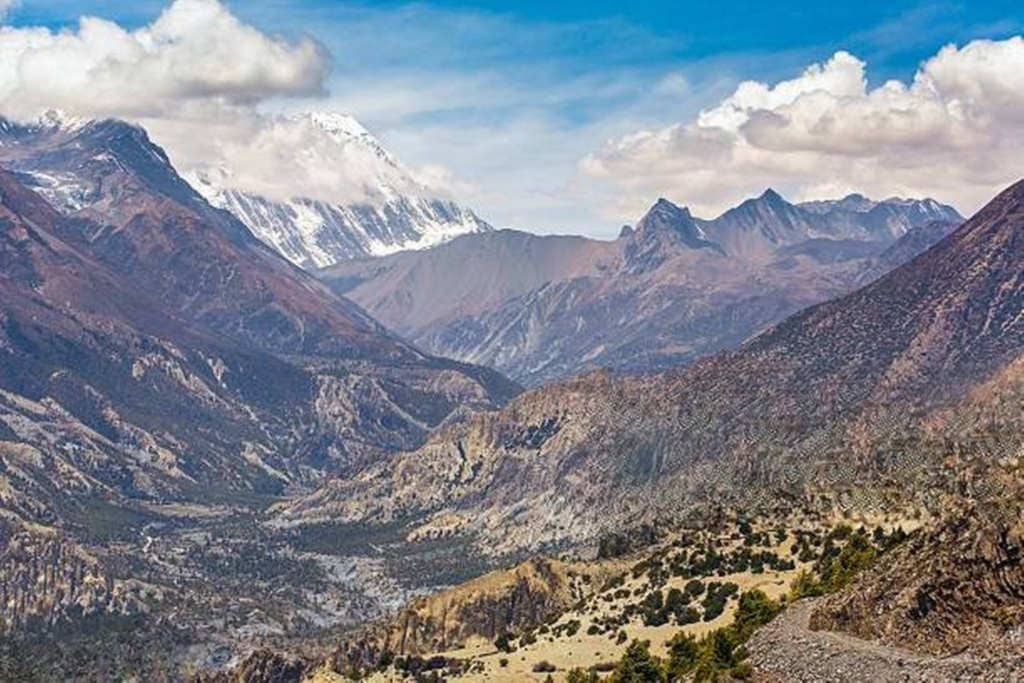
At the start of the trek, you walk through green forests and rice fields – it’s like walking through a warm welcoming valley. As you go higher, the landscape starts to change dramatically. The air gets colder, the trees get thinner, and you start to see some quite a different scenery – dry valleys, rocky paths, and villages that look like they’ve come straight out of a fairy tale.
Near the highest part of the trek, close to Thorong La Pass, the scenery gets even more stunning. You get to see snowy mountains, icy landscapes, and some of the most beautiful scenery in the Himalayas. It’s a real turning point on the trek, and also a great moment to stop and take in the view, and maybe a few pics to Instagram later. Because the scenery changes so often, each day on the Annapurna Circuit feels like a new adventure. Everyone loves this because the trek never gets boring or repetitive.

What You See on the Everest Base Camp Trek
The Everest Base Camp trek is all about power and scale – it’s like walking into the world’s biggest, most impressive cathedral. You’re surrounded by some of the most iconic scenery in the world, and you can’t help but feel awestruck by the sheer scale of the mountains.
From the very start, you’re surrounded by enormous mountains that totally dwarf you. “Ama Dablam, Lhotse, Nuptse and Mount Everest all stand tall right next to you” might be a more accurate description rather than just listing them off. These mountains – and they really are – don’t just sit off in the distance looking pretty, they’re right in your face, heavy with an air of grandeur, and truly awe-inspiring.
As you go higher the scenery doesn’t change very dramatically in style, but it gets a whole lot more intense. The mountains seem to get bigger, glaciers pop up, and the air gets colder and more somber. The trees start to disappear, and the trail gets rockier and wider.
Walking around in this place can be truly humbling – the mountains put you firmly in your place, but in a good way. Loads of trekkers describe the Everest region as powerful, inspiring – and also a bit emotional.
Why This Matters for New Trekkers
If you’re someone who enjoys mixing it up, having some colour and interesting views in your day, then the Annapurna Circuit will be perfect for you. But, if you like big mountains and dramatic scenery and want to feel like you’re right up close to something truly legendary, then the Everest Base Camp trek is just the ticket. Neither one is better, they’re just two different ways of experiencing the Himalayas.
3. Culture and Village Life Along the Way
Annapurna Circuit: Getting to Know Everyday Mountain Life
On the Annapurna Circuit, you’ll pass through villages where different ethnic groups like Gurung, Thakali and Manangi people live their normal lives, farming, cooking, trading and just looking after their families as you would. As a trekker you feel like an outsider in these real communities.
Everest Base Camp: Sherpa Culture and A Bit of Climbing History
Deeply influenced by Sherpa culture, the Everest region is part of the history of mountaineering. You’ll see monasteries, prayer flags and many memorials to climbers – it all feels deeply connected to the mountains and the spiritual traditions.
Trekking Pace and Daily Routine
Annapurna Circuit: Taking It Easy
The Annapurna Circuit Trek is a long way – so you tend to walk at a slow yet steady pace. Days feel relaxed and you can take it a little easy. This makes it perfect for trekkers who enjoy taking their time and slowing down.
Everest Base Camp: More of a Plan
The Everest Base Camp trek is a bit more structured than the Annapurna Circuit. You have a fixed schedule that is almost unchangeable, and there are planned acclimatization days. The main goal of the climb – getting to base camp – is very clear. This whole structured approach really helps new trekkers get used to the high altitude.
4. Challenges You Should Know About
Both the Annapurna Circuit and the Everest Base Camp trek are safe and well organised, but they each come with their own kinds of challenges. Knowing what to expect helps trekkers old and new to feel more confident and prepared.
Thorong La Pass (Annapurna Circuit)
Thorong La Pass is the highest point you’ll hit on the Annapurna Circuit – its perched high in the mountains and you usually cross it in a long day’s journey.
To make the most of it, you’ll set off very early, often before sunrise. This is because you want to avoid those strong winds and changing weather later in the day. The walk is long and a bit tiring – it’s also quite cold and the altitude doesn’t help. But the key thing to know is this:
• Thorong La comes after loads of gradual walking so your body has by now already adapted to the altitude.
• With solid acclimatization, a steady pace, warm clothes and a good knowledgeable guide, most trekkers make it up the pass just fine. It’s not a technical climb, it’s more about being patient than being fit.
Altitude on the Everest Base Camp Trek
On the Everest Base Camp trek, it’s all about the altitude – not just on any one particular day, but throughout the whole journey.
As you climb higher, the air’s got less oxygen in it which means that:
• You breathe more quickly
• Walking feels slower
• You get tired more easily
This happens to anyone, even the fittest people. That’s why the Everest Base Camp trek includes a fair few planned rest days in places like Namche Bazaar and Dingboche – to give your body a chance to catch up and avoid altitude sickness. But if you start to feel any signs of trouble, it’s super important to listen to your body and take it slow. Good guides will be keeping a close eye on you all the time to make sure you’re okay.
Plan your perfect Everest Base Camp trip — explore top tours and activities here:
- Everest Base Camp Trek
- Landing Everest Base Camp Kalapathar by Helicopter with Breakfast
- Everest Base Camp Trek – 14 Days
Ready to trek Everest Base Camp? Find guided tours here:
Which Trek Is Better for New Trekkers?
There’s no single ‘best’ trek for newbies. The right one really depends on what kind of experience you’re after.
The Annapurna Circuit is for you if:
• You like variety and changing scenery throughout your day
• You enjoy village life and local culture – these villages feel like real communities
• You’re happy with a slower pace and a more relaxed approach
• You prefer a quieter trail with fewer crowds
This trek suits people who like a long journey and taking their time.
Everest Base Camp is for you if:
• You’ve always dreamed of seeing Mount Everest up close
• You like iconic destinations and the buzz around them
• You prefer a more clear daily goal and a schedule to stick to
This trek is perfect for people who are after a real challenge and the adventure of tackling a big challenge or visiting some of the most legendary spots in Asia, or for that matter in the world.
Simple Tips for First-Time Trekkers to Keep in Mind
Regardless of which trek you decide to go on, these basic tips can make all the difference:
• Don’t rush it – getting there quick won’t make up for the altitude
• Take those rest days seriously – they’re actually a vital part of the trek
• Make sure you drink plenty of water – dehydration will make things even tougher when you’re at altitude
• Fuel up on warm meals – your body needs the energy
• Get a local guide – they’ll look after your safety, support you, and share some local knowledge
• Plan your trek for spring or autumn – the weather is way more stable and the views are clearer
You don’t have to be a marathon runner or a gym enthusiast. All you need to do is be patient and make sure you’re prepared for what’s ahead.
Conclusion
Both treks are doable for beginners, provided you approach them correctly. Thousands of first-time trekkers complete them every year without any problems. The secret to success is not pushing yourself too hard, listening to your guide, and just taking it all in step by step. If you show some respect to the mountains, they’ll take care of you just fine.
About Saugat
Saugat Adhikari is the founder and owner of Magical Nepal, a locally rooted trekking and travel company in Nepal. He combines deep knowledge of the Himalayas with a strong understanding of technology to create authentic, safe, and well-organized journeys for travelers worldwide. His approach blends responsible tourism with modern digital systems to improve customer experience and operations. Through Magical Nepal, he helps travelers connect meaningfully with Nepal’s mountains, culture, and people. Follow him on Twitter and Facebook here.
Other Posts You Might Like
- Dal bhat tarkari recipe
- The list of best pork recipes to try
- Famous chapels to visit in South Eastern Asia
- Why using wagons for outdoor garden work helps
- What to eat in Taipei


