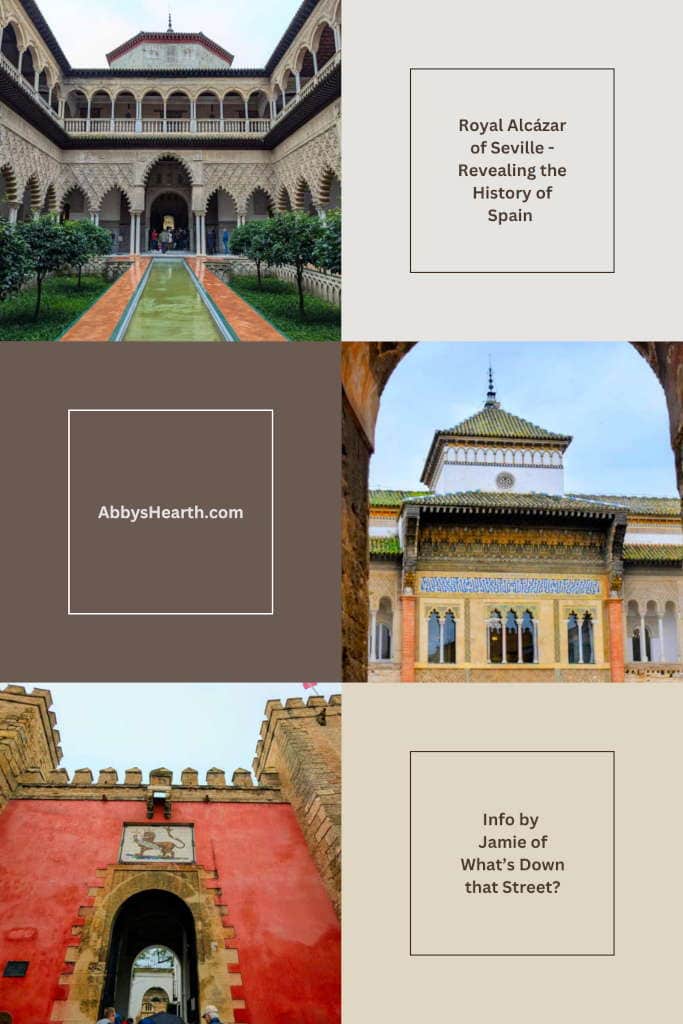
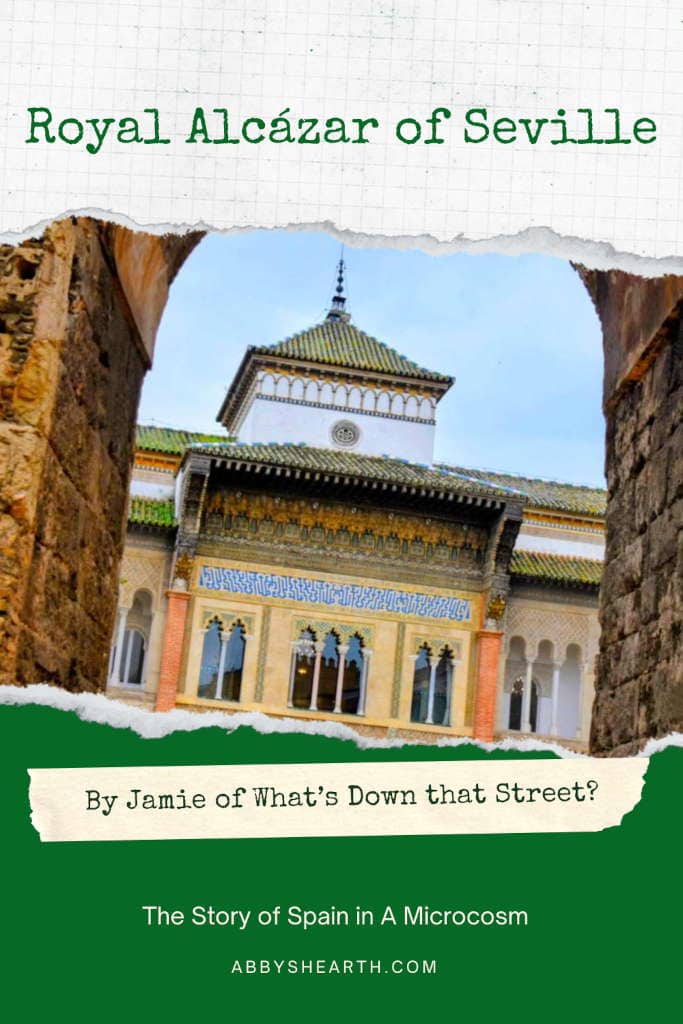
There are surely only a small number of buildings in Europe like the Real Alcázar. Those places that aren’t really buildings or museums at all, but living breathing histories, stretching back a thousand years. That bear witness to the rise and fall of empires.
It sounds almost cliché, but the Alcázar tells the story of Spain in microcosm – a building that started its life under the Moors, and has been used as a royal residence ever since, still used by the Spanish monarchy. And it does so in the most beautiful setting.
In this guide, I’ll explore the Alcázar’s historical development through its key phases – Islamic, Mudéjar, Gothic, and Renaissance – and highlight the architectural and cultural features that make it a must-see destination.
Top activities and tours to the Royal Alcazar of Seville
If you’re in a hurry or were just looking for info about which tours to book, below are the top picks:
- Real Alcazar with an exclusive group (Skip the line at the Alcazar with a small group led by a certified guide)
- Priority Tour of Cathedral, Alcazar and Giralda (Skip the line at the Alcazar and Cathedral with an official guide, and hear stories of Spanish architecture and history!)
Moorish origins
It always surprises me how little awareness there is of Spain’s Moorish era – especially where I live, in the UK. But for centuries, Spain was Islamic. And Seville was one of the most important cities – a leading cultural centre. When Muslim rule began to fragment into separate dynasties, it became the capital for one of those: the Almohads.
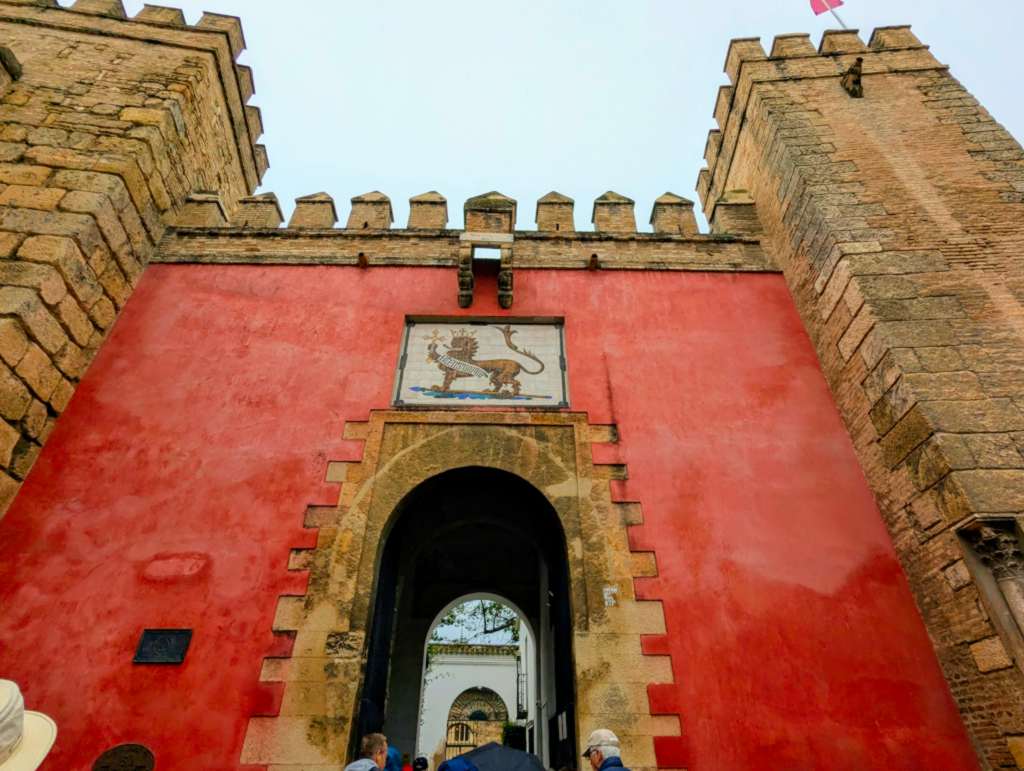
What is now the Alcázar began life some time in the 10th century, when the Umayyad Caliph Abd al-Rahman III ordered the construction of a new fortified government complex. Over the following centuries, successive Muslim dynasties (the Abbadids and then the Almohads) massively expanded the palace. They added new courtyards, halls, and defensive walls.
Little remains from this time, but you can still find tantalising glimpses. One of the most extraordinary is the Patio del Yeso (the Courtyard of Plaster), dating from the 12th century. It’s a classic Islamic patio, with elegant arches and a central pool.
Although much of what we see in today’s Alcázar comes after this period, the reason it looks the way it does – clearly so Islamic in inspiration and design – comes from the Moorish era of Spain.
The Christians conquer Spain – and the Alcázar becomes a fusion of cultures
In the 13th century, Christian forces under King Ferdinand III of Castile conquered Seville. The Alázar became the Castilian monarchy’s seat of power in the city – ensuring an unbroken tradition of royal use that continues to this day.
As they did across Spain, the conquering Christian kings were quick to imprint their own styles on the complex. But at the same time, many Muslims stayed behind. They were known as ‘mudéjars’. The new monarchs had great admiration for Islamic design, architecture and art, and wanted to incorporate it into their legacy. So many of the remaining Moors were employed as artisans, birthing a new artistic style entirely unique to Spain: mudéjar, a fusion of the Christian and Islamic, named after the ones who stayed.
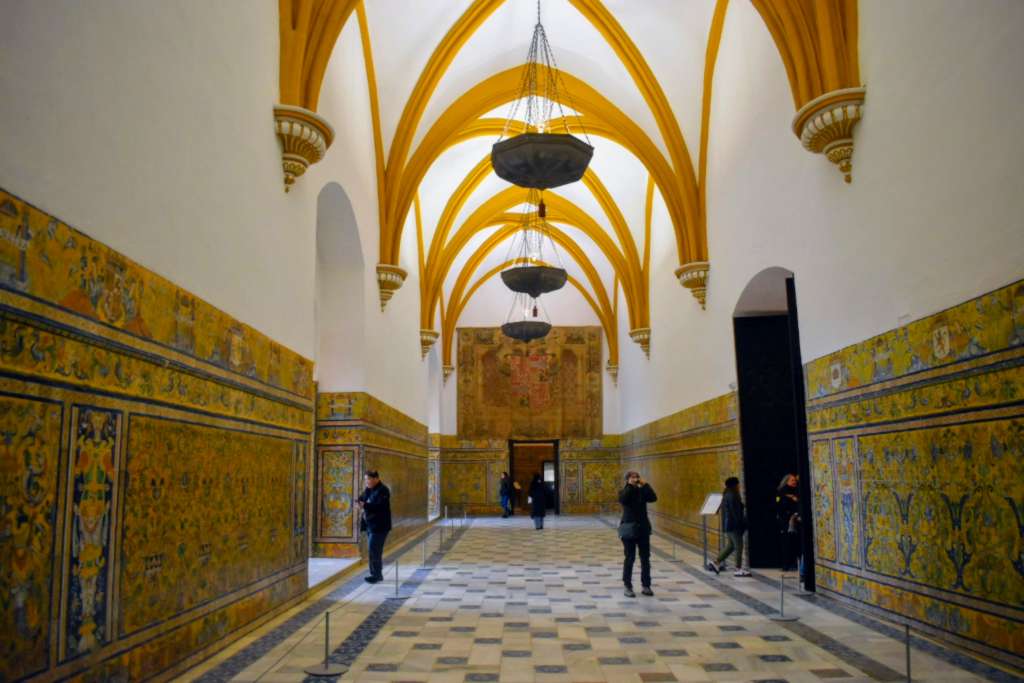
And so as the Christian kings reshaped the Alcázar, they did this in a hybrid style. Alfonso X (Ferdinand’s son) built a Gothic Palace in the 13th century, overlaying parts of the old Moorish structures with the architectural fashion of medieval Europe, but incorporated an Islamic-style garden layout. But it was his son, Pedro I, who took this idea of fusion to its breathtaking peak.
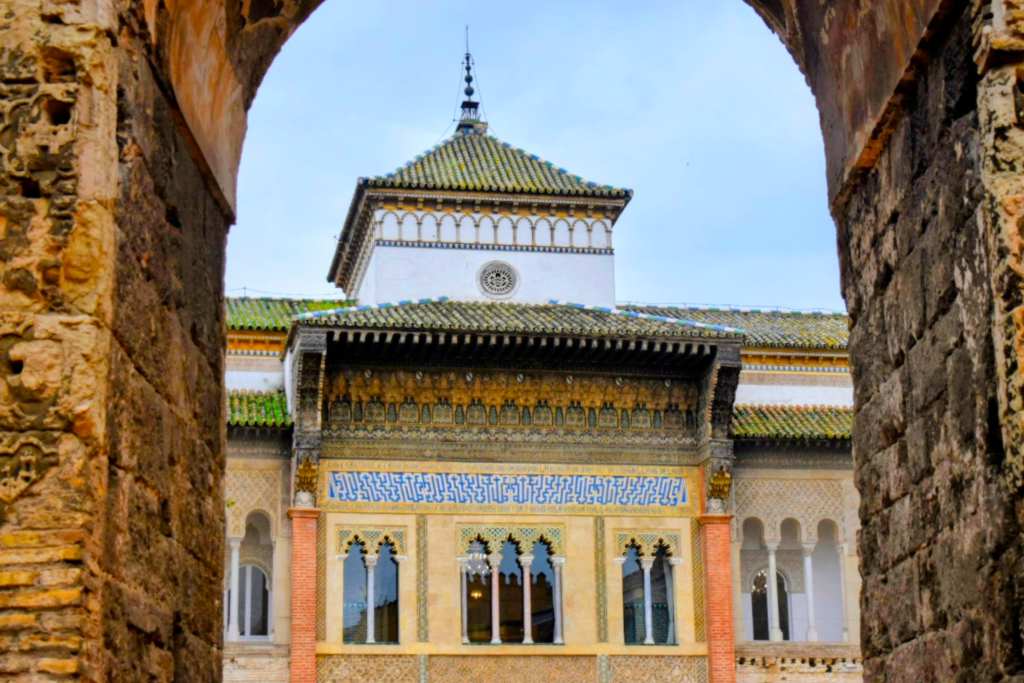
Pedro I’s Mudéjar Palace
King Pedro I had strong ties to Islamic sultans – including the Kingdom of Granada, the last part of Spain to remain muslim. He had a strong admiration for Islamic artisanship, and he made this a key part of his royal image.
He demolished much of the older palace and erected a lavish new palace in the Mudéjar style, deliberately harking back to Al-Andalus (the name for Muslim Spain) at its zenith. The result is simply astonishing. It’s not hyperbole to say that Pedro I’s palace is one of the most beautiful places in all of Spain.
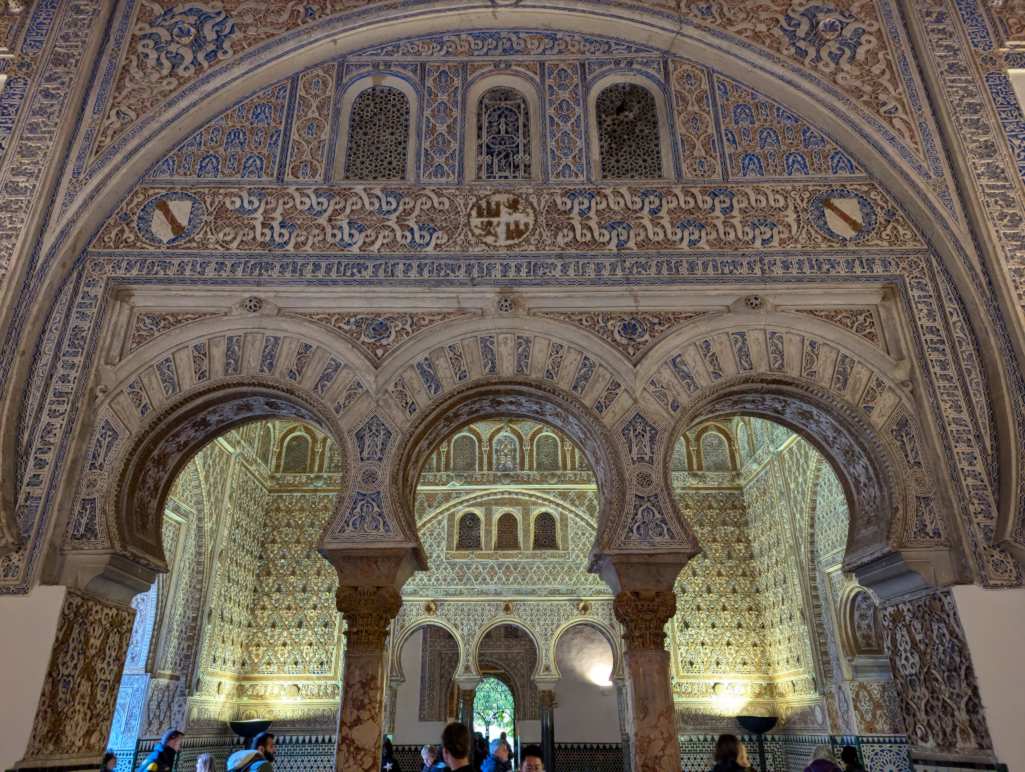
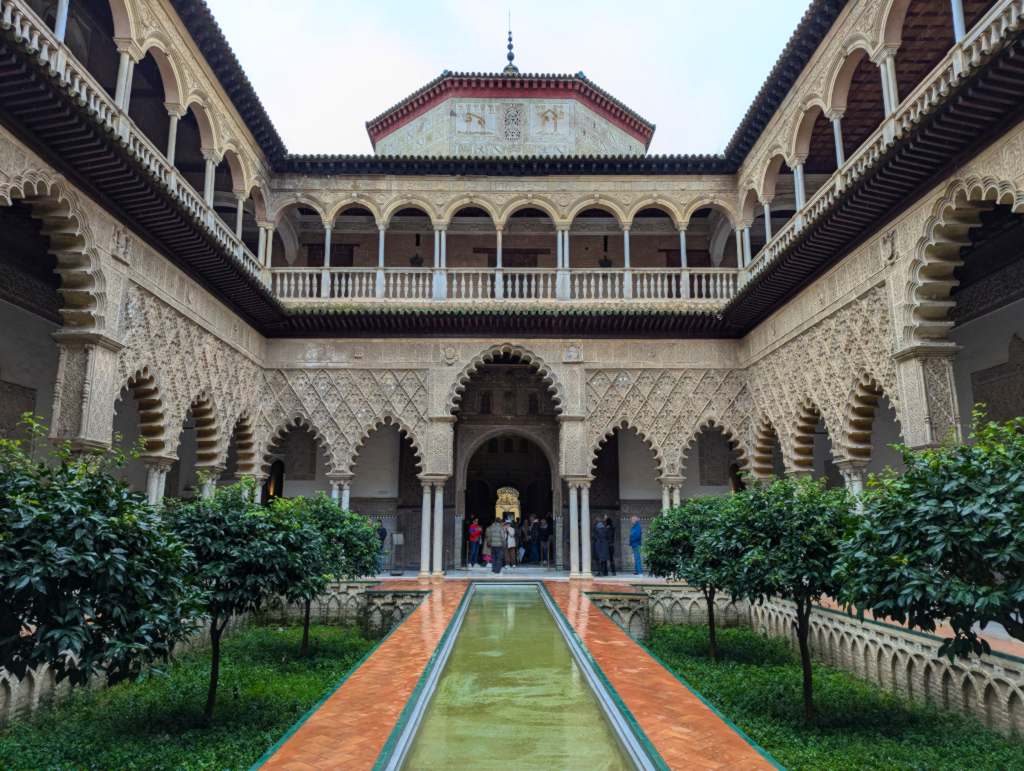
You walk through the Patio de las Doncellas (“Courtyard of the Maidens”), where a long reflecting pool is flanked by sunken gardens and two levels of arched galleries. At its end, you pass through an arch into Pedro’s throne hall – the Hall of Ambassadors. Every inch of it is covered with patterns, including Arabic inscriptions praising the king (and describing him as Sultan Pedro), and a gilded dome. The room was also used in Game of Thrones.
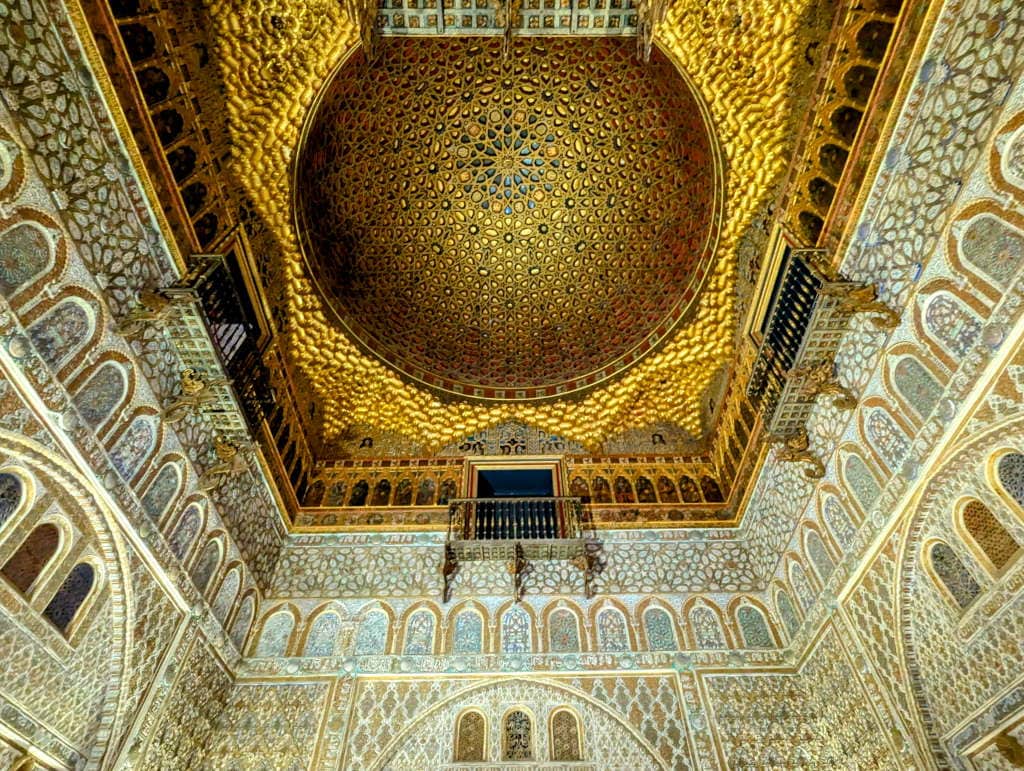
Pedro’s palace embodies the fusion of cultures in medieval Spain. It stands as one of the finest examples of Mudéjar architecture in the world, and an essential part (possibly the essential part) of why the Alcázar is so special. It’s also one of the key pieces in Seville’s rich mudéjar legacy.
The Alcázar in later centuries
While the Mudéjar palace steals the show, the Alcázar continued to evolve in later centuries. After King Pedro’s time, the Catholic Monarchs (Queen Isabella I and King Ferdinand II) made the Alcázar their Sevillian headquarters in the late 15th century. It played a key role during the so-called Age of Discovery, hosting the House of Trade where trade with the New World was managed.
These later centuries added new aspects to the palace – Gothic chapels and rooms, as well as refined Renaissance sections. Although not as unique as the Mudéjar palace, they only add to the Alcázar’s allure, a real hybrid. Full of orange and lemon trees, the beautiful gardens were also expanded in this time, another fusion of European landscaping with Islamic patios and gardens.
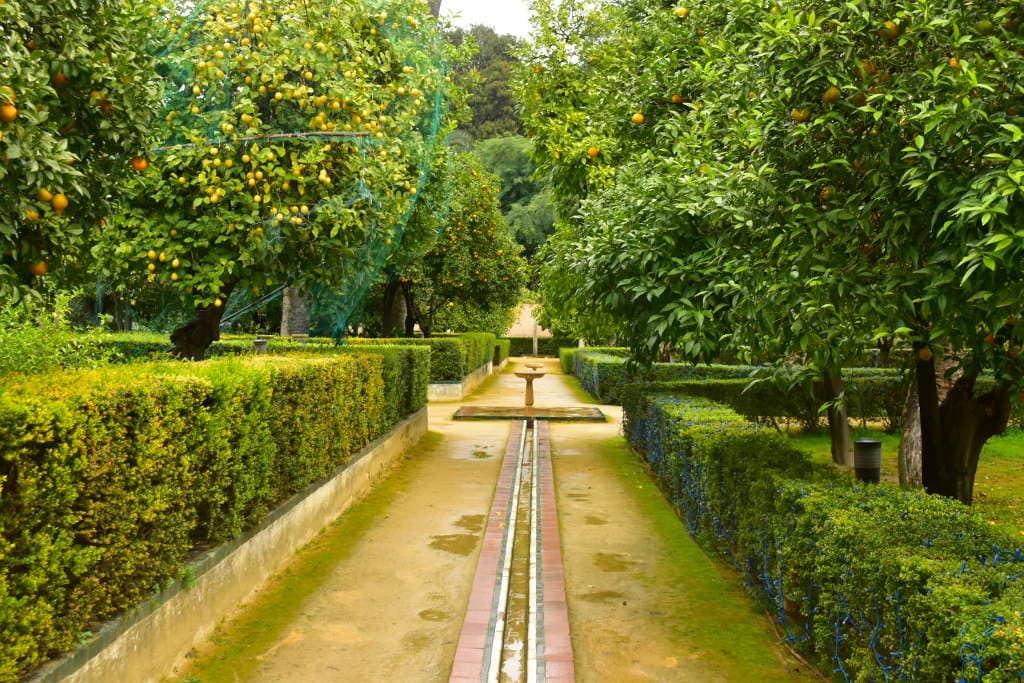
Now a UNESCO World Heritage Site, the Alcázar is one of Spain’s most popular tourist attractions. But its role in Spanish life is also alive – when the Spanish royal family visits Seville, they reside in the Alcázar’s upper apartments, continuing a tradition over 700 years old.
Overall, the palace is a must-visit in Spain, one of its most beautiful and fascinating buildings. And in Andalucía, a region with so many excellent museums, it’s living, breathing monuments like the Alcázar that really bring history to life.
Make the most of your visit — explore tours and experiences here:
- Royal Alcázar Entry Ticket
- Royal Alcázar Guided Tour with Skip-the-Line Ticket
- Small-Group Alcázar Guided Tour & Entry Ticket
- VIP Exclusive Early Access Tour of The Alcazar
Additional Information
- Visiting hours are 9:30 a.m. to 5:00 p.m in Winter and 9:30 a.m. to 7:00 p.m. in Summer. More info is available on the Real Alcazar website.
- Tickets cost about €15.50 and entrance to the Upper Royal Room is an extra €5.50. There are discounts available for seniors and students.
- The audio guide is easily accessible from your mobile by scanning a QR code.
- Night visits are only allowed for concerts and other events.
- If you prefer an in person guide to ask questions to, book a guided tour.
Option A: Skip-the-link with a certified guide who’ll tell you all about the Alcazar’s long history.
Option B: Priority Access to Seville Cathedral, Royal Alcázar of Seville, and the Giralda with an acredited guide - There is a souvenir shop in the Royal Palace where you can buy mementos of your trip to Spain.
Find the best tours and experiences — browse and book here:
Great monuments are physical expressions of the culture and faith of a people – explore more on our culture page.
About the author: Jamie

Jamie is the writer behind What’s Down That Street?, a travel blog for people who want more than just a checklist. For those who explore culture through a city’s streets, wonder why a place looks the way it does — and want to uncover the stories behind it.
Above all, it’s for the curious, the detour-takers, the ones who look around the corner and ask: What’s down that street?
Make sure you follow Jamie on Threads and Instagram.
Other posts you might like
- Where to stay in Marbella
- Must-buy souvenirs in Seville
- Cadiz Cathedral
- Must-eats in Valencia
- Hiking the Torrent de Pareis