
If you’ve been in church long enough, you’ve probably heard the terms tithe and first fruits used almost interchangeably. But they’re not the same thing — and understanding the difference matters more than most people realise.
We’ve already talked about why Christians should tithe in a different post. But first fruits is its own principle, its own act of faith with its own distinct meaning. And once you understand it, it changes the way you think about everything you earn, own, and receive.
What Are First Fruits?
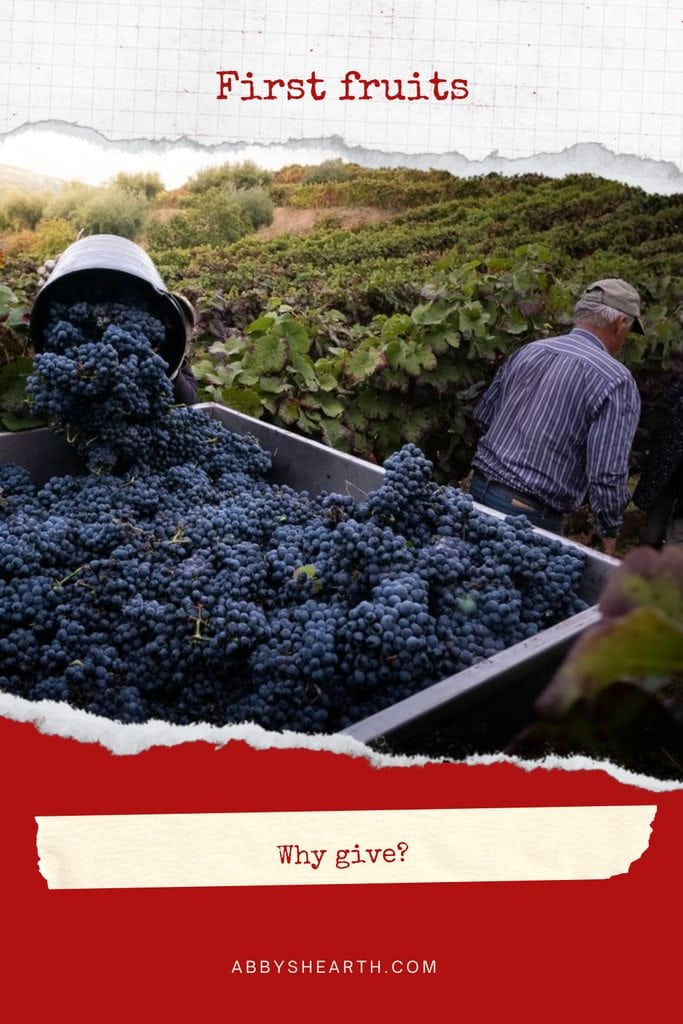
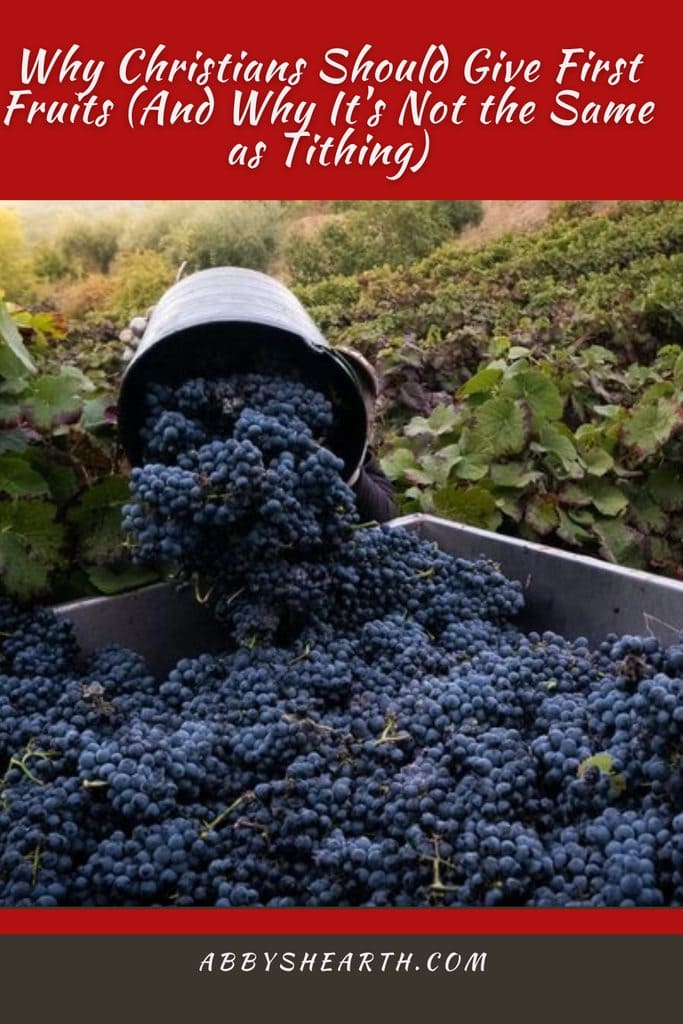
In the Old Testament, first fruits known as bikkurim in Hebrew referred to the very first portion of the harvest. Before anything else was eaten, stored, or sold, the first and best of the crop was brought to the temple as an offering to God (Exodus 23:19, Deuteronomy 26:1-11).
This wasn’t the leftover or damaged produce, or the least desirable grain. It was the first. The best. Given before you knew how the rest of the harvest would turn out. That’s the key thing to understand about first fruits: it’s given in faith, before the outcome is clear.
How Is First Fruits Different From Tithing?
The tithe is a tenth — a calculated, consistent portion of your increase. It’s ongoing, regular, and tied to everything you earn.
First fruits is different. It’s a one-time act of consecration — a deliberate offering of the first and best as an acknowledgment that everything you have comes from Abba. It’s often given at significant moments: the start of a new year, a new job, a new season. It’s not a percentage calculation. It’s a posture.
Think of it this way: tithing is the rhythm of your giving; first fruits is the declaration that starts the song.
The Biblical Foundation for First Fruits
First fruits runs deep through Scripture; far deeper than most Christians realise.
In Exodus 23:19, God commands the Israelites: “Bring the best of the firstfruits of your soil to the house of the Lord your God.” In Deuteronomy 26, Moses gives detailed instructions for how the offering is to be made — with a recitation of gratitude, remembering that everything they had came from Abba’s hand.
In Proverbs 3:9-10, the principle is restated clearly: “Honour the Lord with your wealth and with the firstfruits of all your produce; then your barns will be filled with plenty.” Notice the order here. First you honour, then the barns fill. Not the other way around.
And then there’s the New Testament dimension of first fruits that is easy to miss. In 1 Corinthians 15:20, Paul describes Jesus himself as the “firstfruits of those who have fallen asleep” — the first to rise from the dead, consecrating the resurrection of all who believe. In Romans 8:23, the Holy Spirit is described as the first fruits of our inheritance.
First fruits is woven into the very fabric of the gospel.
Why Should Christians Give First Fruits Today?
1. It declares that Abba is first — before you know how things will turn out
This is the heart of first fruits giving. When you give the first of something before the month is out, before the bills are paid, before you know if there’s enough; you’re making a statement of faith that is difficult to fake.
It’s easy to give when there’s plenty. It’s a different thing entirely to give first, when the harvest is still uncertain. And that’s exactly the kind of faith that Abba honours.
Chuck Pierce at Glory of Zion International Ministries teaches that first fruits isn’t just about the amount you give — it’s about what giving first does in you. It builds real confidence that your Father will always provide. It puts you in a posture of expecting him to show up, not just to provide but to visit. And it’s part of a longer arc. Giving first fruits trains us to watch a promise mature over time, the same patient watching that Scripture describes in Hebrews 11:13–14, Ephesians 1:11,14,18, Colossians 1:12, and 1 Peter 1:4. It’s all about holding onto something God has promised before we can fully see it.
2. It breaks the spirit of lack and scarcity
There is something spiritually significant about giving the first portion. It breaks agreement with the lie that says there won’t be enough. It says: I trust You with what I have before I know how this will work out.
Many people are waiting until they have more before they give generously. But first fruits teaches us the opposite. It shows that generosity comes before abundance, not after it.
3. It consecrates the rest
When you give the first fruits of your income, your harvest, your time — you’re placing the rest under a kind of covering. In Numbers 15:20-21, the first batch of dough offered to God was said to hallow the whole. The principle is that what you consecrate first, Abba blesses in full.
There’s no mathematical formula or transaction here, but the simple trust and logic of a covenant relationship with a generous God.
4. It’s an act of gratitude and remembrance
In Deuteronomy 26, when the Israelites brought their first fruits offering, they were required to recite their history; remembering that they were once slaves, that Abba brought them out with a mighty hand, that the land they now farmed was a gift. First fruits giving is an act of memory. A deliberate stopping to say: I didn’t get here alone. Everything I have came from His generous and loving hands.
In a world that pushes relentless hustle and self-sufficiency, that is a radical thing to declare.
What Does First Fruits Giving Look Like Today?
In practical terms, first fruits can look like a few things.
It could be a specific offering at the start of a new year — a deliberate, intentional gift given before the year gets going, as a declaration of who comes first. Many churches incorporate first fruits giving in January or at the time of Passover/Easter, following the agricultural calendar of the Old Testament.
It can also look like giving from the first of every paycheck — not waiting until you see what’s left, but setting aside an offering before anything else goes out. If you’re already tithing, first fruits is a separate act given at the start of every Hebrew Month or even at the start of any normal month, given as a standalone offering of consecration.
It can be non-monetary too. The firstfruits of your time — giving the first hours of your day to prayer and the Word rather than your phone. The first fruits of a new skill, a new project, a new creative endeavour — dedicating it to Abba before the world sees it.
The principle is always the same: first, before the rest.
Does First Fruits Giving Apply to Non-Israelites?
This question comes up because much of the first fruits language in the Old Testament is directed at Israel. And it’s worth thinking through.
The New Testament doesn’t explicitly command first fruits giving in the way the Old Testament does. But the principle behind it — honouring God with the first and best of what you have — is entirely consistent with New Testament generosity. It’s consistent with seeking first the Kingdom (Matthew 6:33). It’s consistent with presenting your body as a living sacrifice (Romans 12:1). It’s consistent with the whole spirit of a life surrendered to Abba.
The Law may not bind us. The principle still shapes us.
First Fruits, Fasting, and Tithing: A Triad of Surrender
If you think about it, fasting, tithing, and first fruits giving all operate on the same underlying principle: the willingness to give up or give first, before the outcome is guaranteed. All three are acts of surrender that train the heart to trust Abba over self.
Fasting says: I choose You over the comfort of my flesh. Tithing says: I acknowledge You as the source of everything I earn. First fruits says: I give You the best, before I see how the rest turns out.
Together, they form a kind of spiritual discipline of the hands and the heart — practical, physical acts that shape who you become in the unseen places.
If you want to go deeper on the discipline of giving, it’s also worth reading some of these Christian books — several of them deal with faith, generosity, and surrendering your finances to God in ways that are genuinely life-changing.
A Note on Israel
First fruits is deeply rooted in the story of Israel — the land, the harvest, the covenant. If you’ve been reading about God’s heart for Israel and His faithfulness to His people, first fruits is another thread in that same tapestry. Abba’s promises to Israel — the land, the blessing, and the protection were always tied to covenant obedience, and first fruits was one of the visible, tangible expressions of that covenant relationship.
When the Israelites brought their harvest to the temple, they were declaring: This land is Yours. This harvest is Yours. We exist because of Your faithfulness. When we give first fruits as Christians today, we are grafted into that same story. We are saying, along with the Israelites who brought their harvest to the temple: You are faithful. You provided then, and You will provide now.
The Bottom Line
First fruits giving is not an Old Testament relic. It is a living principle about who gets your first and your best — and whether you trust Abba enough to give before you know how things will turn out.
It’s not complicated, and it doesn’t require a spreadsheet. It just requires a heart that’s willing to say: You first, Abba. Always.
Start there. And watch what He does with the rest.
If you want to understand more about Israel’s place in God’s redemptive plan, these posts are a good place to start: Israel, a Biblical and Christian Summary and Why Every True Christian Should Support Israel. And if you feel called to do more than just understand, there are also ways to volunteer in Israel or give through Christian charities that support Israel.
You might also like:
- Why Christians Should Tithe
- Different Types of Fasts Christians Can Do
- My Favourite Christian Books
- God’s Retaliation Against Israel’s Enemies
- Revelation Jokes – In the End

Heya, I’m Abby! I’m a Gourmand Award-winning cookbook author and East Indian from Bombay, India. This blog is all about faith, food, and culture – from East Indian recipes to home, DIY, and spending time in the Word. Find out more about me here!